
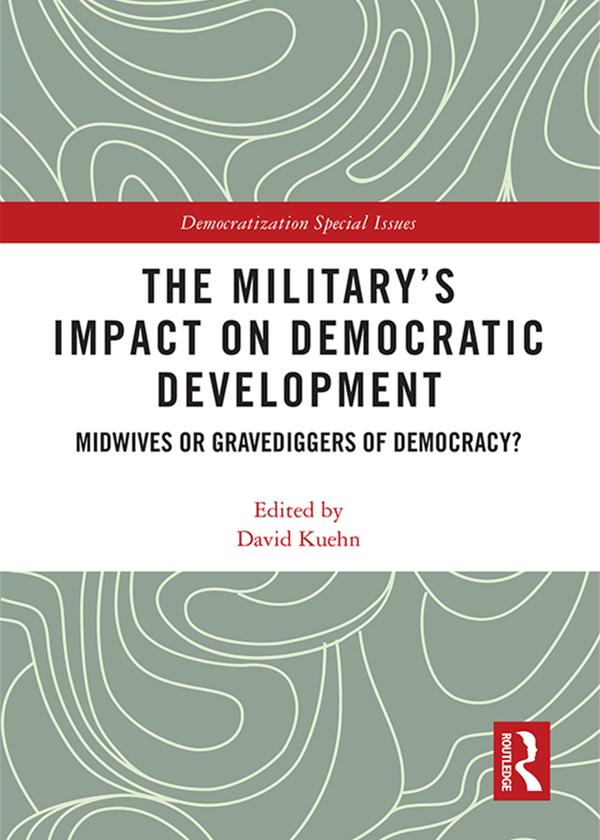
Despite the decline in the number of military coups since the 1960s and 1970s, Militaries continue to be crucial political actors in many world regions. Their impact on the democratic development of nations, however, has been mixed. On the one hand, coups against democratically elected leaders in Mali (2012), Egypt (2013), and Thailand (2014) have spelled doom for these countries’ nascent democratic regimes and have ushered in new periods of military dominance in politics. The cases of Portugal (1974), the Philippines (1986), and Tunisia (2011), on the other hand, show that the military’s decision not to defend authoritarian leaders against mass protests contributed crucially to the fall of dictatorships and facilitated transitions to democracy. This volume addresses the military’s ambivalent role as "midwife" or "gravedigger" of democracy and highlights the often multi-layered and complex relationship between militaries’ political behaviour and democratization.
The chapters were originally published in a special issue of Democratization.
Pay easily by card, Klarna, Apple Pay or Google Pay. Not happy? You always have a 14-day money-back guarantee. Read more in our terms. If you have any questions, email us at hello@memmo.org.
Memmo makes studying easier – wherever you are in the world. We bring your course books and smart study tools together in one place: summaries, quizzes, podcasts and flashcards. Plus Ted, your study buddy who answers anything you wonder. Over 50,000 students already study here – built to help you learn faster and stress less.