
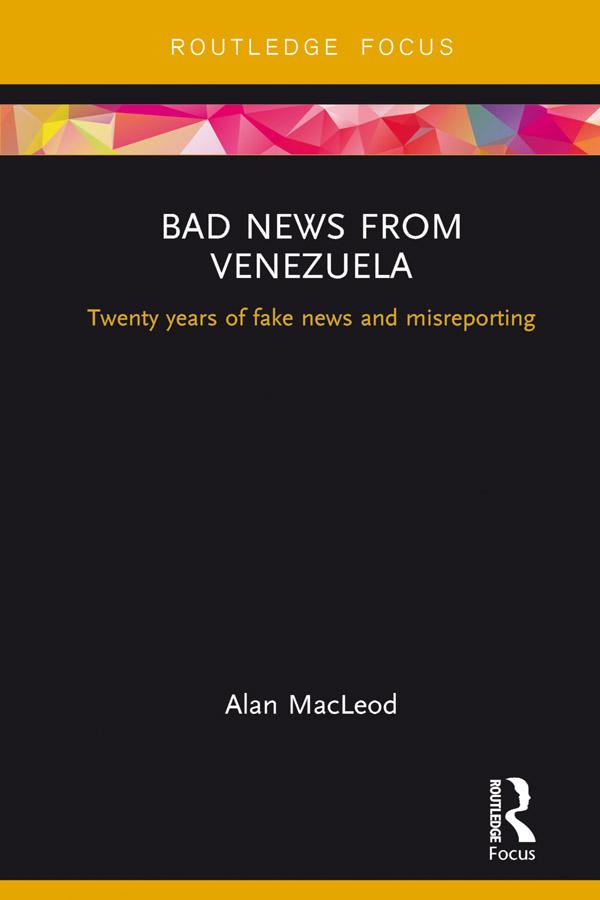
Since the election of President Hugo Chavez in 1998, Venezuela has become an important news item. Western coverage is shaped by the cultural milieu of its journalists, with news written from New York or London by non-specialists or by those staying inside wealthy guarded enclaves in an intensely segregated Caracas. Journalists mainly work with English-speaking elites and have little contact with the poor majority. Therefore, they reproduce ideas largely attuned to a Western, neoliberal understanding of Venezuela.
Through extensive analysis of media coverage from Chavez’s election to the present day, as well as detailed interviews with journalists and academics covering the country, Bad News from Venezuela highlights the factors contributing to reportage in Venezuela and why those factors exist in the first place. From this examination of a single Latin American country, the book furthers the discussion of contemporary media in the West, and how, with the rise of ‘fake news’, their operations have a significant impact on the wider representation of global affairs.
Bad News from Venezuela is comprehensive and enlightening for undergraduate students and research academics in media and Latin American studies.
Pay easily by card, Klarna, Apple Pay or Google Pay. Not happy? You always have a 14-day money-back guarantee. Read more in our terms. If you have any questions, email us at hello@memmo.org.
Memmo makes studying easier – wherever you are in the world. We bring your course books and smart study tools together in one place: summaries, quizzes, podcasts and flashcards. Plus Ted, your study buddy who answers anything you wonder. Over 50,000 students already study here – built to help you learn faster and stress less.