
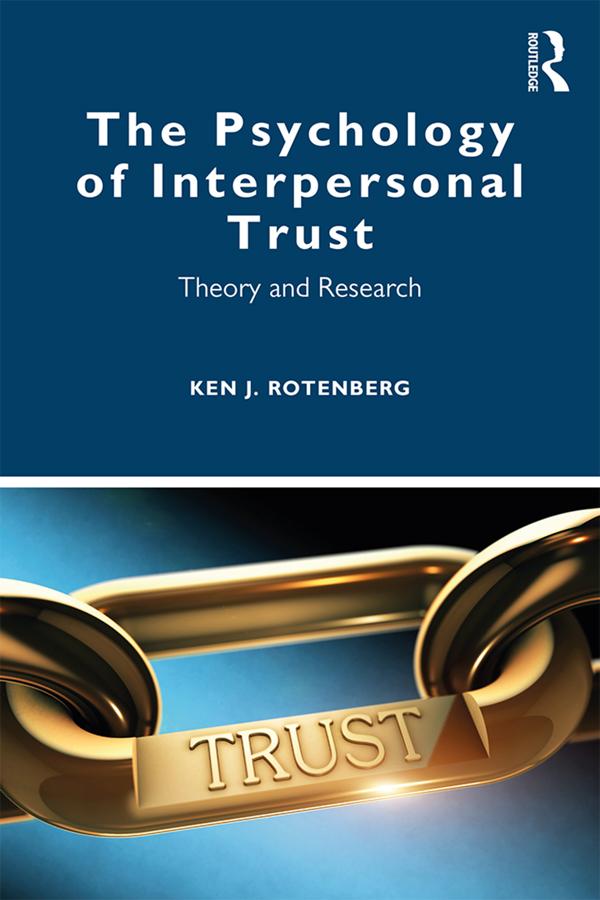
Trust is a crucial facet of social functioning that feeds into our relationships with individuals, groups, and organizations. The Psychology of Interpersonal Trust: Theory and Research examines existing theories, frameworks, and models of trust as well as the methods and designs for examining it. To fully examine how interpersonal trust impacts our lives, Rotenberg reviews the many essential topics trust relates to, including close relationships, trust games, behavioural trust, and trust development.
Designed to encourage researchers to recognize the links between different approaches to trust, this book begins with an overview of the different approaches to interpersonal trust and a description of the methods used to investigate it. Following on from this, each chapter introduces a new subtopic or context, including lying, adjustment, socialization, social media, politics, and health. Each subtopic begins with a short monologue (to provide a personal perspective) and covers basic theory and research. Rotenberg’s applied focus demonstrates the relevance of interpersonal trust and highlights the issues and problems people face in contemporary society.
This is essential reading for students, researchers, and academics in social psychology, especially those with a specific interest in the concept of trust.
Pay easily by card, Klarna, Apple Pay or Google Pay. Not happy? You always have a 14-day money-back guarantee. Read more in our terms. If you have any questions, email us at hello@memmo.org.
Memmo makes studying easier – wherever you are in the world. We bring your course books and smart study tools together in one place: summaries, quizzes, podcasts and flashcards. Plus Ted, your study buddy who answers anything you wonder. Over 50,000 students already study here – built to help you learn faster and stress less.