
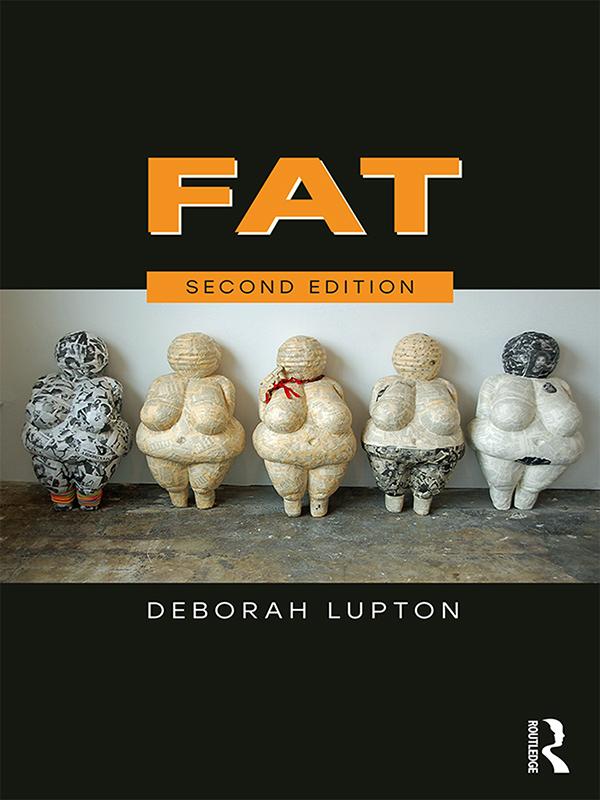
In contemporary western societies, the fat body has become a focus of stigmatizing discourses and practices aimed at disciplining, regulating and containing it. Despite the fact that in many western countries fat bodies outnumber those that are thin, fat people are still socially marginalized, and treated with derision and even repulsion and disgust. Medical and public health experts continue to insist that an ‘obesity epidemic’ exists and that fatness is a pathological condition which should be prevented and controlled.
Fat is a book about why the fat body has become so reviled and reviewed as diseased, the target of such intense discussion and debate about ways to reduce its size down to socially and medically acceptable dimensions. It is about the lived experience of fat embodiment: how does it feel to be fat in a fat phobic-society? Fat activism and obesity politics, and related controversies, are also discussed. Internationally-renowned sociologist Deborah Lupton explores fat as a sociocultural artefact: a bodily substance or body shape that is given meaning by complex and shifting systems of ideas, practices, emotions, material objects and interpersonal relationships. This analysis identifies broader preoccupations and trends in the ways that human bodies and selfhood are experienced and practised.
The second and much expanded edition of Fat is twice as long as the original edition. Lupton incorporates the very latest current critical scholarship and research offered in the humanities and social sciences on fat embodiment and fat politics. New updated material is presented in every chapter, including substantial additional sections on new digital media. Fat is a lively, at times provocative introduction for the general reader, as well as for students and academics interested in the politics of embodiment and health.
Pay easily by card, Klarna, Apple Pay or Google Pay. Not happy? You always have a 14-day money-back guarantee. Read more in our terms. If you have any questions, email us at hello@memmo.org.
Memmo makes studying easier – wherever you are in the world. We bring your course books and smart study tools together in one place: summaries, quizzes, podcasts and flashcards. Plus Ted, your study buddy who answers anything you wonder. Over 50,000 students already study here – built to help you learn faster and stress less.