
"This was several times with that damn cribbage board. I hate cribbage boards to this very day. They never beat us on the arms or legs or stuff, it was always on the bottom of the feet, I couldn't figure it out." Brian L., Huronia Regional Centre Survivor
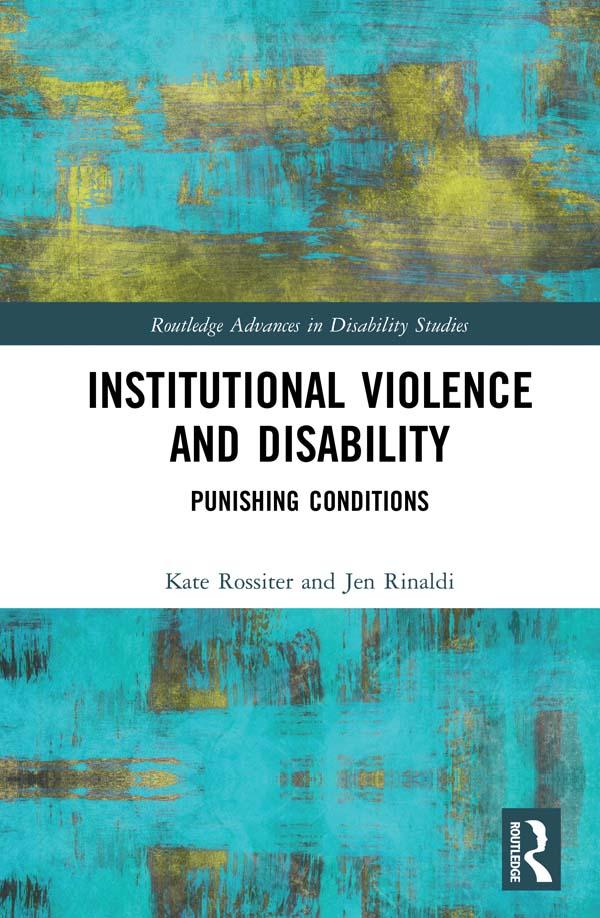
Over the past two decades, the public has borne witness to ongoing revelations of shocking, intense, and even sadistic forms of violence in spaces meant to provide care. This has been particularly true in institutions designed to care for people with disabilities. In this work, the authors not only describe institutional violence, but work to make sense of how and why institutional violence within care settings is both so pervasive and so profound.
Drawing on a wide range of primary data, including oral histories of institutional survivors and staff, ethnographic observation, legal proceedings and archival data, this book asks: What does institutional violence look like in practice and how might it be usefully categorized? How have extreme forms violence and neglect come to be the cultural norm across institutions? What organizational strategies in institutions foster the abdication of personal morality and therefore violence? How is institutional care the crucial "first step" in creating a culture that accepts violence as the norm?
This highly interdisciplinary work develops scholarly analysis of the history and importance of institutional violence and, as such, is of particular interest to scholars whose work engages with issues of disability, health care law and policy, violence, incarceration, organizational behaviour, and critical theory.
Pay easily by card, Klarna, Apple Pay or Google Pay. Not happy? You always have a 14-day money-back guarantee. Read more in our terms. If you have any questions, email us at hello@memmo.org.
Memmo makes studying easier – wherever you are in the world. We bring your course books and smart study tools together in one place: summaries, quizzes, podcasts and flashcards. Plus Ted, your study buddy who answers anything you wonder. Over 50,000 students already study here – built to help you learn faster and stress less.