
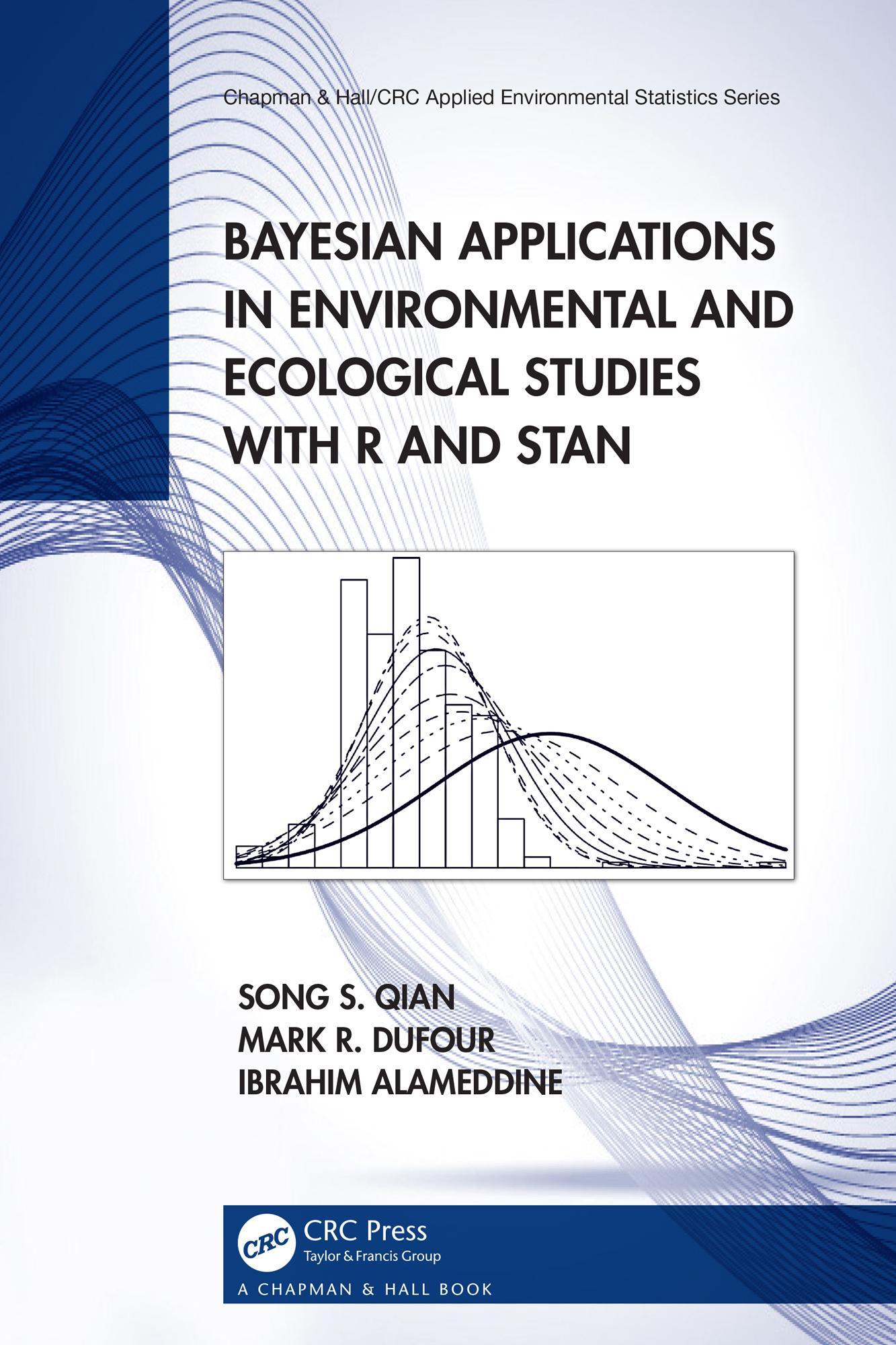
Modern ecological and environmental sciences are dominated by observational data. As a result, traditional statistical training often leaves scientists ill-prepared for the data analysis tasks they encounter in their work. Bayesian methods provide a more robust and flexible tool for data analysis, as they enable information from different sources to be brought into the modelling process. Bayesian Applications in Evnironmental and Ecological Studies with R and Stan provides a Bayesian framework for model formulation, parameter estimation, and model evaluation in the context of analyzing environmental and ecological data.
Features:
- An accessible overview of Bayesian methods in environmental and ecological studies
- Emphasizes the hypothetical deductive process, particularly model formulation
- Necessary background material on Bayesian inference and Monte Carlo simulation
- Detailed case studies, covering water quality monitoring and assessment, ecosystem response to urbanization, fisheries ecology, and more
- Advanced chapter on Bayesian applications, including Bayesian networks and a change point model
- Complete code for all examples, along with the data used in the book, are available via GitHub
The book is primarily aimed at graduate students and researchers in the environmental and ecological sciences, as well as environmental management professionals. This is a group of people representing diverse subject matter fields, who could benefit from the potential power and flexibility of Bayesian methods.
Pay easily by card, Klarna, Apple Pay or Google Pay. Not happy? You always have a 14-day money-back guarantee. Read more in our terms. If you have any questions, email us at hello@memmo.org.
Memmo makes studying easier – wherever you are in the world. We bring your course books and smart study tools together in one place: summaries, quizzes, podcasts and flashcards. Plus Ted, your study buddy who answers anything you wonder. Over 50,000 students already study here – built to help you learn faster and stress less.