
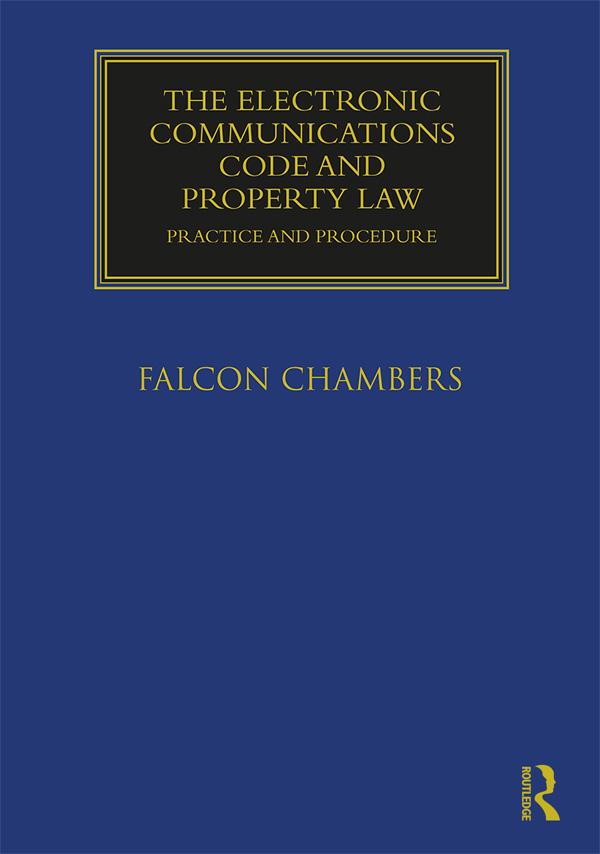
Life now without access to electronic telecommunications would be regarded as highly unsatisfactory by most of the UK population. Such ready access would not have been achieved without methodical and ultimately enforceable means of access to the land on which to install the infrastructure necessary to support the development of an electronic communications network. Successive governments have made such access a priority, regarding it as a principle that no person should unreasonably be denied access to an electronic communications network or electronic communications services. The enactment of the Telecommunications Act 1984 and its revision by the Communications Act in 2003 have played their role in the provision of an extensive electronic infrastructure in the UK, while their reshaping by means of the Digital Economy Act 2017 will continue that process. Throughout that process, a little publicised series of struggles has taken place between telecommunications operators and landowners, as they seek to interpret the Electronic Communications Code by which their rights and obligations have been regulated.
This book describes the problems that accompanied the Old Code (which will continue to regulate existing installations and agreements); and the intended solutions under the New Code. The eminent team of authors explain the background, provisions and operation of the old code and the new one, providing practical and jargon-free guidance throughout. It is sure to become the reference on this topic and is intended as a guide for telecommunications operators, land owners, and of course for their advisers in the legal and surveying professions.
All members of Falcon Chambers, comprising nine Queen’s Counsel and 30 junior barristers, specialise in property law and allied topics, including the various incarnations of the Electronic Communications Code. Members of Falcon Chambers, including all the authors of this new work, have for many years lectured and written widely on the code, and have appeared (acting for both operators and landowners) in many of the few reported cases on the subject of the interface between property law and the code, including for example: Geo Networks Ltd v The Bridgewater Canal Co. Ltd (2010); Geo Networks Ltd v The Bridgewater Canal Co. Ltd (2011); Crest Nicholson (Operations) Ltd v Arqiva Services Ltd (2015); Brophy v Vodafone Ltd (2017).
Pay easily by card, Klarna, Apple Pay or Google Pay. Not happy? You always have a 14-day money-back guarantee. Read more in our terms. If you have any questions, email us at hello@memmo.org.
Memmo makes studying easier – wherever you are in the world. We bring your course books and smart study tools together in one place: summaries, quizzes, podcasts and flashcards. Plus Ted, your study buddy who answers anything you wonder. Over 50,000 students already study here – built to help you learn faster and stress less.