
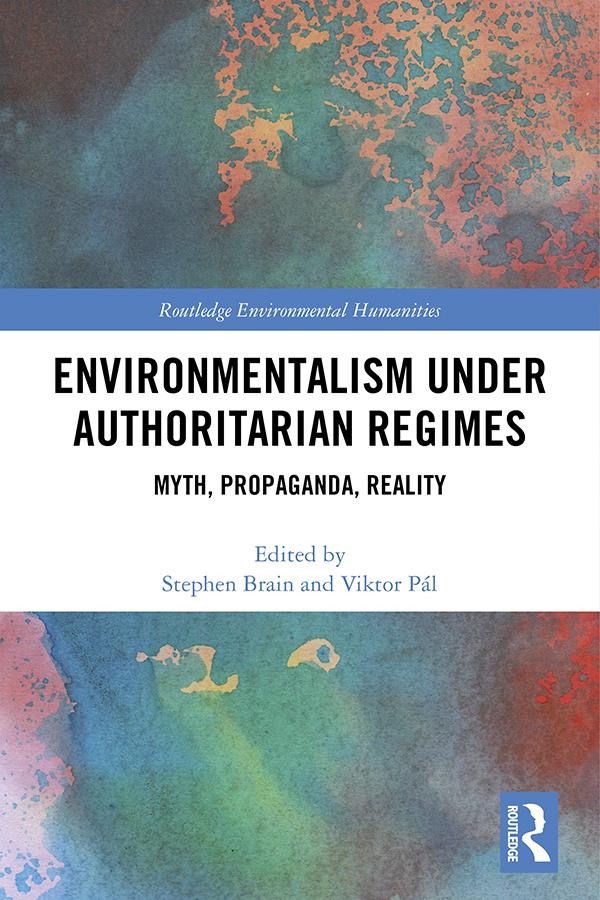
Since the early 2000s, authoritarianism has risen as an increasingly powerful global phenomenon. This shift has not only social and political implications, but also environmental implications: authoritarian leaders seek to recast the relationship between society and the government in every aspect of public life, including environmental policy. When historians of technology or the environment have investigated the environmental consequences of authoritarian regimes, they have frequently argued that authoritarian regimes have been unable to produce positive environmental results or adjust successfully to global structural change, if they have shown any concern for the environment at all. Put another way, the scholarly consensus holds that authoritarian regimes on both the left and the right generally have demonstrated an anti-environmentalist bias, and when opposed by environmentalist social movements, have succeeded in silencing those voices.
This book explores the theme of environmental politics and authoritarian regimes on both the right and the left. The authors argue that in instances when environmentalist policies offer the possibility of bolstering a country’s domestic (nationalist) appeal or its international prestige, authoritarian regimes can endorse and have endorsed environmental protective measures. The collection of essays analyzes environmentalist initiatives pursued by authoritarian regimes, and provides explanations for both the successes and failures of such regimes, looking at a range of case studies from a number of countries, including Brazil, China, Poland, and Zimbabwe. The volume contributes to the scholarly debate about the social and political preconditions necessary for effective environmental protection.
This book will be of great interest to those studying environmental history and politics, environmental humanities, ecology, and geography.
Pay easily by card, Klarna, Apple Pay or Google Pay. Not happy? You always have a 14-day money-back guarantee. Read more in our terms. If you have any questions, email us at hello@memmo.org.
Memmo makes studying easier – wherever you are in the world. We bring your course books and smart study tools together in one place: summaries, quizzes, podcasts and flashcards. Plus Ted, your study buddy who answers anything you wonder. Over 50,000 students already study here – built to help you learn faster and stress less.