
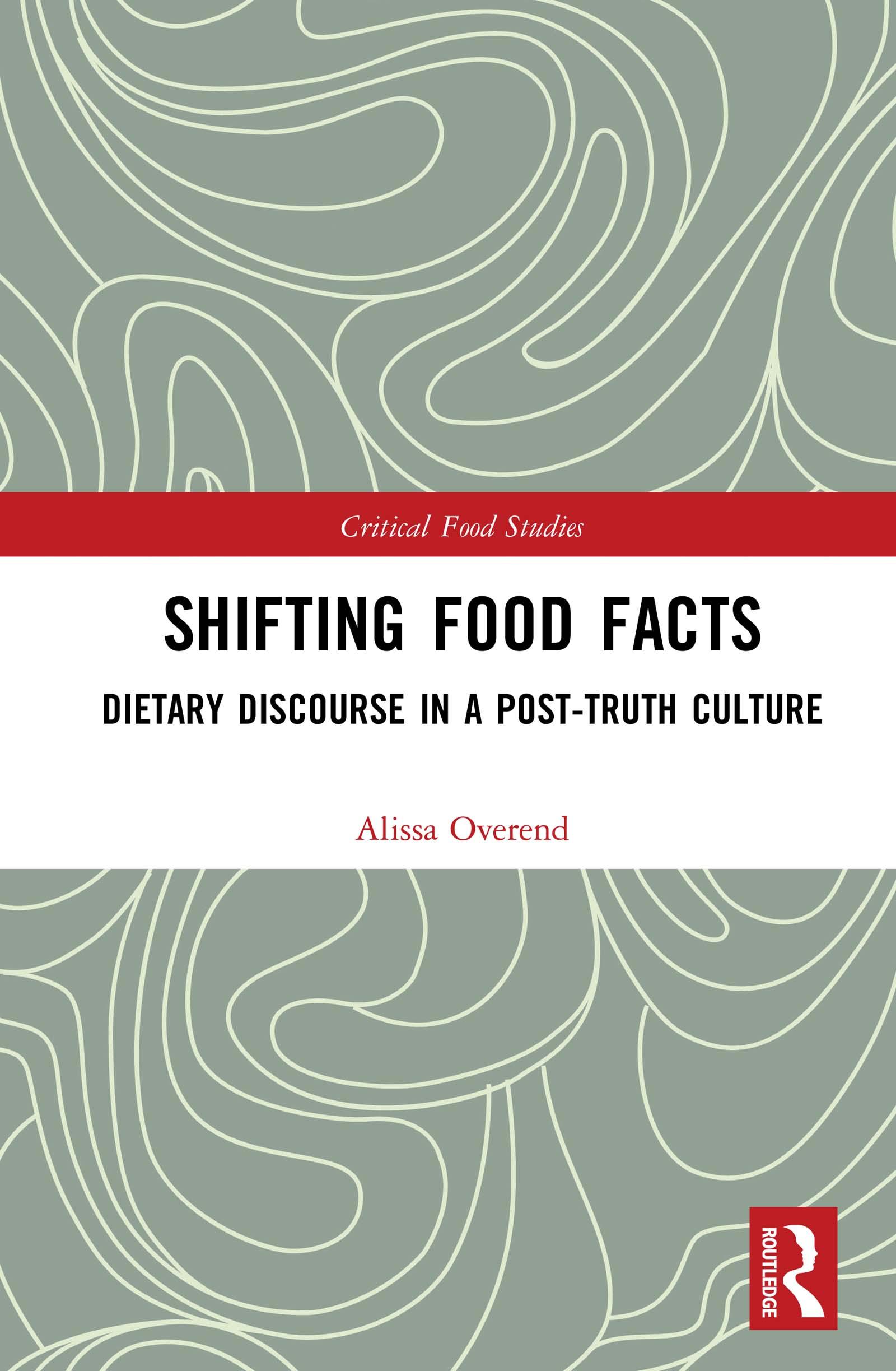
This book offers a much-needed reframing of food discourse by presenting alternative ways of thinking about the changing politics of food, eating, and nutrition. It examines critical epistemological questions of how food knowledge comes to be shaped and why we see pendulum swings when it comes to the question of what to eat.
As food facts peak and peril in the face of conflicting dietary advice and nutritional evidence, this book situates shifting food truths through a critical analysis of how healthy eating is framed and contested, particularly amid fluctuating truth claims of a “post-truth” culture. It explores what a post-truth epistemological framework can offer critical food and health studies, considers the type of questions this may enable, and looks at what can be gained by relinquishing rigid empirical pursuits of singular dietary truths. In focusing too intently on the separation between food fact and food fiction, the book argues that politically dangerous and epistemically narrow ideas of one way to eat “healthy” or “right” are perpetuated. Drawing on a range of archival materials related to food and health and interviews with registered dietitians, this book offers various examples of shifting food truths, from macro-historical genealogies to contemporary case studies of dairy, wheat, and meat.
Providing a rich and innovative analysis, this book offers news ways to think about, and act upon, our increasingly complex food landscapes. It does so by loosening our empirical Western reliance on singular food facts in favour of an articulation of contextual food truths that situate the problems of health as problems of living, not as individualistic problems of eating. It will be of interest to students, scholars, and practitioners working in food studies, food politics, sociology, environmental geography, health, nutrition, and cultural studies.
Pay easily by card, Klarna, Apple Pay or Google Pay. Not happy? You always have a 14-day money-back guarantee. Read more in our terms. If you have any questions, email us at hello@memmo.org.
Memmo makes studying easier – wherever you are in the world. We bring your course books and smart study tools together in one place: summaries, quizzes, podcasts and flashcards. Plus Ted, your study buddy who answers anything you wonder. Over 50,000 students already study here – built to help you learn faster and stress less.