
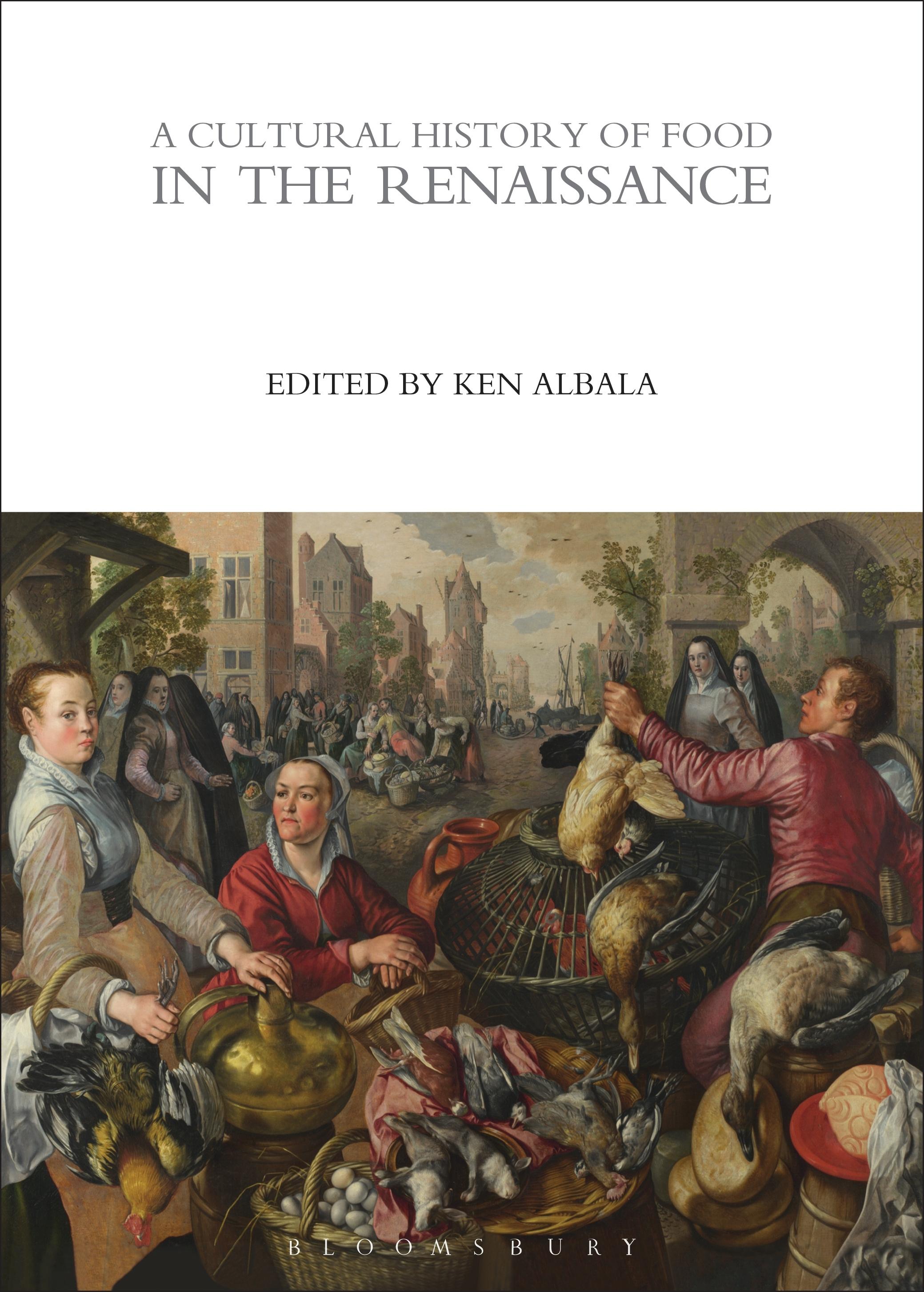
Food and attitudes toward it were transformed in Renaissance Europe. The period between 1300 and 1600 saw the discovery of the New World and the cultivation of new foodstuffs, as well as the efflorescence of culinary literature in European courts and eventually in the popular press, and most importantly the transformation of the economy on a global scale. Food became the object of rigorous investigation among physicians, theologians, agronomists and even poets and artists. Concern with eating was, in fact, central to the cultural dynamism we now recognize as the Renaissance.
A Cultural History of Food in the Renaissance presents an overview of the period with essays on food production, food systems, food security, safety and crises, food and politics, eating out, professional cooking, kitchens and service work, family and domesticity, body and soul, representations of food, and developments in food production and consumption globally.
A Cultural History of Food in the Renaissance presents an overview of the period with essays on food production, food systems, food security, safety and crises, food and politics, eating out, professional cooking, kitchens and service work, family and domesticity, body and soul, representations of food, and developments in food production and consumption globally.
Pay easily by card, Klarna, Apple Pay or Google Pay. Not happy? You always have a 14-day money-back guarantee. Read more in our terms. If you have any questions, email us at hello@memmo.org.
Memmo makes studying easier – wherever you are in the world. We bring your course books and smart study tools together in one place: summaries, quizzes, podcasts and flashcards. Plus Ted, your study buddy who answers anything you wonder. Over 50,000 students already study here – built to help you learn faster and stress less.