
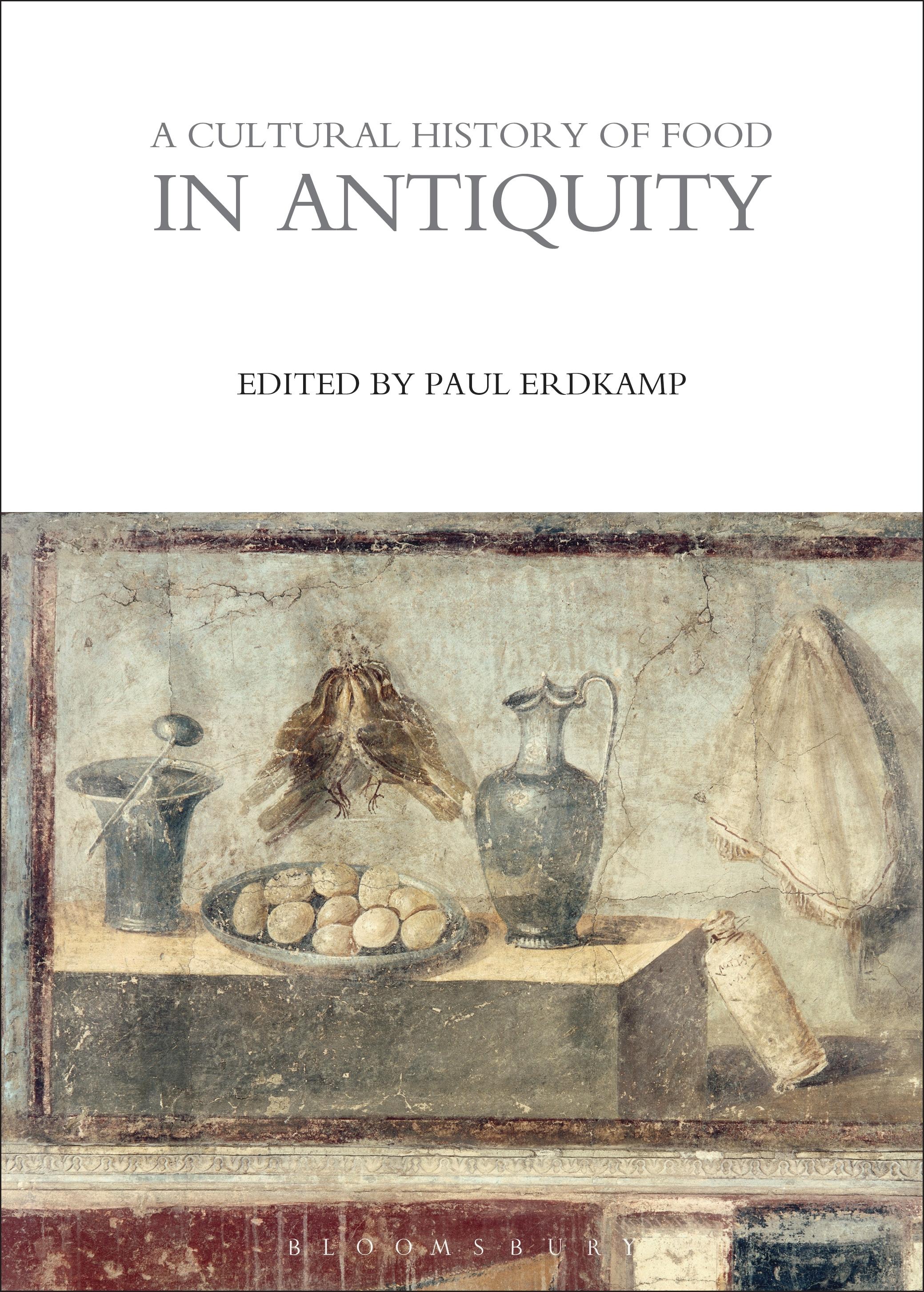
From Archaic Greece until the Late Roman Empire (c. 800 BCE to c. 500 CE), food was more than a physical necessity; it was a critical factor in politics, economics and culture. On the one hand, the Mediterranean landscape and climate encouraged particular crops – notably cereals, vines and olives – but, with the risks of crop failure ever-present, control of food resources was vital to economic and political power. On the other hand, diet and dining reflected complex social hierarchies and relationships. What was eaten, with whom and when was a fundamental part of the expression of one's role and place in society. In addition, symbolism and ritual suffused foodstuffs, their preparation and consumption.
A Cultural History of Food in Antiquity presents an overview of the period with essays on food production, food systems, food security, safety and crises, food and politics, eating out, professional cooking, kitchens and service work, family and domesticity, body and soul, representations of food, and developments in food production and consumption globally.
A Cultural History of Food in Antiquity presents an overview of the period with essays on food production, food systems, food security, safety and crises, food and politics, eating out, professional cooking, kitchens and service work, family and domesticity, body and soul, representations of food, and developments in food production and consumption globally.
Pay easily by card, Klarna, Apple Pay or Google Pay. Not happy? You always have a 14-day money-back guarantee. Read more in our terms. If you have any questions, email us at hello@memmo.org.
Memmo makes studying easier – wherever you are in the world. We bring your course books and smart study tools together in one place: summaries, quizzes, podcasts and flashcards. Plus Ted, your study buddy who answers anything you wonder. Over 50,000 students already study here – built to help you learn faster and stress less.