
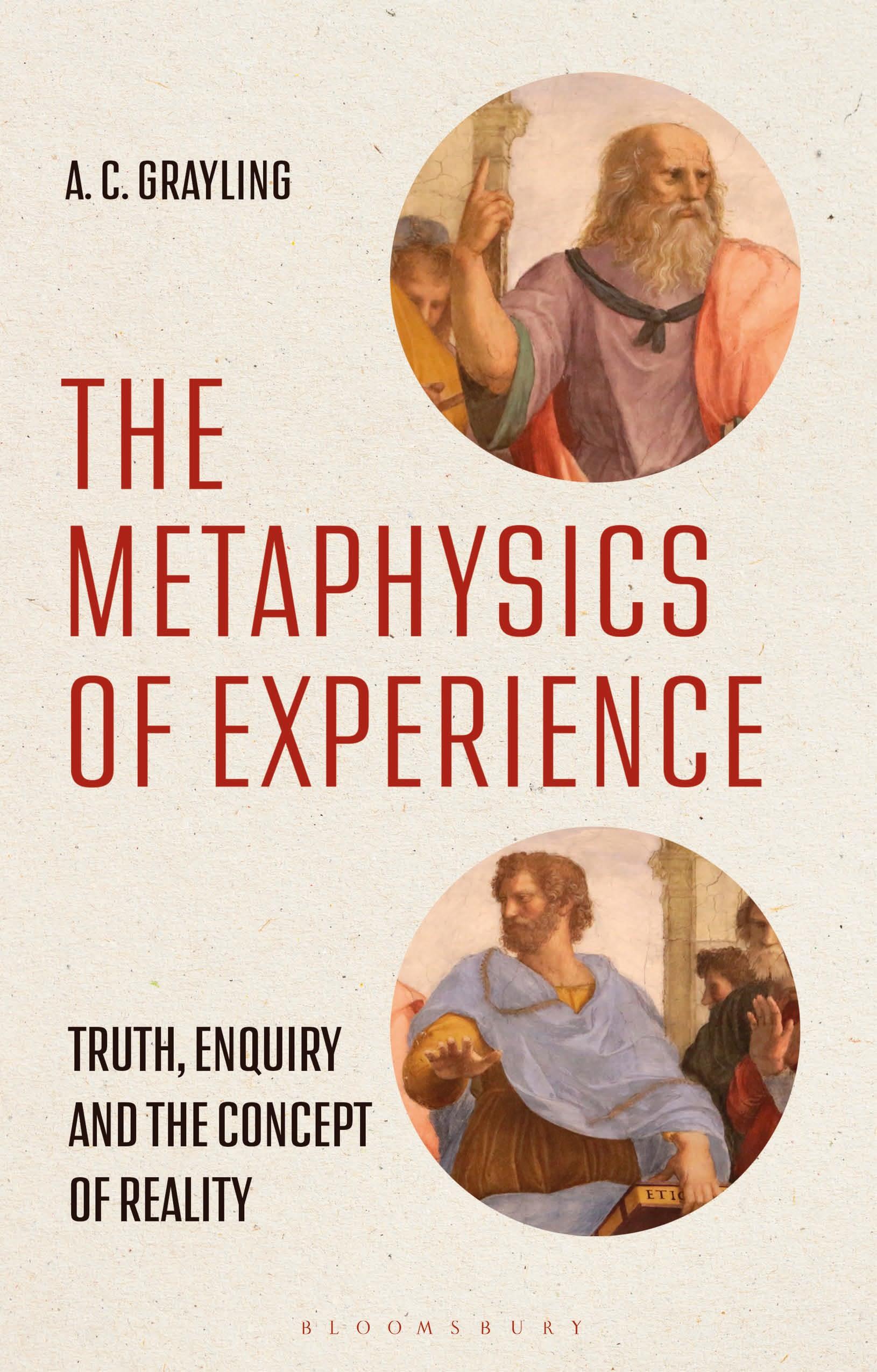
AC Grayling presents a work of analytic philosophy arguing that considerations of natural language ontology tell us much about how to understand truth, reference and concepts of reality.
In this detailed examination of how philosophers currently think about the 'ultimate reality', Grayling builds on three decades of thinking about metaphysical and semantic questions. Covering a wide range of central issues in metaphysics, Grayling presents stimulating insights on a range of topics including the difference between the concepts of 'actual' and 'real' and why 'social reality' is as 'real' as physical reality. He shows us the significance of epistemological scepticism and offers a revised and developed view of the consequences of it for understanding the nature and role of assertion.
Grayling's semantic anti-realism does not entail a rejection of metaphysical realism. Here the question is reframed as one about the way discourses project ontologies. By reversing the idea that perceptual discourse is the base case and that mimicry by other discourses of its grammar is a source of philosophical problems, Grayling argues that a series of familiar philosophical problems are resolved. His case for a deferral approach to ultimate reality, a metaphysical one, is compelling.
Located as part of an historical development running though Parmenides, Plato, Spinoza, Berkeley, Hume, this is a work with broad implications in the metaphysics and philosophy of science. It is essential reading for any philosopher wanting to rethink the entanglement of ontology and epistemology in questions about reality.
In this detailed examination of how philosophers currently think about the 'ultimate reality', Grayling builds on three decades of thinking about metaphysical and semantic questions. Covering a wide range of central issues in metaphysics, Grayling presents stimulating insights on a range of topics including the difference between the concepts of 'actual' and 'real' and why 'social reality' is as 'real' as physical reality. He shows us the significance of epistemological scepticism and offers a revised and developed view of the consequences of it for understanding the nature and role of assertion.
Grayling's semantic anti-realism does not entail a rejection of metaphysical realism. Here the question is reframed as one about the way discourses project ontologies. By reversing the idea that perceptual discourse is the base case and that mimicry by other discourses of its grammar is a source of philosophical problems, Grayling argues that a series of familiar philosophical problems are resolved. His case for a deferral approach to ultimate reality, a metaphysical one, is compelling.
Located as part of an historical development running though Parmenides, Plato, Spinoza, Berkeley, Hume, this is a work with broad implications in the metaphysics and philosophy of science. It is essential reading for any philosopher wanting to rethink the entanglement of ontology and epistemology in questions about reality.
Pay easily by card, Klarna, Apple Pay or Google Pay. Not happy? You always have a 14-day money-back guarantee. Read more in our terms. If you have any questions, email us at hello@memmo.org.
Memmo makes studying easier – wherever you are in the world. We bring your course books and smart study tools together in one place: summaries, quizzes, podcasts and flashcards. Plus Ted, your study buddy who answers anything you wonder. Over 50,000 students already study here – built to help you learn faster and stress less.