
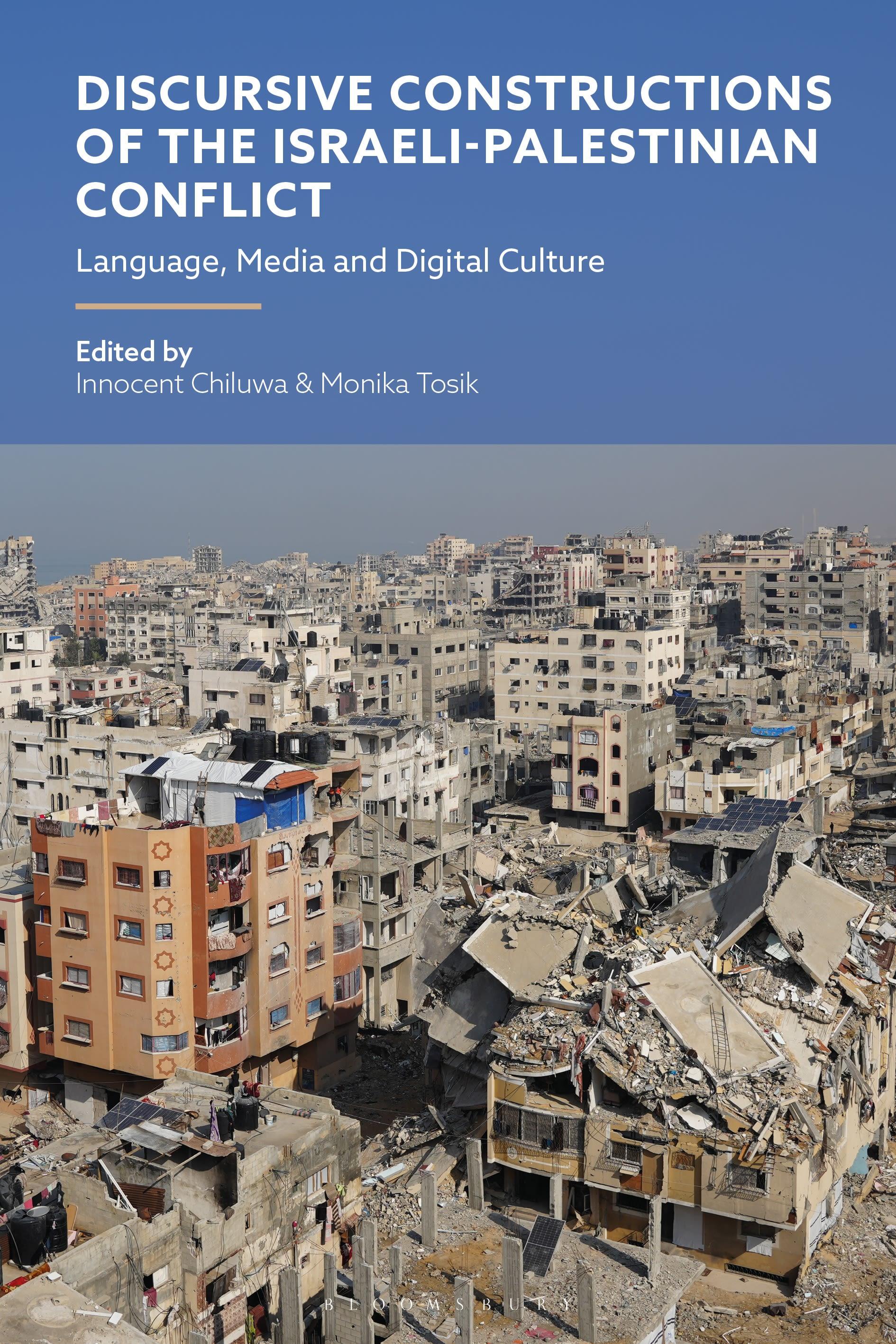
This important volume tackles the discourse of the Israeli-Palestinian conflict from an interdisciplinary perspective with a focus on language and communication, constituting a novel approach in the literature on the topic. By drawing on methods from linguistics, media studies, digital culture, journalism, and literature, it explores new pathways for analysing how narratives are constructed, contested, and disseminated across multiple platforms and contexts. Offering a contemporary, interdisciplinary approach rooted in critical discourse analysis, digital activism, and cultural symbolism, the book represents an important evolution in the field by extending traditional conflict analysis into the digital age, highlighting how social media, memes, hashtags, and global digital networks shape public perception and activism around the Israeli-Palestinian conflict.
Part One examines linguistic and literary constructions reflected in embodied resistance (of and in solidarity with the Palestinians) through cultural symbols and artefacts. Part Two comprises critical evaluations of how journalism and film mediate the conflict, and Part Three critiques the impact of social media and hashtag activism in the conflict. The final part considers three concepts that have dominated the debate in the latest conflict – colonialism, genocide and antisemitism.
This multi-disciplinary approach to discourse analysis in the study of the Israeli-Palestinian conflict not only examines the linguistic landscapes of protest but also serves researchers, students, and practitioners seeking a deeper understanding of how language shapes perceptions of conflict, resistance, victimhood, and power.
Part One examines linguistic and literary constructions reflected in embodied resistance (of and in solidarity with the Palestinians) through cultural symbols and artefacts. Part Two comprises critical evaluations of how journalism and film mediate the conflict, and Part Three critiques the impact of social media and hashtag activism in the conflict. The final part considers three concepts that have dominated the debate in the latest conflict – colonialism, genocide and antisemitism.
This multi-disciplinary approach to discourse analysis in the study of the Israeli-Palestinian conflict not only examines the linguistic landscapes of protest but also serves researchers, students, and practitioners seeking a deeper understanding of how language shapes perceptions of conflict, resistance, victimhood, and power.
Pages: 312
Category: Film- & Medievetenskap
e-ISBN: 9781350589834
Shipping weight: 1.2 kg
Ships in: 1-2 days
Pay easily by card, Klarna, Apple Pay or Google Pay. Not happy? You always have a 14-day money-back guarantee. Read more in our terms. If you have any questions, email us at hello@memmo.org.
Memmo makes studying easier – wherever you are in the world. We bring your course books and smart study tools together in one place: summaries, quizzes, podcasts and flashcards. Plus Ted, your study buddy who answers anything you wonder. Over 50,000 students already study here – built to help you learn faster and stress less.