
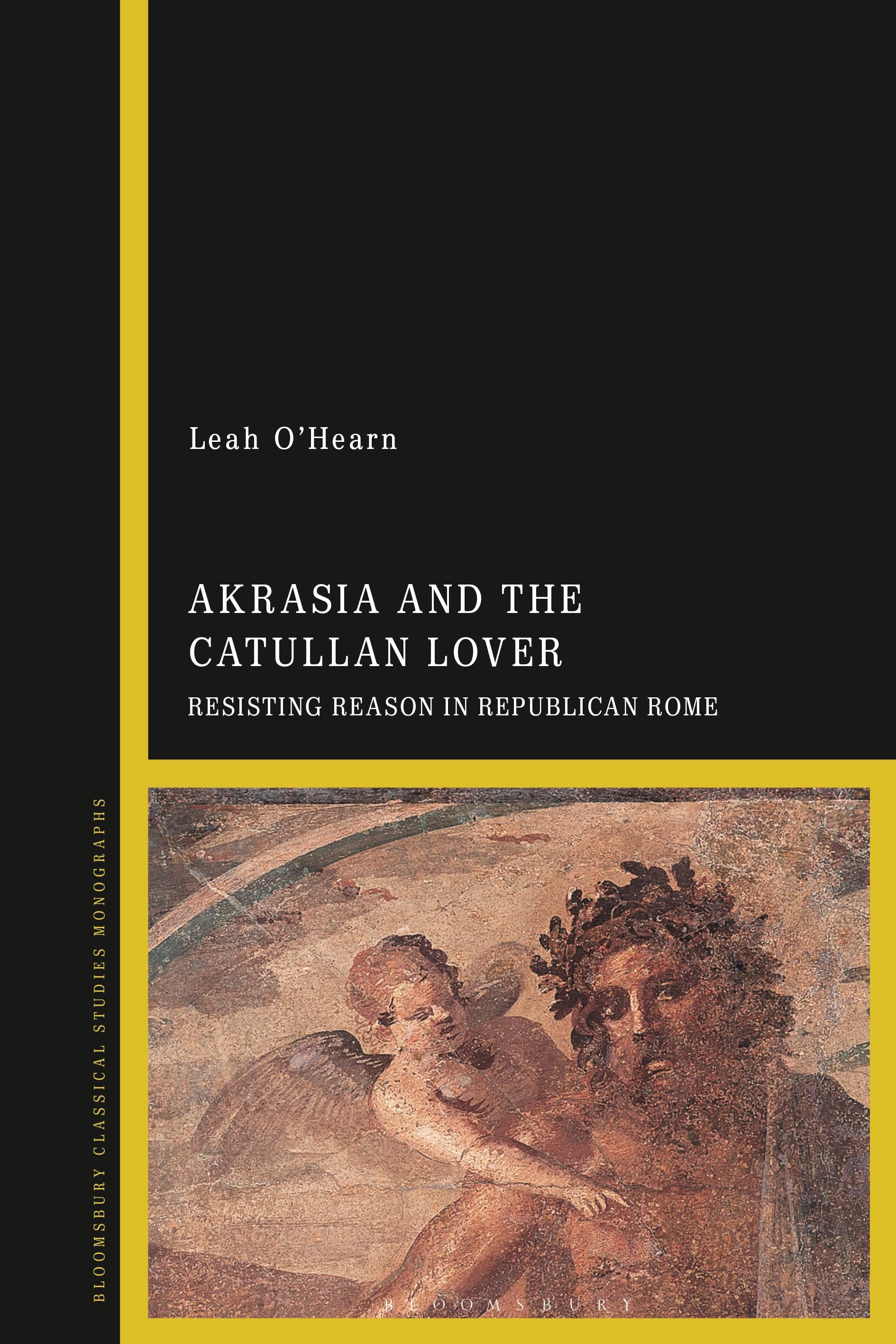
Exploring how the Roman poet Catullus portrays erotic desire as a problem of self-control, Leah O'Hearn argues that Catullus presents himself as a lover plagued by akrasia (the failure to act on better judgement) drawing on philosophical models, particularly Aristotle's, to frame his emotional conflict. Offering new insights into Roman masculinity and selfhood in the late Republic, this book follows the full range of Catullus' collection from the familiar Lesbia poems to the Juventius cycle, friendships, rivalries and mythological narratives.
Positioning Catullus within a broader literary engagement with philosophical thought, this book contributes to the growing field of classical emotion studies by tracing how conflicting desires were staged and moralised in Roman poetry. In doing so, it reveals how Catullus' conflicted speaker resists philosophical ideals of rational self-mastery, offering instead a poetic script for loving too much, regretting it, and doing it again anyway.
Positioning Catullus within a broader literary engagement with philosophical thought, this book contributes to the growing field of classical emotion studies by tracing how conflicting desires were staged and moralised in Roman poetry. In doing so, it reveals how Catullus' conflicted speaker resists philosophical ideals of rational self-mastery, offering instead a poetic script for loving too much, regretting it, and doing it again anyway.
Pay easily by card, Klarna, Apple Pay or Google Pay. Not happy? You always have a 14-day money-back guarantee. Read more in our terms. If you have any questions, email us at hello@memmo.org.
Memmo makes studying easier – wherever you are in the world. We bring your course books and smart study tools together in one place: summaries, quizzes, podcasts and flashcards. Plus Ted, your study buddy who answers anything you wonder. Over 75,000 students already study here – built to help you learn faster and stress less.