
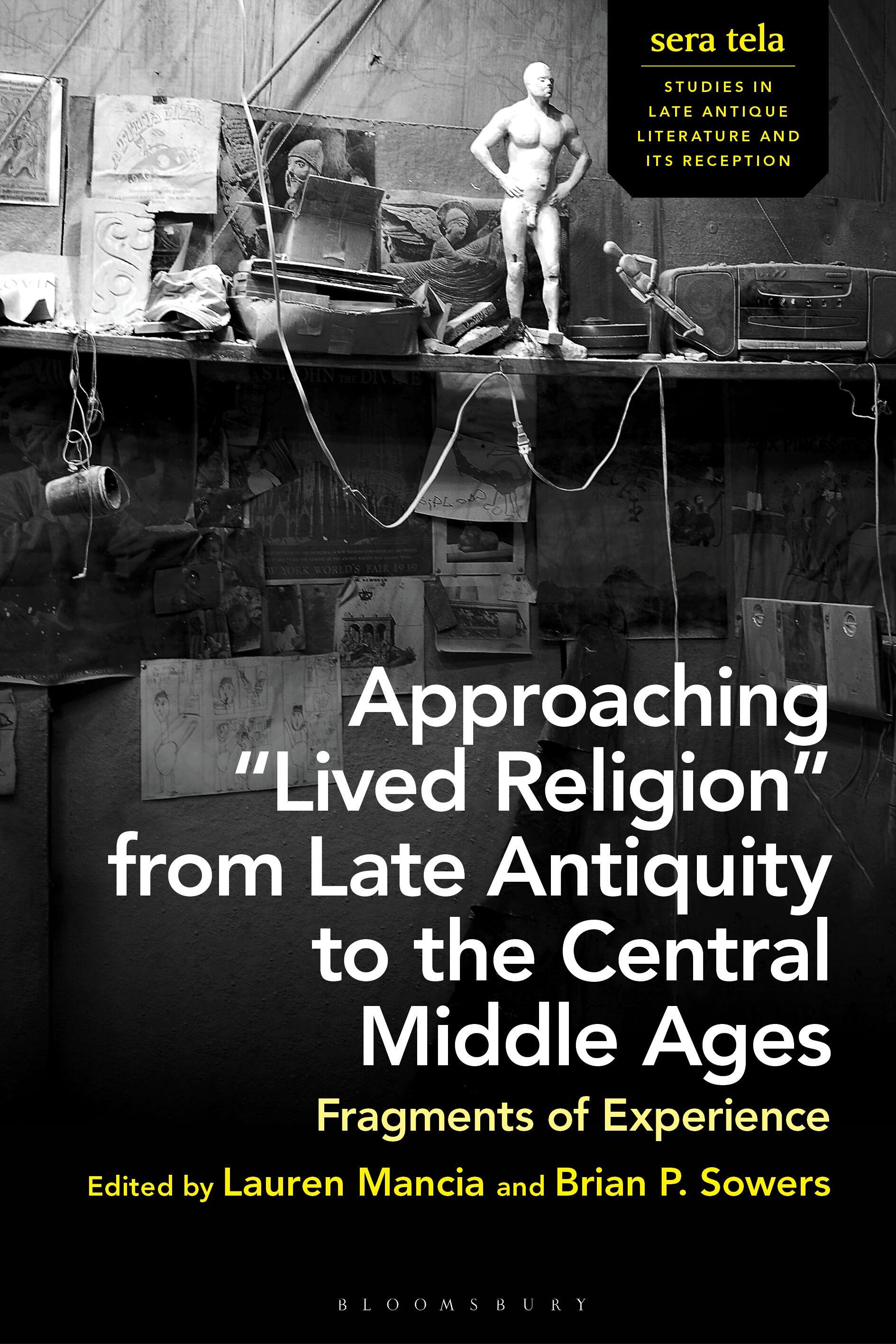
This edited volume brings together renowned specialists from History, Medieval Studies, Religious Studies, Archaeology and Art History to critically examine the topic of religious experience and so-called “lived religion” from Late Antiquity to the Central Middle Ages. With papers on Judaism, Christianity and Islam in this period, the volume is the first of its kind to consider this question in the early medieval era from a comparative perspective, drawing from a wide variety of theoretical literatures and multiple approaches, including performance theory, history of emotions, eco-criticism, queer phenomenology, history of experience and new materialism culture, to name just a few.
Recovering a historical community's religious experiences is a delicate, oftentimes difficult task. This is particularly true of religious experiences from Late Antiquity to the Central Middle Ages (c. 300–1100 C.E.), where the number and quality of sources for religious communities increase (compared to classical antiquity) yet have not reached the fevered pitch of the so-called High Middle Ages.
Recovering a historical community's religious experiences is a delicate, oftentimes difficult task. This is particularly true of religious experiences from Late Antiquity to the Central Middle Ages (c. 300–1100 C.E.), where the number and quality of sources for religious communities increase (compared to classical antiquity) yet have not reached the fevered pitch of the so-called High Middle Ages.
Pay easily by card, Klarna, Apple Pay or Google Pay. Not happy? You always have a 14-day money-back guarantee. Read more in our terms. If you have any questions, email us at hello@memmo.org.
Memmo makes studying easier – wherever you are in the world. We bring your course books and smart study tools together in one place: summaries, quizzes, podcasts and flashcards. Plus Ted, your study buddy who answers anything you wonder. Over 50,000 students already study here – built to help you learn faster and stress less.