
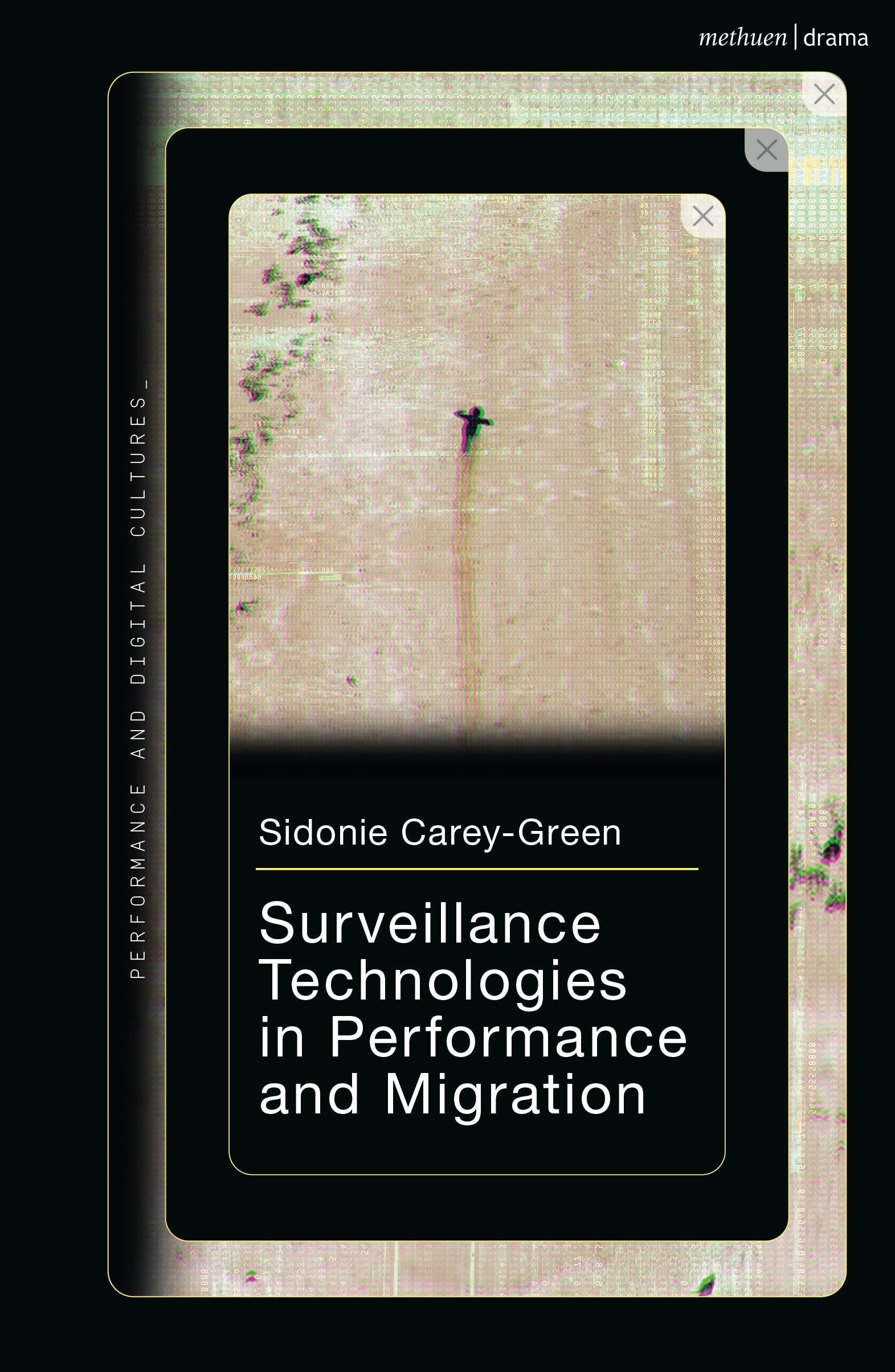
Reflecting on the violent impact of digital border systems and surveillance practices that dehumanises migrating bodies, this book draws parallels to similar harmful acts of identity marking in relation to performance and migration.
Performance practice creates an opportunity for bodies reduced to data at digital border zones to reject the numerical label forced upon them, making a more human and multifaceted counternarrative. Leading with the original concept of 'choreographing evidence', the book applies Practice as Research methods to performance works created with artist and refugee Tom Tegento: Uninvited (2021) and Contagion (2021). This work disrupts surveillance technologies and their violence towards bodies at borders as well as using them in alternative ways within performance practice. It considers how choreography which utilises both overt optical tracking technologies and GPS methods embedded in smart devices can enable othered bodies to redraw borders, reclaim narratives and resituate the self.
Alongside this PaR work, the book analyses contemporary performance which uses the body and/or technology to explore narratives of migration. It offers examples of UK and European works which critique the way migrating bodies are represented within performance, including Flight Pattern (2019), A Place to Sit (2021), The Walk (Little Amal) (2021) and Now is the Time to Say Nothing (2019). The insights gained offer a richer understanding of the power dynamics at digital borders, how they function, how they can be resisted and how they are felt and lived.
Performance practice creates an opportunity for bodies reduced to data at digital border zones to reject the numerical label forced upon them, making a more human and multifaceted counternarrative. Leading with the original concept of 'choreographing evidence', the book applies Practice as Research methods to performance works created with artist and refugee Tom Tegento: Uninvited (2021) and Contagion (2021). This work disrupts surveillance technologies and their violence towards bodies at borders as well as using them in alternative ways within performance practice. It considers how choreography which utilises both overt optical tracking technologies and GPS methods embedded in smart devices can enable othered bodies to redraw borders, reclaim narratives and resituate the self.
Alongside this PaR work, the book analyses contemporary performance which uses the body and/or technology to explore narratives of migration. It offers examples of UK and European works which critique the way migrating bodies are represented within performance, including Flight Pattern (2019), A Place to Sit (2021), The Walk (Little Amal) (2021) and Now is the Time to Say Nothing (2019). The insights gained offer a richer understanding of the power dynamics at digital borders, how they function, how they can be resisted and how they are felt and lived.
Pay easily by card, Klarna, Apple Pay or Google Pay. Not happy? You always have a 14-day money-back guarantee. Read more in our terms. If you have any questions, email us at hello@memmo.org.
Memmo makes studying easier – wherever you are in the world. We bring your course books and smart study tools together in one place: summaries, quizzes, podcasts and flashcards. Plus Ted, your study buddy who answers anything you wonder. Over 75,000 students already study here – built to help you learn faster and stress less.