
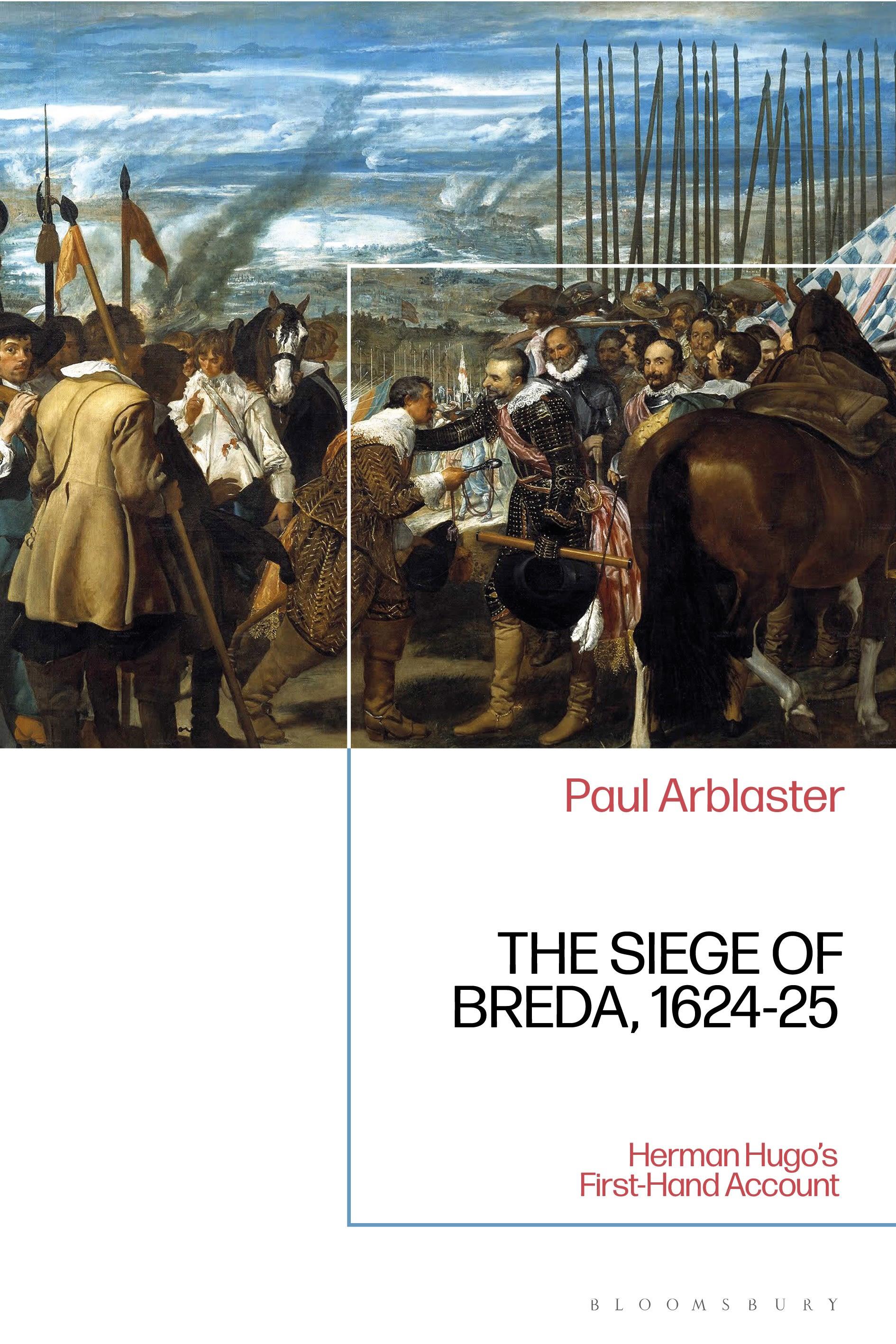
This book presents Herman Hugo's The Siege of Breda (1626) in a modern-spelling edition of Henry Gage's 1627 English translation, introduced and contextualised by Paul Arblaster.
Hugo's text is a classic of Latin Baroque historical writing that comprehensively recounts a nine-month military campaign in the Low Countries (1624-25) which was a showcase of early 17th-century siege warfare and attracted the attention and involvement of almost every country in Europe. His translator was an Englishman who served in the siege as a company captain.
Arblaster shines a light on Hugo's first-hand account of the siege, with its considerations of every aspect of the military operations and their human consequences. Hugo took part in the campaign himself as chaplain to the general who conducted the siege, Ambrogio Spinola, and so had privileged access to the decision-making process, as well as close familiarity with the various events and incidents that he recounts. Hugo also devotes attention to the moral and material state of the soldiery and of the besieged; describes individual actions, lapses, feats of heroism, duels, ambushes and stratagems; and considers the wider propaganda war that surrounded the siege. As a result, his book offers a contemporary commentary on the role of honour, reputation and image in 17th-century warfare, as well as vital insights into the perspective of one of the first and foremost celebrity generals of the time.
Hugo's text is a classic of Latin Baroque historical writing that comprehensively recounts a nine-month military campaign in the Low Countries (1624-25) which was a showcase of early 17th-century siege warfare and attracted the attention and involvement of almost every country in Europe. His translator was an Englishman who served in the siege as a company captain.
Arblaster shines a light on Hugo's first-hand account of the siege, with its considerations of every aspect of the military operations and their human consequences. Hugo took part in the campaign himself as chaplain to the general who conducted the siege, Ambrogio Spinola, and so had privileged access to the decision-making process, as well as close familiarity with the various events and incidents that he recounts. Hugo also devotes attention to the moral and material state of the soldiery and of the besieged; describes individual actions, lapses, feats of heroism, duels, ambushes and stratagems; and considers the wider propaganda war that surrounded the siege. As a result, his book offers a contemporary commentary on the role of honour, reputation and image in 17th-century warfare, as well as vital insights into the perspective of one of the first and foremost celebrity generals of the time.
Pay easily by card, Klarna, Apple Pay or Google Pay. Not happy? You always have a 14-day money-back guarantee. Read more in our terms. If you have any questions, email us at hello@memmo.org.
Memmo makes studying easier – wherever you are in the world. We bring your course books and smart study tools together in one place: summaries, quizzes, podcasts and flashcards. Plus Ted, your study buddy who answers anything you wonder. Over 50,000 students already study here – built to help you learn faster and stress less.