
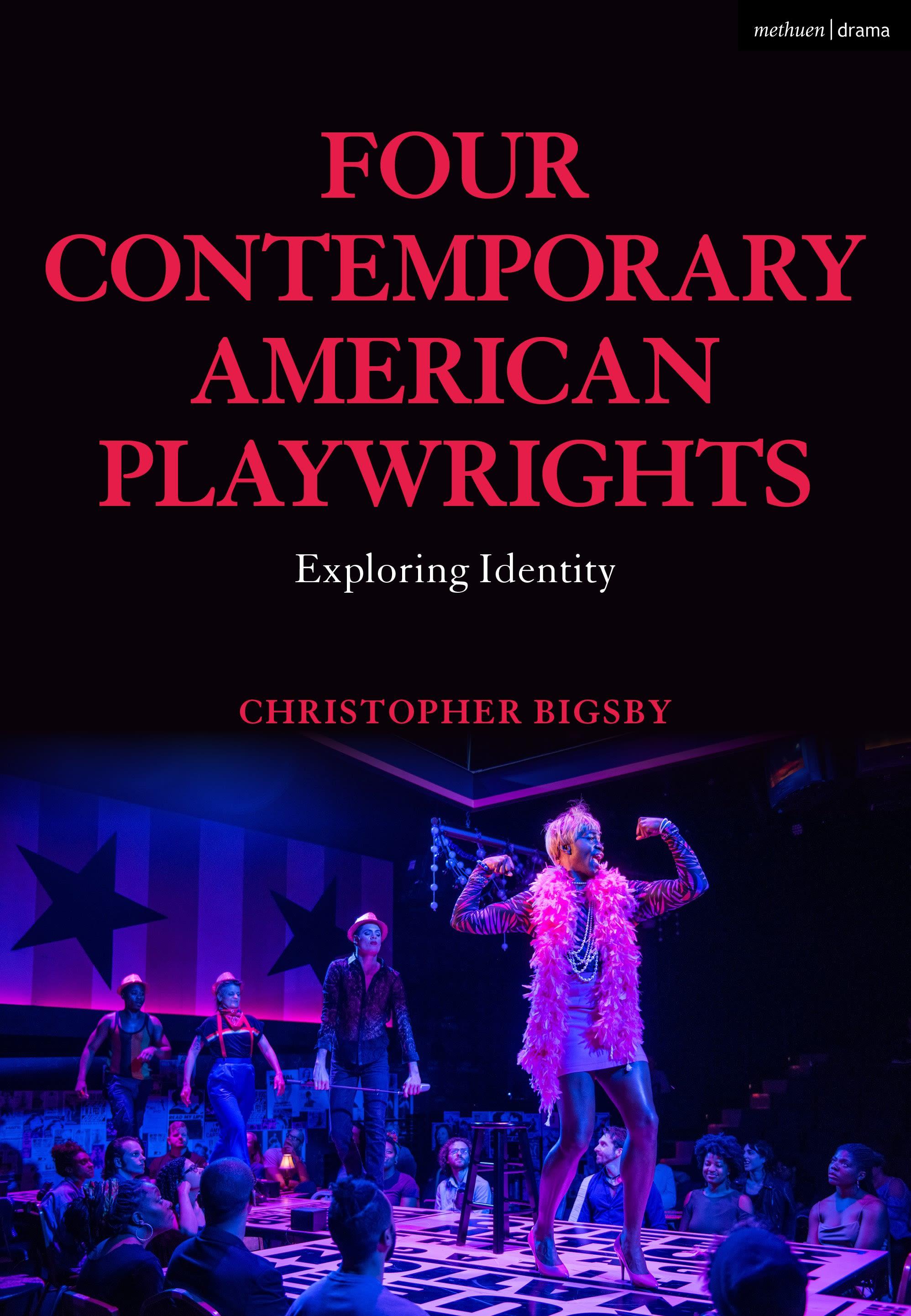
The fourth in a series of books exploring the careers of 28 contemporary American playwrights, this book covers the work of four male writers, Lucas Hnath, Branden Jacobs-Jenkins, Stephen Karam and Tarell Alvin McCraney.
The dramatic strategies of these award-winning playwrights range widely in styles and approach. Christopher Bigsby interweaves critical analysis of their work with biographical information, contemporary responses and the writers' own comments, drawn from interviews.
At a time when the question of identity is central in America, at both a personal and national level, how far do these playwrights see this as central or incidental to their work? Bigsby argues that Branden Jacobs-Jenkins' work often asks to what extent race is a construct, in work including neighbors, An Octoroon and Appropriate, while stepping away from race in Everybody. Tarell Alvin McCraney, conscious that being labelled as gay or black can influence the reception of his work, nonetheless embraces both in The Brothers Size, Choir Boy, Wig Out and his Oscar-winning film Moonlight.
If Stephen Karam, from a Lebanese-American family, engages with gay characters in Speech and Debate and The Humans, this book posits that he is also interested in suffering, something of which he has personal experience. Finally, Lucas Hnath approaches identity in another way, appropriating the lives of real characters, historical and contemporary, inhabiting and deconstructing them.
The dramatic strategies of these award-winning playwrights range widely in styles and approach. Christopher Bigsby interweaves critical analysis of their work with biographical information, contemporary responses and the writers' own comments, drawn from interviews.
At a time when the question of identity is central in America, at both a personal and national level, how far do these playwrights see this as central or incidental to their work? Bigsby argues that Branden Jacobs-Jenkins' work often asks to what extent race is a construct, in work including neighbors, An Octoroon and Appropriate, while stepping away from race in Everybody. Tarell Alvin McCraney, conscious that being labelled as gay or black can influence the reception of his work, nonetheless embraces both in The Brothers Size, Choir Boy, Wig Out and his Oscar-winning film Moonlight.
If Stephen Karam, from a Lebanese-American family, engages with gay characters in Speech and Debate and The Humans, this book posits that he is also interested in suffering, something of which he has personal experience. Finally, Lucas Hnath approaches identity in another way, appropriating the lives of real characters, historical and contemporary, inhabiting and deconstructing them.
Pay easily by card, Klarna, Apple Pay or Google Pay. Not happy? You always have a 14-day money-back guarantee. Read more in our terms. If you have any questions, email us at hello@memmo.org.
Memmo makes studying easier – wherever you are in the world. We bring your course books and smart study tools together in one place: summaries, quizzes, podcasts and flashcards. Plus Ted, your study buddy who answers anything you wonder. Over 75,000 students already study here – built to help you learn faster and stress less.