
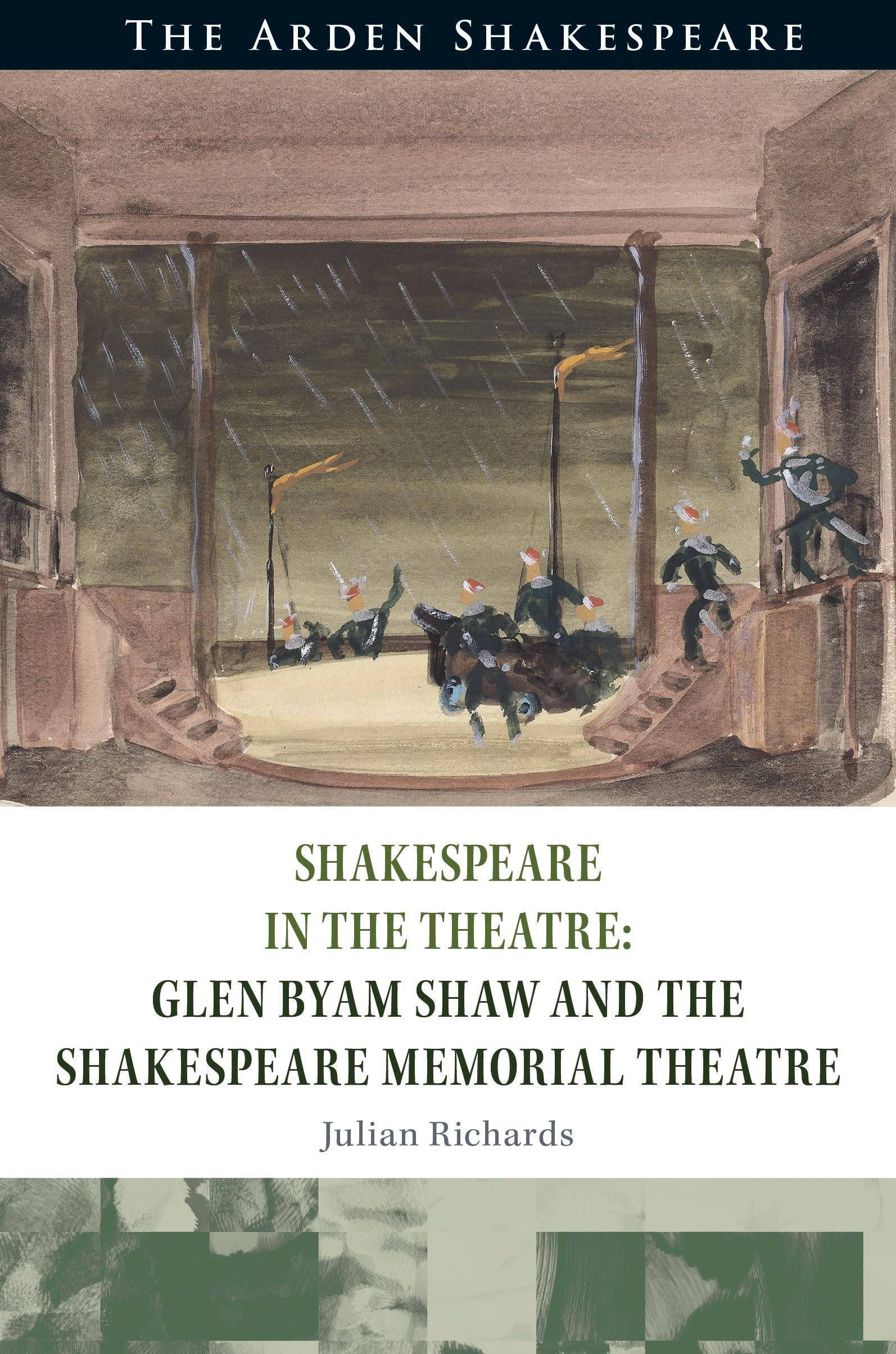
Drawing on interviews with contemporaries and his never-before-seen notebooks, this volume is the first book-length analysis on how Glen Byam Shaw's work on Shakespeare in the 1950s reshaped the landscape of British theatre.
Glen Byam Shaw was a pivotal figure in the development of Shakespearean performance in 20th-century Britain. From actor to director to army officer by 1942, his wartime experiences profoundly shaped his attitudes and understandings of Shakespeare. As Director of the Theatre at the Shakespeare Memorial Theatre in Stratford-upon-Avon from 1952 to 1959, Shaw oversaw a vital post-war transition that laid the groundwork for what became the Royal Shakespeare Company. Overlooked in great part due to his own humility, this study seeks to restore the reputation and legacy of one of Britain's most influential theatre directors.
Shaw's unique production practices and approaches, captured in the notebooks he kept on every play he directed, allow us to read his thoughts in his own words. Richards works closely with these preproduction materials, including detailed character analyses and interpretive notes on all aspects of the plays Shaw directed. A cross-section of Shaw's productions in Stratford are examined, including Coriolanus, Troilus and Cressida, Macbeth, The Merry Wives of Windsor, Othello and Hamlet, revealing a progression of Shaw's anti-war and anti-military readings of Shakespeare. In doing so it presents a revisionist history of the Royal Shakespeare Company, locating in Shaw's work the origins of many of its foundational principles, practices and approaches.
Glen Byam Shaw was a pivotal figure in the development of Shakespearean performance in 20th-century Britain. From actor to director to army officer by 1942, his wartime experiences profoundly shaped his attitudes and understandings of Shakespeare. As Director of the Theatre at the Shakespeare Memorial Theatre in Stratford-upon-Avon from 1952 to 1959, Shaw oversaw a vital post-war transition that laid the groundwork for what became the Royal Shakespeare Company. Overlooked in great part due to his own humility, this study seeks to restore the reputation and legacy of one of Britain's most influential theatre directors.
Shaw's unique production practices and approaches, captured in the notebooks he kept on every play he directed, allow us to read his thoughts in his own words. Richards works closely with these preproduction materials, including detailed character analyses and interpretive notes on all aspects of the plays Shaw directed. A cross-section of Shaw's productions in Stratford are examined, including Coriolanus, Troilus and Cressida, Macbeth, The Merry Wives of Windsor, Othello and Hamlet, revealing a progression of Shaw's anti-war and anti-military readings of Shakespeare. In doing so it presents a revisionist history of the Royal Shakespeare Company, locating in Shaw's work the origins of many of its foundational principles, practices and approaches.
Pay easily by card, Klarna, Apple Pay or Google Pay. Not happy? You always have a 14-day money-back guarantee. Read more in our terms. If you have any questions, email us at hello@memmo.org.
Memmo makes studying easier – wherever you are in the world. We bring your course books and smart study tools together in one place: summaries, quizzes, podcasts and flashcards. Plus Ted, your study buddy who answers anything you wonder. Over 75,000 students already study here – built to help you learn faster and stress less.