
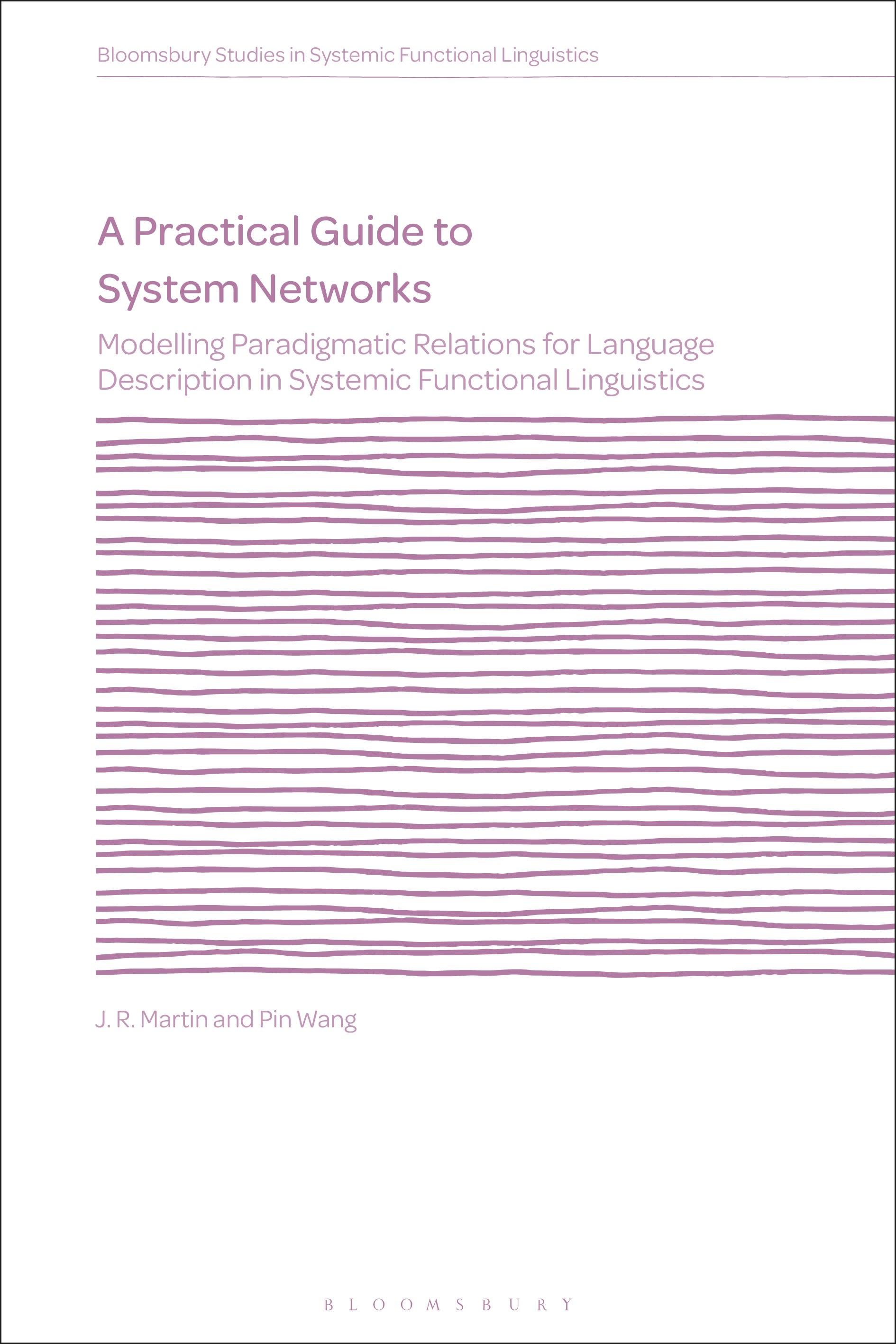
In Systemic Functional Linguistics (SFL), paradigmatic relations are formalised in system networks. This book provides a practical, step-by-step guide to designing system networks for language description, one of the key aspects of SFL theory and analysis.
Including examples from English, Chinese, Korean and Spanish, and exercises with answer keys for each of the main chapters, this book offers a broad coverage and guides learners through the process of designing system networks for the purpose of grammatical description in an accessible way.
Beginning with simple systems, the authors show how grammars involve a complex of relations, with some systems dependent on others and some working in parallel with simultaneous options. They introduce the reasoning involved in designing system networks, explaining how choices in grammatical systems are motivated in terms of their realisation in structure and how this relationship between the paradigmatic axis and the syntagmatic axis is formalised in SFL descriptions. In addition, the book helps readers to understand the theoretical architecture of SFL – including the dimensions of rank, metafunction and stratification.
With an introduction by Michael Alexander Kirkwood (M. A. K.) Halliday, who reviews the history of the development of his approach to system and structure and the use of system networks to formalise paradigmatic relations, this book is essential reading for all scholars of functional grammar and SFL. It will also appeal to researchers interested in theoretical linguistics from the perspective of the history of linguistics and different schools of linguistics.
Including examples from English, Chinese, Korean and Spanish, and exercises with answer keys for each of the main chapters, this book offers a broad coverage and guides learners through the process of designing system networks for the purpose of grammatical description in an accessible way.
Beginning with simple systems, the authors show how grammars involve a complex of relations, with some systems dependent on others and some working in parallel with simultaneous options. They introduce the reasoning involved in designing system networks, explaining how choices in grammatical systems are motivated in terms of their realisation in structure and how this relationship between the paradigmatic axis and the syntagmatic axis is formalised in SFL descriptions. In addition, the book helps readers to understand the theoretical architecture of SFL – including the dimensions of rank, metafunction and stratification.
With an introduction by Michael Alexander Kirkwood (M. A. K.) Halliday, who reviews the history of the development of his approach to system and structure and the use of system networks to formalise paradigmatic relations, this book is essential reading for all scholars of functional grammar and SFL. It will also appeal to researchers interested in theoretical linguistics from the perspective of the history of linguistics and different schools of linguistics.
Pay easily by card, Klarna, Apple Pay or Google Pay. Not happy? You always have a 14-day money-back guarantee. Read more in our terms. If you have any questions, email us at hello@memmo.org.
Memmo makes studying easier – wherever you are in the world. We bring your course books and smart study tools together in one place: summaries, quizzes, podcasts and flashcards. Plus Ted, your study buddy who answers anything you wonder. Over 75,000 students already study here – built to help you learn faster and stress less.