
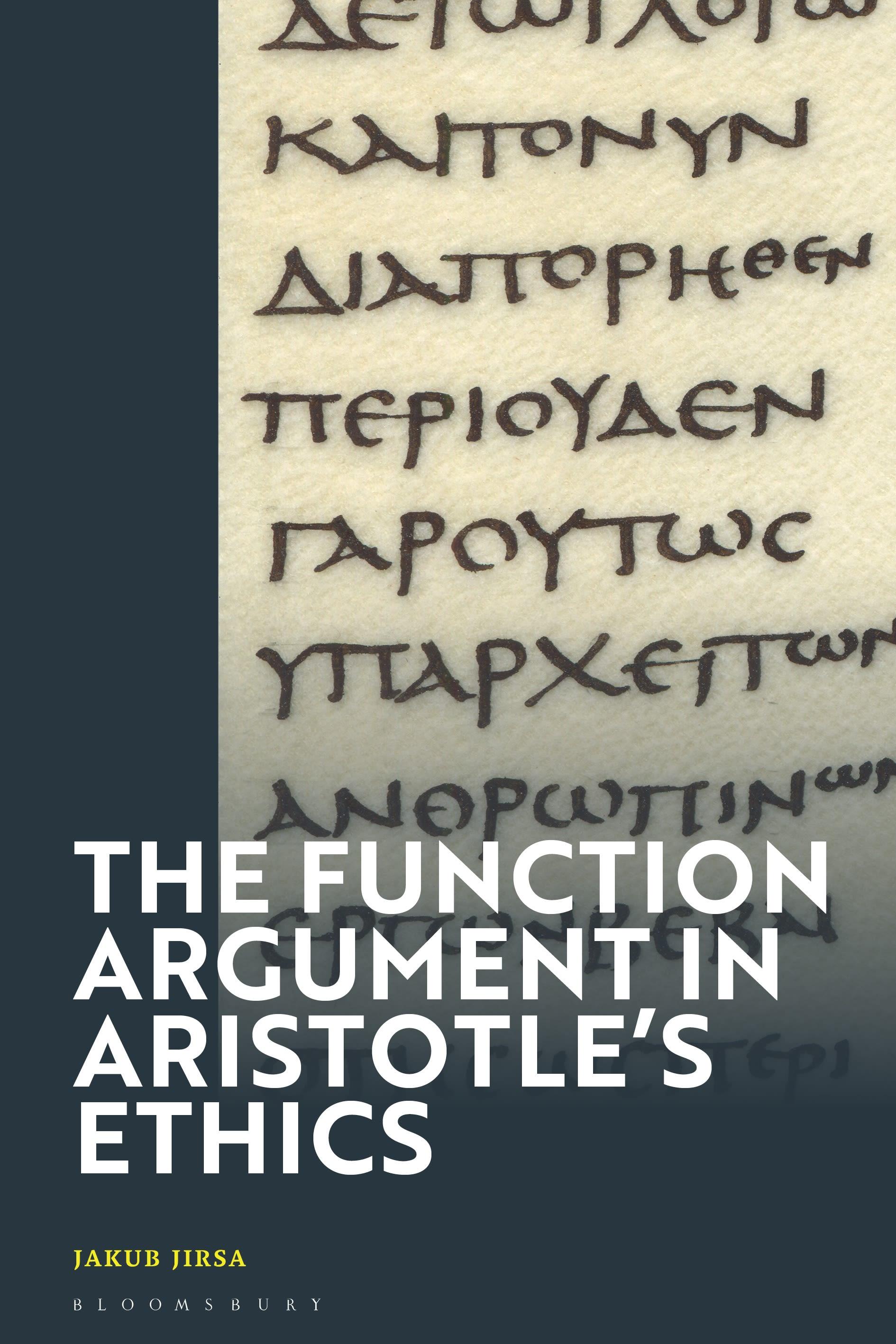
Jakub Jirsa provides the first book-length study of the “function argument”, outlining its central importance for Aristotle's ethics and his understanding of happiness and living well.
The Function Argument in Aristotle's Ethics gives a systematic account of the development of the function argument from Plato's Republic to the Nicomachean Ethics, with an explication of the interdependence between different versions of the argument which appear in Aristotle's ethical writings. In careful close readings of Aristotle's Proptrepticus, the Eudemian Ethics and the Nicomachean Ethics, Jirsa makes the case that the function (ergon) argument – that the function of human beings is virtuous activity of the rational part of the soul – serves as a transition from formal to substantial ethical debate and helps to differentiate between happiness and the happy life. The book then evaluates Aristotle's function argument against contemporary critiques.
With English translations of sections of the Proptrepticus based on the recent reconstruction from ancient sources and fragments, this volume offers a novel context for understanding a key element of Aristotle's ethical works, and is an ideal reference for those studying Aristotelian ethics, virtue ethics and the history of philosophy.
The Function Argument in Aristotle's Ethics gives a systematic account of the development of the function argument from Plato's Republic to the Nicomachean Ethics, with an explication of the interdependence between different versions of the argument which appear in Aristotle's ethical writings. In careful close readings of Aristotle's Proptrepticus, the Eudemian Ethics and the Nicomachean Ethics, Jirsa makes the case that the function (ergon) argument – that the function of human beings is virtuous activity of the rational part of the soul – serves as a transition from formal to substantial ethical debate and helps to differentiate between happiness and the happy life. The book then evaluates Aristotle's function argument against contemporary critiques.
With English translations of sections of the Proptrepticus based on the recent reconstruction from ancient sources and fragments, this volume offers a novel context for understanding a key element of Aristotle's ethical works, and is an ideal reference for those studying Aristotelian ethics, virtue ethics and the history of philosophy.
Pay easily by card, Klarna, Apple Pay or Google Pay. Not happy? You always have a 14-day money-back guarantee. Read more in our terms. If you have any questions, email us at hello@memmo.org.
Memmo makes studying easier – wherever you are in the world. We bring your course books and smart study tools together in one place: summaries, quizzes, podcasts and flashcards. Plus Ted, your study buddy who answers anything you wonder. Over 50,000 students already study here – built to help you learn faster and stress less.