
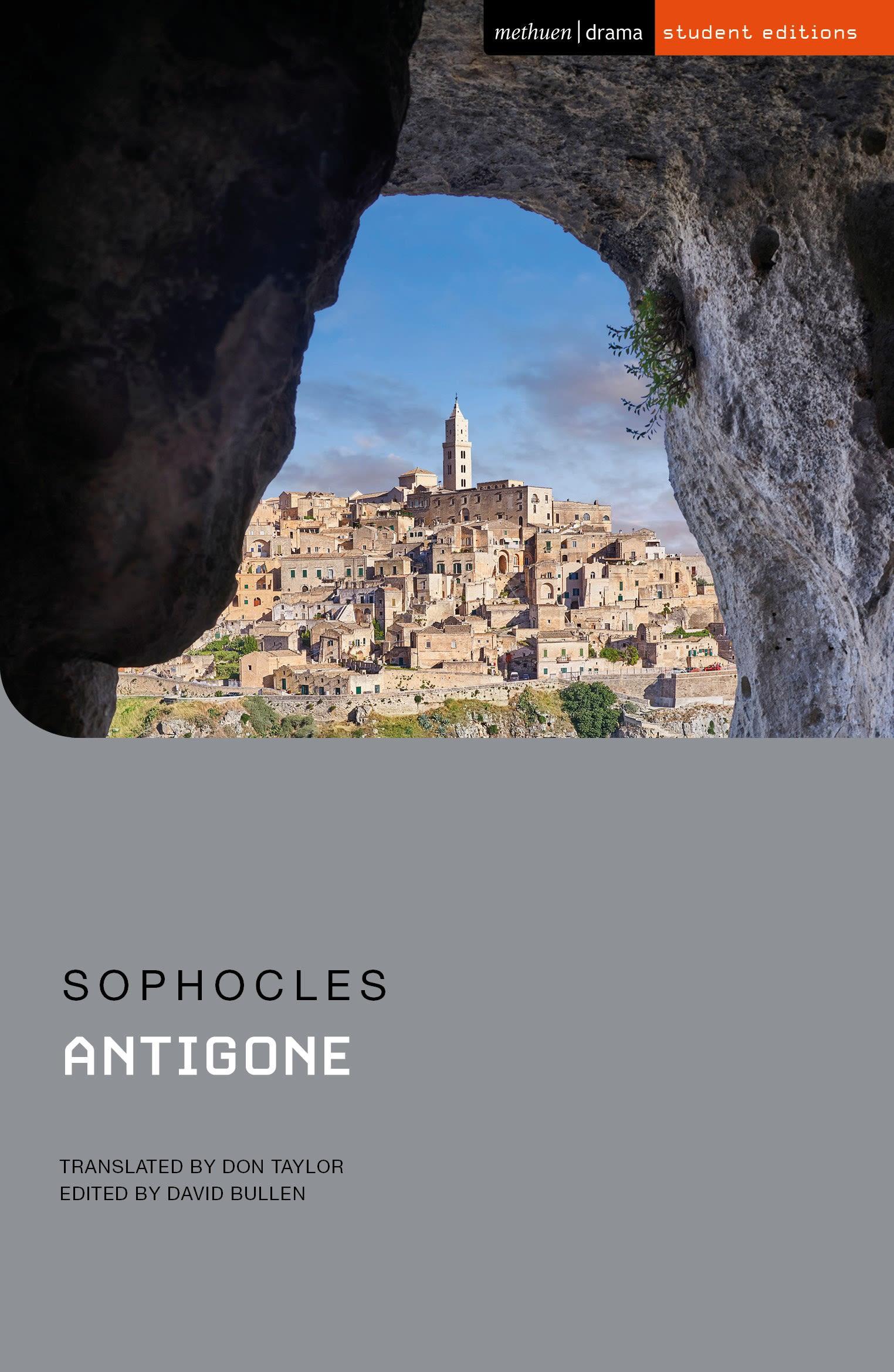
Sophocles' great tragic play dramatises the clash between family and the city and, through high poetry and deep tragedy, presents an irreconcilable but equally balanced conflict.
Sophoclean heroine Antigone has become a cultural archetype - the personification of personal integrity and political freedom, and the play has been staged and adapted numerous times over the centuries.
It is published here in Don Taylor's classic translation with commentary and notes by David Bullen. The commentary looks at the original performance conditions that would have shaped the impact of Antigone in 441 BCE; key choices made by the translator; key ideas in the play taken up by philosophers such as Hegel and Butler; and more recent translations and adaptations by the likes of Bertolt Brecht, Anne Carson, Moira Buffini, Kamila Shamsie and Inua Ellams.
Sophoclean heroine Antigone has become a cultural archetype - the personification of personal integrity and political freedom, and the play has been staged and adapted numerous times over the centuries.
It is published here in Don Taylor's classic translation with commentary and notes by David Bullen. The commentary looks at the original performance conditions that would have shaped the impact of Antigone in 441 BCE; key choices made by the translator; key ideas in the play taken up by philosophers such as Hegel and Butler; and more recent translations and adaptations by the likes of Bertolt Brecht, Anne Carson, Moira Buffini, Kamila Shamsie and Inua Ellams.
Pay easily by card, Klarna, Apple Pay or Google Pay. Not happy? You always have a 14-day money-back guarantee. Read more in our terms. If you have any questions, email us at hello@memmo.org.
Memmo makes studying easier – wherever you are in the world. We bring your course books and smart study tools together in one place: summaries, quizzes, podcasts and flashcards. Plus Ted, your study buddy who answers anything you wonder. Over 75,000 students already study here – built to help you learn faster and stress less.