
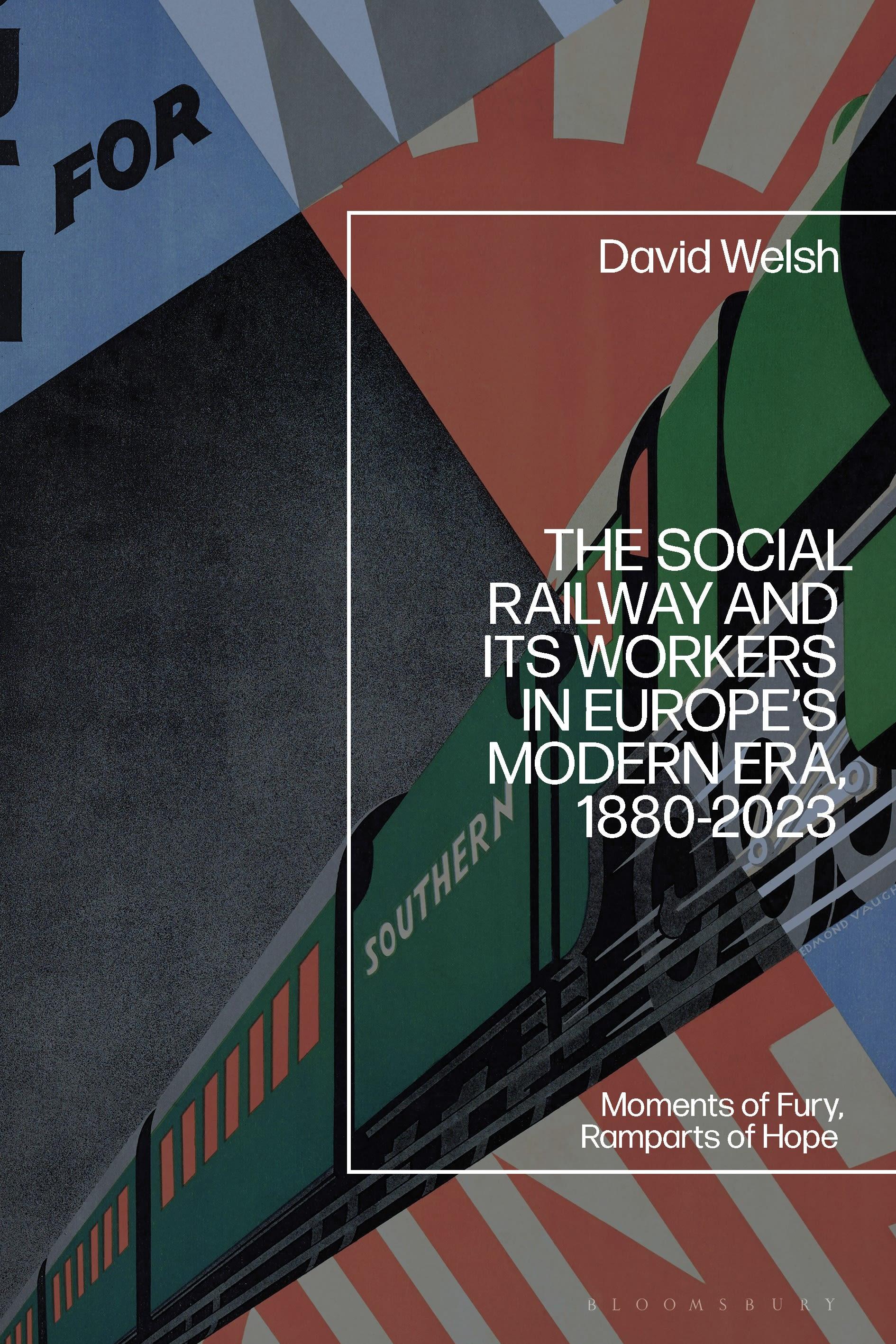
This thematically arranged book examines the evolution of rail transport and a number of railway workforces across Europe in the modern era, from around 1880 to 2023.
Each chapter explores how, within the context of a social railway, rail workers developed distinct national and international perspectives on the nature of their work and their roles in societies and states. David Welsh convincingly argues that workers formed a raft of entirely new and enduring organisations such as trade unions that, in turn, became ramparts of hope. Welsh goes on to consider how the insurgent character of these organisations produced moments of fury during tumultuous periods in the 20th century. The Social Railway and its Workers in Europe's Modern Era, 1880-2023 explores the national and European contexts in which both characteristics came to the fore, including the ecology of fossil fuel technology (coal and oil). Above all, it argues that social, economic and political forces are not simply external 'scene-shifting' but integral to the history of railway systems.
The book examines the cultural construction of European railways through literature, art and other forms of writing as well as recent oral history. It also includes a detailed investigation of the role played by nationalisation and public ownership in Europe. In the context of neoliberalism and globalization, it proposes a 21st century programme for the social railway.
Each chapter explores how, within the context of a social railway, rail workers developed distinct national and international perspectives on the nature of their work and their roles in societies and states. David Welsh convincingly argues that workers formed a raft of entirely new and enduring organisations such as trade unions that, in turn, became ramparts of hope. Welsh goes on to consider how the insurgent character of these organisations produced moments of fury during tumultuous periods in the 20th century. The Social Railway and its Workers in Europe's Modern Era, 1880-2023 explores the national and European contexts in which both characteristics came to the fore, including the ecology of fossil fuel technology (coal and oil). Above all, it argues that social, economic and political forces are not simply external 'scene-shifting' but integral to the history of railway systems.
The book examines the cultural construction of European railways through literature, art and other forms of writing as well as recent oral history. It also includes a detailed investigation of the role played by nationalisation and public ownership in Europe. In the context of neoliberalism and globalization, it proposes a 21st century programme for the social railway.
Pay easily by card, Klarna, Apple Pay or Google Pay. Not happy? You always have a 14-day money-back guarantee. Read more in our terms. If you have any questions, email us at hello@memmo.org.
Memmo makes studying easier – wherever you are in the world. We bring your course books and smart study tools together in one place: summaries, quizzes, podcasts and flashcards. Plus Ted, your study buddy who answers anything you wonder. Over 50,000 students already study here – built to help you learn faster and stress less.