
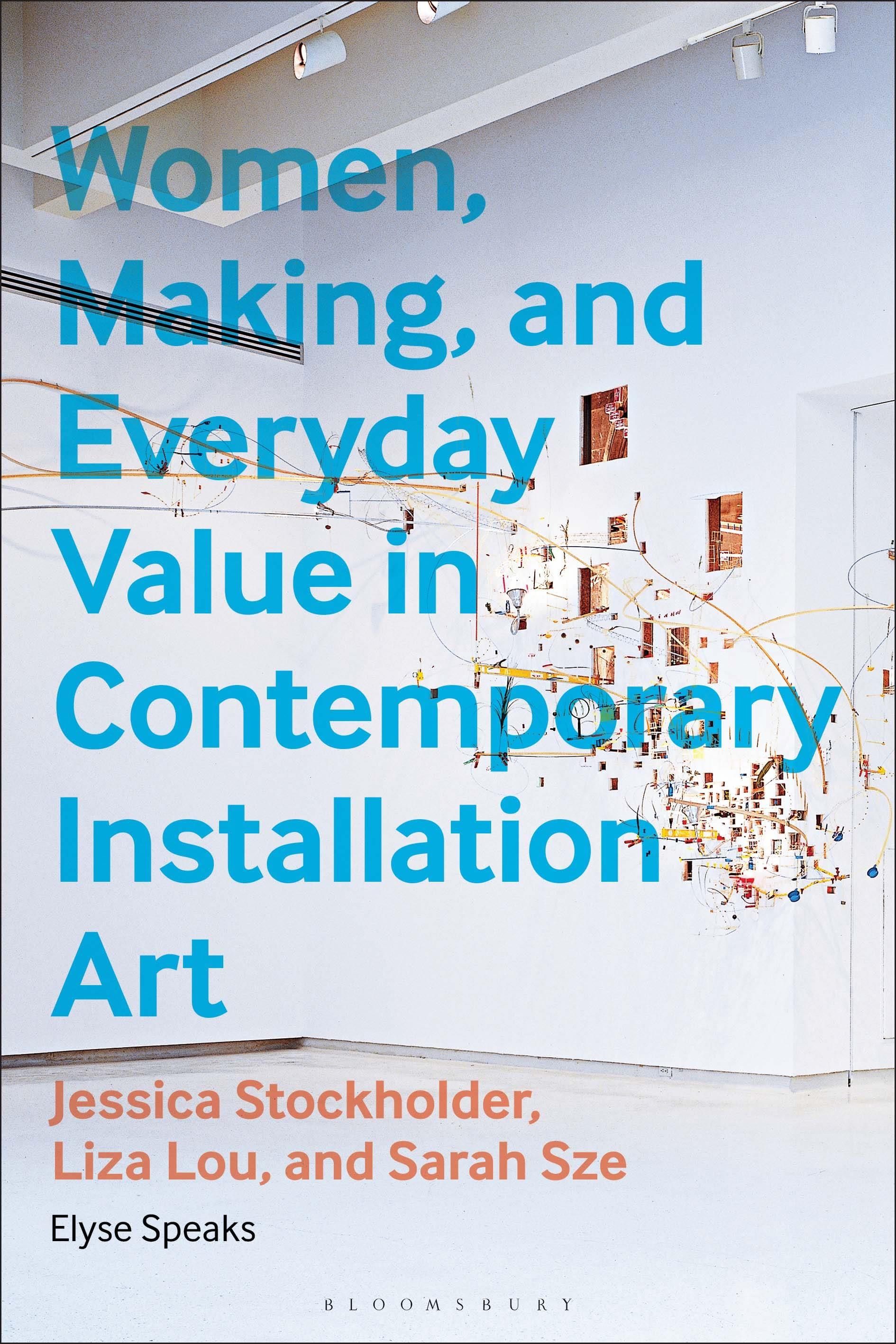
What can art offer as it extends beyond aesthetic categories and their boundaries?
Examining the work of three major American contemporary artists, Jessica Stockholder, Liza Lou, and Sarah Sze, this book explores their installation-specific practice in rich detail, connecting it to wider issues surrounding feminist art, everyday objects, DIY spaces and practice in the 1990s and broader contemporary period.
Feminist art practice has long invested in the shape, routines, and materials of everyday life but the 1990s saw a significant return of handwork and process-driven practice within installation art. This book highlights the capacity for artwork to promote alternate categories of aesthetic experience through investigations of inventive and alternative materials and processes. By looking across these artists' contrasting practices and approaches to intermediality, the book shows how their work makes connections between the mundane and surprising, the banal and transformed, and the real and imaginary.
Richly illustrated and drawing on interviews with Stockholder, Lou and Sze, each chapter presents a case study for how these artists have questioned the aesthetics of the everyday through their provocative use of everyday objects, craft materials and making techniques. Each artwork is situated within broader issues surrounding materiality and contemporary art, and each artist examined in relation to their contemporaries, including Abraham Cruzvillegas, Haegue Yang, Rachel Harrison, Thomas Hirschhorn, Cady Noland, Gabriel Orozco, Rikrit Tiravanija and Do Ho Suh. What emerges is a new understanding of aesthetic and material value, and the legacy of experimental forms of artistic production.
Examining the work of three major American contemporary artists, Jessica Stockholder, Liza Lou, and Sarah Sze, this book explores their installation-specific practice in rich detail, connecting it to wider issues surrounding feminist art, everyday objects, DIY spaces and practice in the 1990s and broader contemporary period.
Feminist art practice has long invested in the shape, routines, and materials of everyday life but the 1990s saw a significant return of handwork and process-driven practice within installation art. This book highlights the capacity for artwork to promote alternate categories of aesthetic experience through investigations of inventive and alternative materials and processes. By looking across these artists' contrasting practices and approaches to intermediality, the book shows how their work makes connections between the mundane and surprising, the banal and transformed, and the real and imaginary.
Richly illustrated and drawing on interviews with Stockholder, Lou and Sze, each chapter presents a case study for how these artists have questioned the aesthetics of the everyday through their provocative use of everyday objects, craft materials and making techniques. Each artwork is situated within broader issues surrounding materiality and contemporary art, and each artist examined in relation to their contemporaries, including Abraham Cruzvillegas, Haegue Yang, Rachel Harrison, Thomas Hirschhorn, Cady Noland, Gabriel Orozco, Rikrit Tiravanija and Do Ho Suh. What emerges is a new understanding of aesthetic and material value, and the legacy of experimental forms of artistic production.
Pay easily by card, Klarna, Apple Pay or Google Pay. Not happy? You always have a 14-day money-back guarantee. Read more in our terms. If you have any questions, email us at hello@memmo.org.
Memmo makes studying easier – wherever you are in the world. We bring your course books and smart study tools together in one place: summaries, quizzes, podcasts and flashcards. Plus Ted, your study buddy who answers anything you wonder. Over 50,000 students already study here – built to help you learn faster and stress less.