
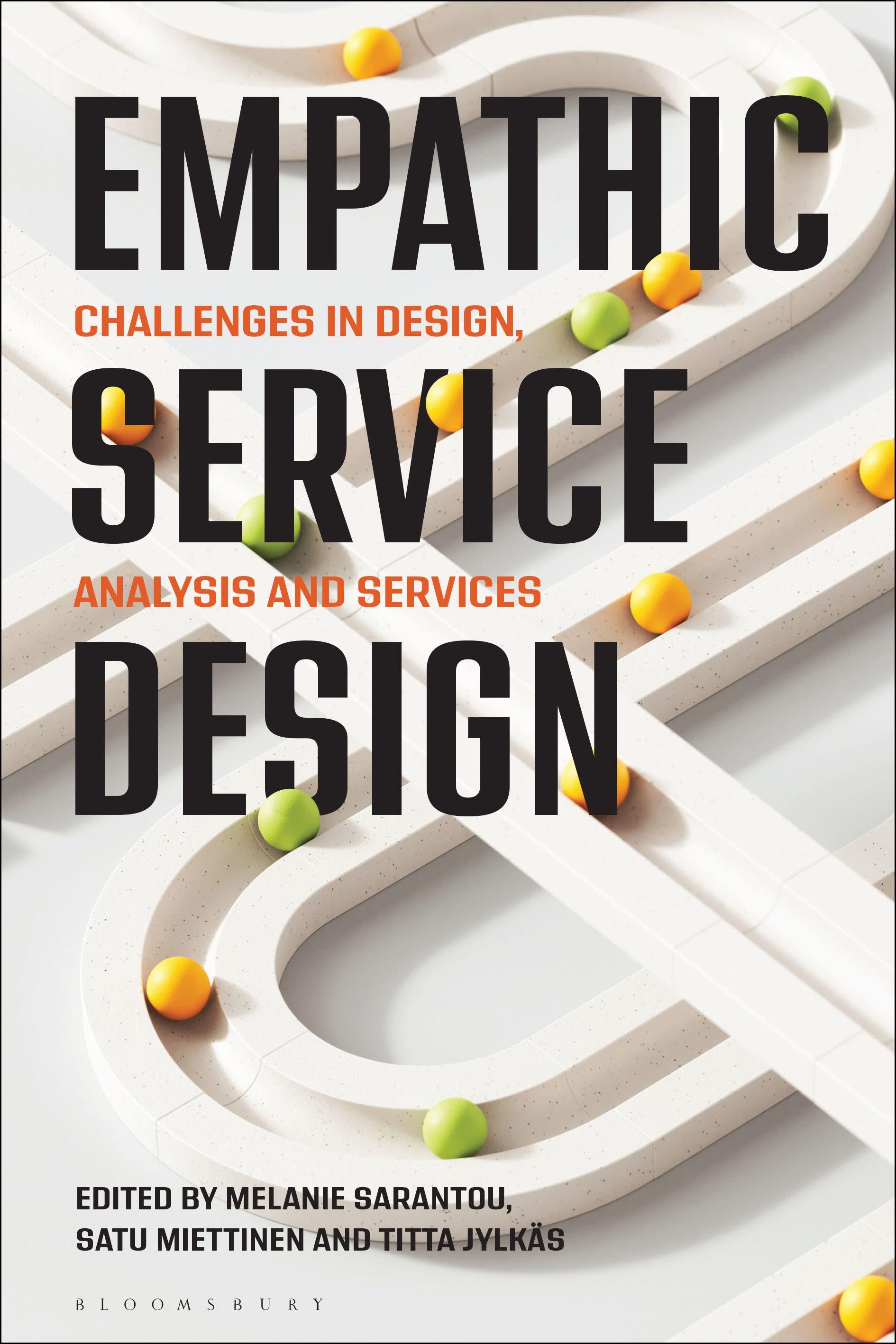
Through case studies from across the globe, this book helps designers understand how forward-looking service prototyping, analysis and tools can promote and create empathic, emotion-oriented and relevant services.
Despite services being at the core of organisations, to create service flows, designers, groups and their diverse stakeholders must negotiate ever more complex and hybrid interactions between human and more-than-human role players in service delivery. The challenge lies in delivering empathic, relevant and desirable services, despite these complexities. New knowledge is needed to bridge the gaps, uncertainties and even anxieties that organisations face in making their service delivery empathic and keeping them purposeful to users.
Addressing problems within service delivery like empathy fatigue, poor collaboration, and siloed work experiences that lead to poorly-functioning systems, the authors suggest concrete solutions for developing empathetic approaches and tools with consideration for the needs of participants. The book critically examines the role of empathy, and explores how compassionate understanding of the end-user is key to success.
Case studies include mapping of children's services, wearable technologies for pandemics, understanding cultural sensitivity, emojis and chat bots, and AI used in care settings.
Despite services being at the core of organisations, to create service flows, designers, groups and their diverse stakeholders must negotiate ever more complex and hybrid interactions between human and more-than-human role players in service delivery. The challenge lies in delivering empathic, relevant and desirable services, despite these complexities. New knowledge is needed to bridge the gaps, uncertainties and even anxieties that organisations face in making their service delivery empathic and keeping them purposeful to users.
Addressing problems within service delivery like empathy fatigue, poor collaboration, and siloed work experiences that lead to poorly-functioning systems, the authors suggest concrete solutions for developing empathetic approaches and tools with consideration for the needs of participants. The book critically examines the role of empathy, and explores how compassionate understanding of the end-user is key to success.
Case studies include mapping of children's services, wearable technologies for pandemics, understanding cultural sensitivity, emojis and chat bots, and AI used in care settings.
Pages: 376
Category: Konst, Design & Fotografi
e-ISBN: 9781350476417
Shipping weight: 1.2 kg
Ships in: 1-2 days
Pay easily by card, Klarna, Apple Pay or Google Pay. Not happy? You always have a 14-day money-back guarantee. Read more in our terms. If you have any questions, email us at hello@memmo.org.
Memmo makes studying easier – wherever you are in the world. We bring your course books and smart study tools together in one place: summaries, quizzes, podcasts and flashcards. Plus Ted, your study buddy who answers anything you wonder. Over 50,000 students already study here – built to help you learn faster and stress less.