
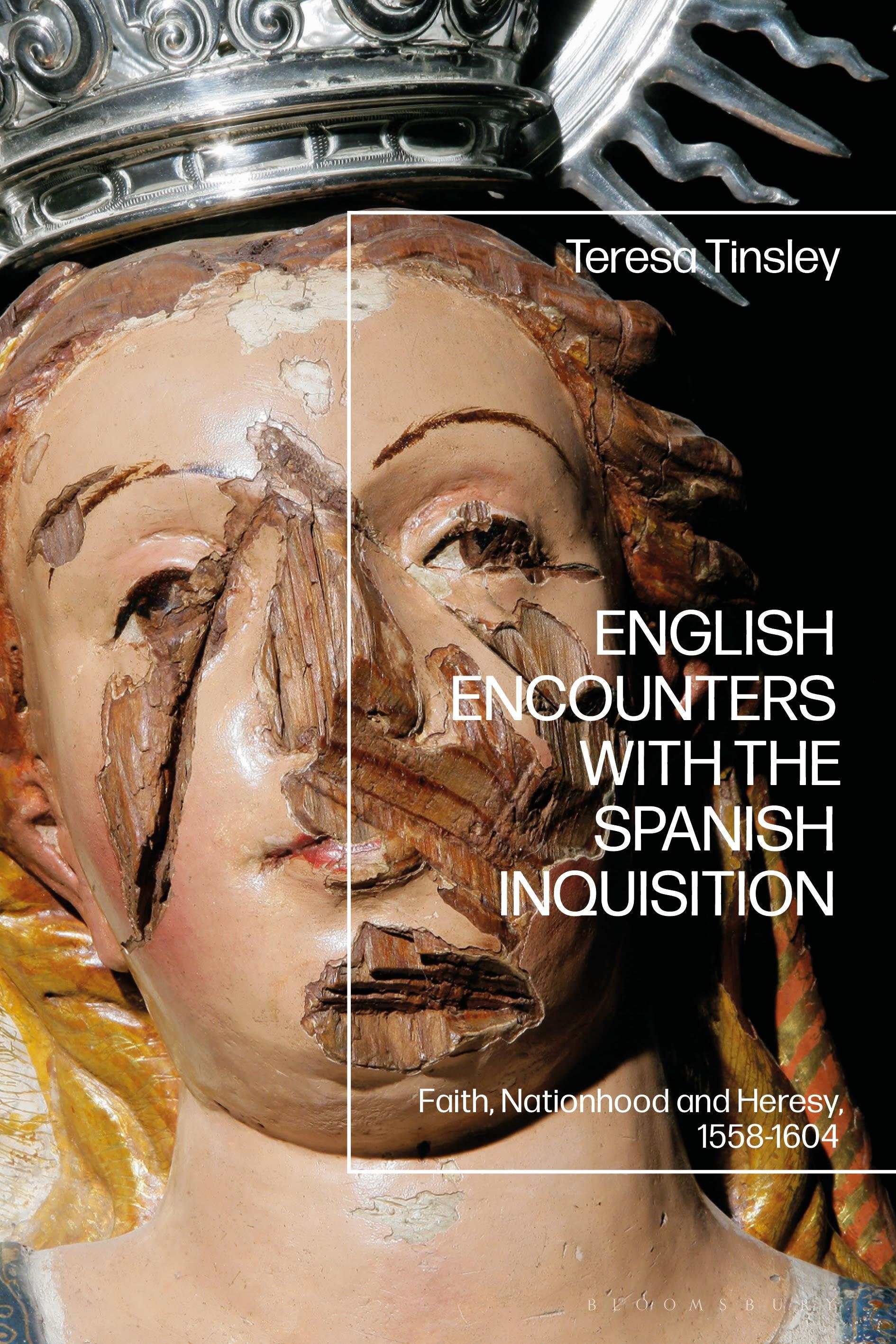
Between 1558 and 1604, more than 400 subjects of Queen Elizabeth I found themselves in contact with the Spanish Inquisition. This book draws on the records of their experiences and testimonies to provide a fresh perspective on a crucial period of religious divergence.
Teresa Tinsley examines the varied experiences of merchants, sailors, diplomats and prisoners of war, highlighting cases of persecution, conversion, ambivalence, and cultural adaptation. Paying close attention to an impressive assemblage of original sources, Tinsley challenges exaggerated claims about the cruelty and scale of the Inquisition's actions against the English, which fed contemporary anti-Spanish propaganda and continue to colour perceptions of early modern globalisation and European colonisation today. She shows that there were witnesses, litigants and collaborators as well as defendants, not all were Protestant, very few were treated harshly and most attempted, with variable success, to bridge the Reformation gap between Elizabeth's Protestant England and Philip II's post-Tridentine Spain.
Their stories provide not only a comprehensive rebuttal of notions derived from the Black Legend, but also privileged access to the historical reality of the lives of individuals at the interface of opposed religious cultures. Cross cultural contact – whether through trade or maritime conflict – brought individuals face to face with differences in religious faith and practice and those interrogated by the Inquisition were required to articulate these. This has resulted in a unique corpus of historical evidence which exposes the multi-dimensional and fluid nature of religious affiliation, nationhood, and personal identity which drove conflict between the two nations.
Teresa Tinsley examines the varied experiences of merchants, sailors, diplomats and prisoners of war, highlighting cases of persecution, conversion, ambivalence, and cultural adaptation. Paying close attention to an impressive assemblage of original sources, Tinsley challenges exaggerated claims about the cruelty and scale of the Inquisition's actions against the English, which fed contemporary anti-Spanish propaganda and continue to colour perceptions of early modern globalisation and European colonisation today. She shows that there were witnesses, litigants and collaborators as well as defendants, not all were Protestant, very few were treated harshly and most attempted, with variable success, to bridge the Reformation gap between Elizabeth's Protestant England and Philip II's post-Tridentine Spain.
Their stories provide not only a comprehensive rebuttal of notions derived from the Black Legend, but also privileged access to the historical reality of the lives of individuals at the interface of opposed religious cultures. Cross cultural contact – whether through trade or maritime conflict – brought individuals face to face with differences in religious faith and practice and those interrogated by the Inquisition were required to articulate these. This has resulted in a unique corpus of historical evidence which exposes the multi-dimensional and fluid nature of religious affiliation, nationhood, and personal identity which drove conflict between the two nations.
Pay easily by card, Klarna, Apple Pay or Google Pay. Not happy? You always have a 14-day money-back guarantee. Read more in our terms. If you have any questions, email us at hello@memmo.org.
Memmo makes studying easier – wherever you are in the world. We bring your course books and smart study tools together in one place: summaries, quizzes, podcasts and flashcards. Plus Ted, your study buddy who answers anything you wonder. Over 50,000 students already study here – built to help you learn faster and stress less.