
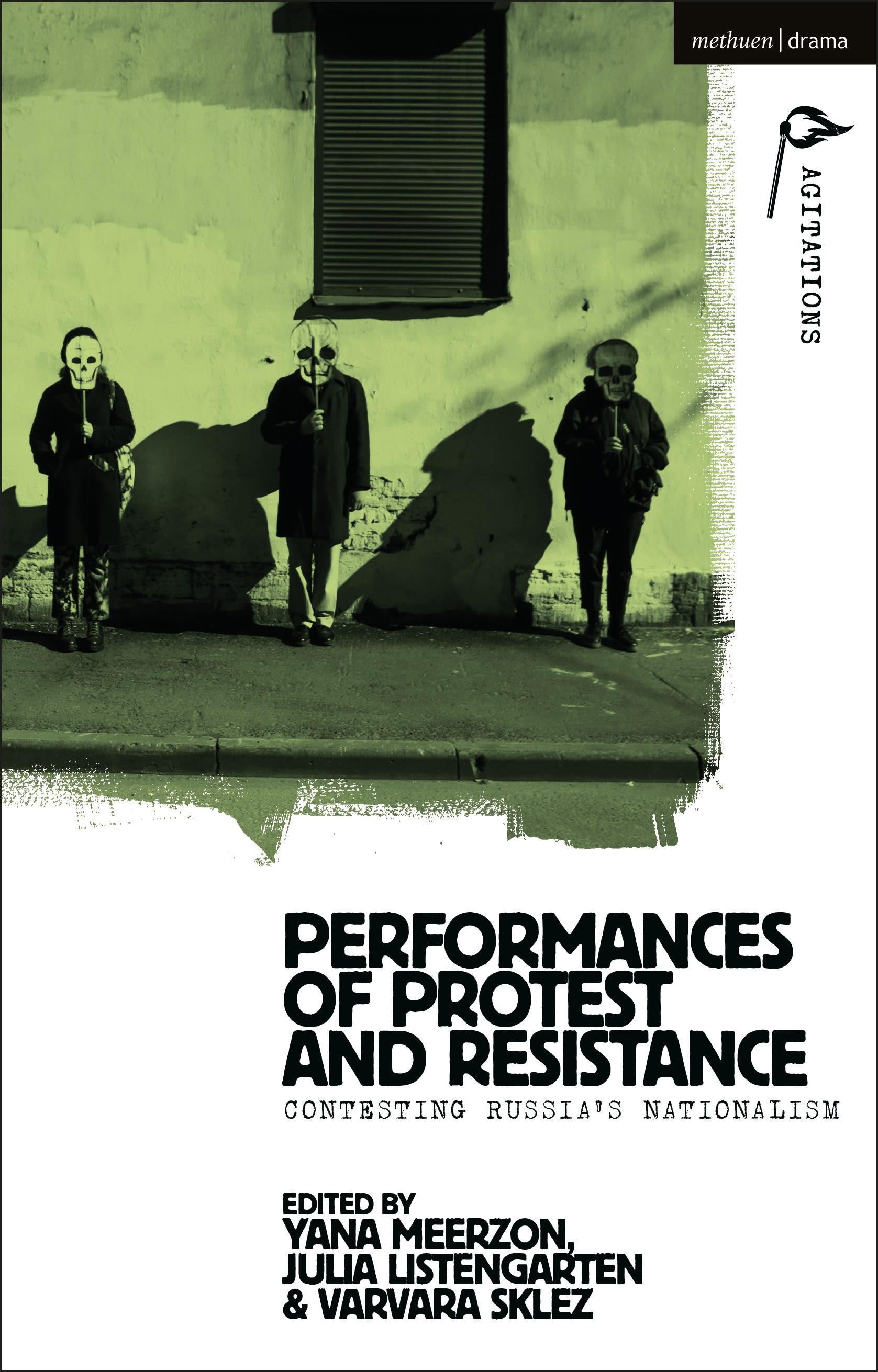
International, interdisciplinary and urgent, this edited collection of 15 essays explores performances of resistance to Russian authoritarianism since the collapse of the Berlin Wall, with a particular focus on the 21st century under Putin's leadership.
Against the backdrop of Russia's Post-Soviet history of rising nationalism and war in Ukraine, this volume challenges what we consider expressions of resistance. How can we evaluate their potential to contest autocracy? In a repressive climate, how do expressions, languages and forms of resistance re-emerge, replicate and intersect across past decades and artistic mediums? How do they reveal perspectives of the other and gesture toward the future? These pressing questions are adressed by engaging with a wide variety of theoretical frameworks including biopolitics, feminism, decoloniality and intersectionality.
The volume is organized into three sections that explore artistic expression, gender and postcolonial critique. A sweeping geographical range is examined, including Ukraine, Belarus, Hungary, Poland and the Caucasus and Central Asian regions of the former Soviet Union, reflecting more broadly on the shifting political landscape of Central Europe and Eurasia. The mediums covered are equally diverse, encompassing social and religious rituals in the public sphere, public speaking, collective or individual re-enactments of past traumatic events, traditional storytelling, social media activism and journalism. To contemplate resistance is to trace its shifting forms and to affirm its existence – even when it is excluded from public discourse, rendered invisible, censored or denied.
Against the backdrop of Russia's Post-Soviet history of rising nationalism and war in Ukraine, this volume challenges what we consider expressions of resistance. How can we evaluate their potential to contest autocracy? In a repressive climate, how do expressions, languages and forms of resistance re-emerge, replicate and intersect across past decades and artistic mediums? How do they reveal perspectives of the other and gesture toward the future? These pressing questions are adressed by engaging with a wide variety of theoretical frameworks including biopolitics, feminism, decoloniality and intersectionality.
The volume is organized into three sections that explore artistic expression, gender and postcolonial critique. A sweeping geographical range is examined, including Ukraine, Belarus, Hungary, Poland and the Caucasus and Central Asian regions of the former Soviet Union, reflecting more broadly on the shifting political landscape of Central Europe and Eurasia. The mediums covered are equally diverse, encompassing social and religious rituals in the public sphere, public speaking, collective or individual re-enactments of past traumatic events, traditional storytelling, social media activism and journalism. To contemplate resistance is to trace its shifting forms and to affirm its existence – even when it is excluded from public discourse, rendered invisible, censored or denied.
Pay easily by card, Klarna, Apple Pay or Google Pay. Not happy? You always have a 14-day money-back guarantee. Read more in our terms. If you have any questions, email us at hello@memmo.org.
Memmo makes studying easier – wherever you are in the world. We bring your course books and smart study tools together in one place: summaries, quizzes, podcasts and flashcards. Plus Ted, your study buddy who answers anything you wonder. Over 75,000 students already study here – built to help you learn faster and stress less.