
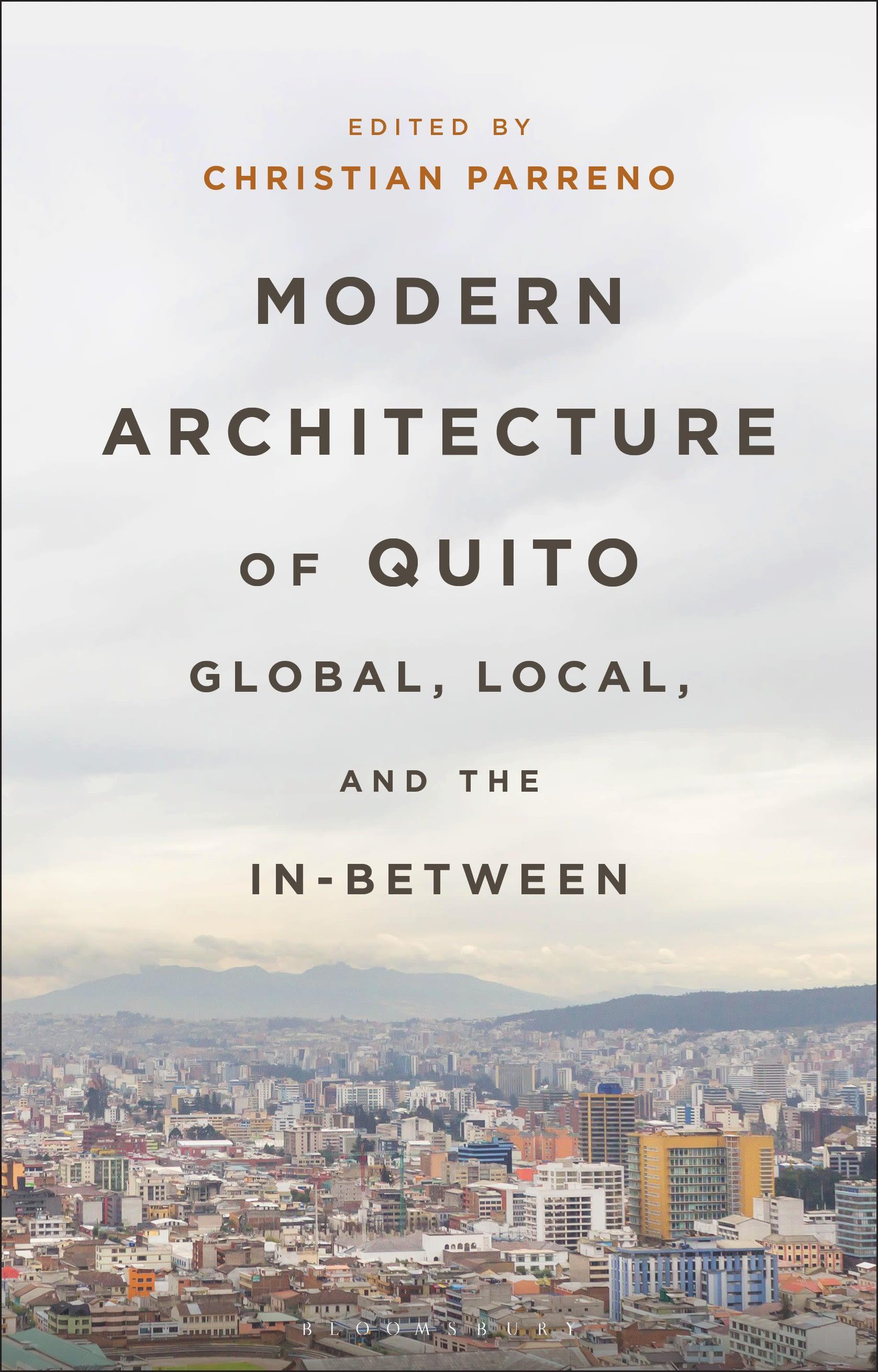
Situated at the crossroads of the foreign and the vernacular, Quito-the capital of Ecuador, with its world-famous yet understudied built environment-stands as a testament to architectural in-betweenness. This book interweaves history and theory to explore how near and far influences have shaped its unique character.
Case studies present diverse and unexpected episodes in the architectural history of this city, spanning the intricacies of its topography, the design of modernist houses and the appropriation of the motel typology. Together, they show how fluxes of different origins have created an architecture marked by diversity and interrelation. To theoretically frame these investigations, this anthology readdresses the notions of the global and the local, examining their tension and unavoidable coexistence, while introducing the in-between as a phenomenon with many variations and embodiments, increasingly referenced in architectural thinking. This book not only furthers the evolution of these concepts but also demonstrates their value as tools for analyzing the architectures of Latin America and the Global South more broadly.
With contributions from both international experts and a new generation of Ecuadorian scholars, Modern Architecture of Quito is an indispensable resource for students and researchers investigating the development of architectural modernism in Latin America.
Case studies present diverse and unexpected episodes in the architectural history of this city, spanning the intricacies of its topography, the design of modernist houses and the appropriation of the motel typology. Together, they show how fluxes of different origins have created an architecture marked by diversity and interrelation. To theoretically frame these investigations, this anthology readdresses the notions of the global and the local, examining their tension and unavoidable coexistence, while introducing the in-between as a phenomenon with many variations and embodiments, increasingly referenced in architectural thinking. This book not only furthers the evolution of these concepts but also demonstrates their value as tools for analyzing the architectures of Latin America and the Global South more broadly.
With contributions from both international experts and a new generation of Ecuadorian scholars, Modern Architecture of Quito is an indispensable resource for students and researchers investigating the development of architectural modernism in Latin America.
Pay easily by card, Klarna, Apple Pay or Google Pay. Not happy? You always have a 14-day money-back guarantee. Read more in our terms. If you have any questions, email us at hello@memmo.org.
Memmo makes studying easier – wherever you are in the world. We bring your course books and smart study tools together in one place: summaries, quizzes, podcasts and flashcards. Plus Ted, your study buddy who answers anything you wonder. Over 75,000 students already study here – built to help you learn faster and stress less.