
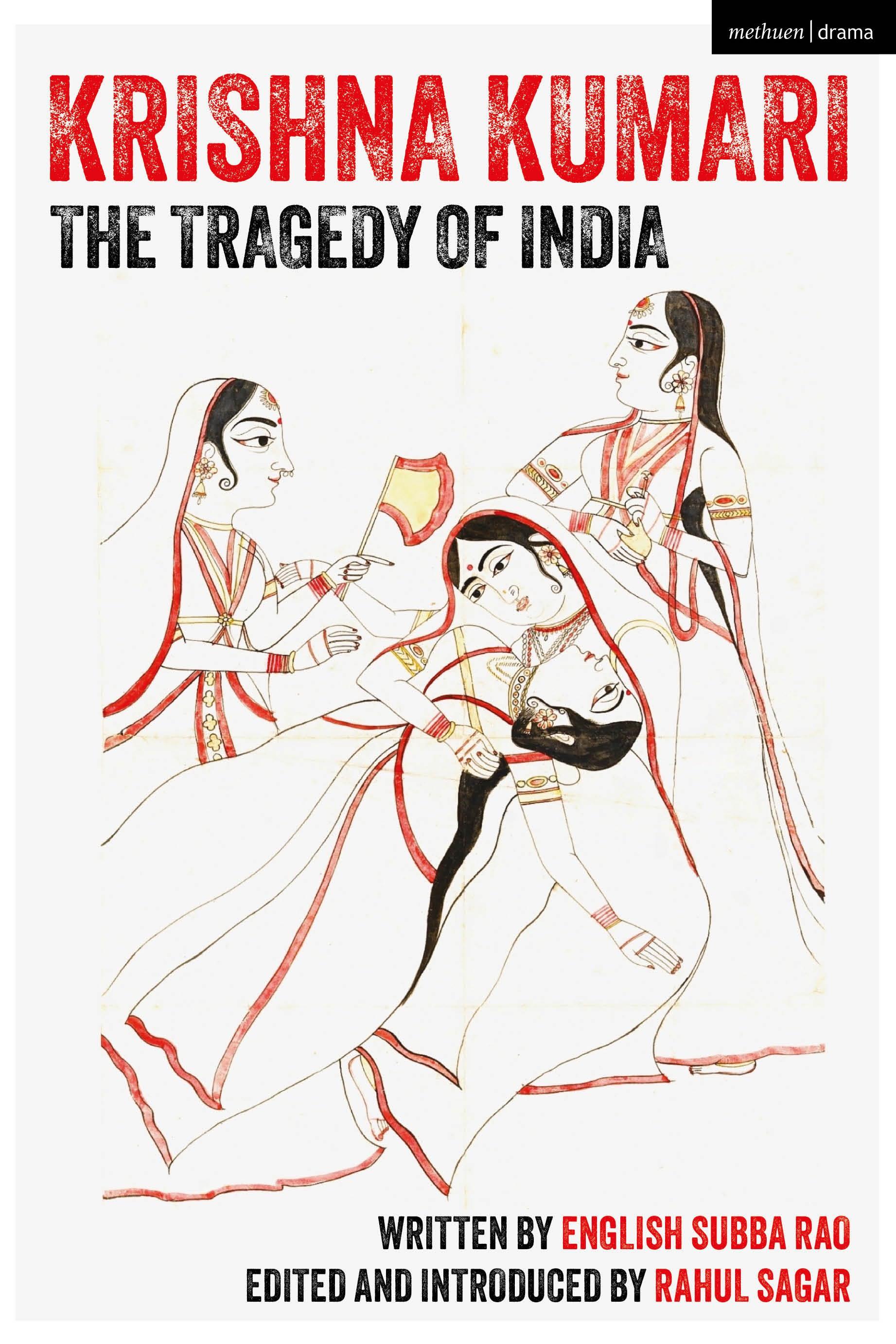
Krishna Kumari: The Tragedy of India introduces readers to the first English language play in modern India.
Written in 1826 by English Subba Rao, one of the first Indians to be schooled in English, Krishna Kumari depicts the true story of a princess of Udaipur who is forced to commit suicide in order to end a war started by her suitors, the rulers of the neighboring kingdoms of Jaipur and Jodhpur. Tragically, her death proves to be in vain because the mercenaries recruited by the contending rulers nevertheless proceed to plunder the region. All three kingdoms are then compelled to seek the protection of the East India Company, bringing their independence to an end.
Sharp and witty, Krishna Kumari was intended to warn Indian principalities against the follies that led to the downfall of the Rajputs. Unfortunately, the play scarcely saw the light of day. Angered by Subba Rao's opposition to their power, the British forced him to withdraw from public life. This is why audiences have never heard of Krishna Kumari-until now. Building on extensive archival research, this volume brings Subba Rao's pioneering drama back to life. The introductory essay by Rahul Sagar, a leading scholar of nineteenth century India, familiarizes readers with the remarkable characters in the play and the violent era in which they lived. By shedding light on Subba Rao's extraordinary life and career, it also reveals how important principalities like Tanjore and Travancore were in battling colonialism and shaping modern India.
Written in 1826 by English Subba Rao, one of the first Indians to be schooled in English, Krishna Kumari depicts the true story of a princess of Udaipur who is forced to commit suicide in order to end a war started by her suitors, the rulers of the neighboring kingdoms of Jaipur and Jodhpur. Tragically, her death proves to be in vain because the mercenaries recruited by the contending rulers nevertheless proceed to plunder the region. All three kingdoms are then compelled to seek the protection of the East India Company, bringing their independence to an end.
Sharp and witty, Krishna Kumari was intended to warn Indian principalities against the follies that led to the downfall of the Rajputs. Unfortunately, the play scarcely saw the light of day. Angered by Subba Rao's opposition to their power, the British forced him to withdraw from public life. This is why audiences have never heard of Krishna Kumari-until now. Building on extensive archival research, this volume brings Subba Rao's pioneering drama back to life. The introductory essay by Rahul Sagar, a leading scholar of nineteenth century India, familiarizes readers with the remarkable characters in the play and the violent era in which they lived. By shedding light on Subba Rao's extraordinary life and career, it also reveals how important principalities like Tanjore and Travancore were in battling colonialism and shaping modern India.
Pay easily by card, Klarna, Apple Pay or Google Pay. Not happy? You always have a 14-day money-back guarantee. Read more in our terms. If you have any questions, email us at hello@memmo.org.
Memmo makes studying easier – wherever you are in the world. We bring your course books and smart study tools together in one place: summaries, quizzes, podcasts and flashcards. Plus Ted, your study buddy who answers anything you wonder. Over 50,000 students already study here – built to help you learn faster and stress less.