
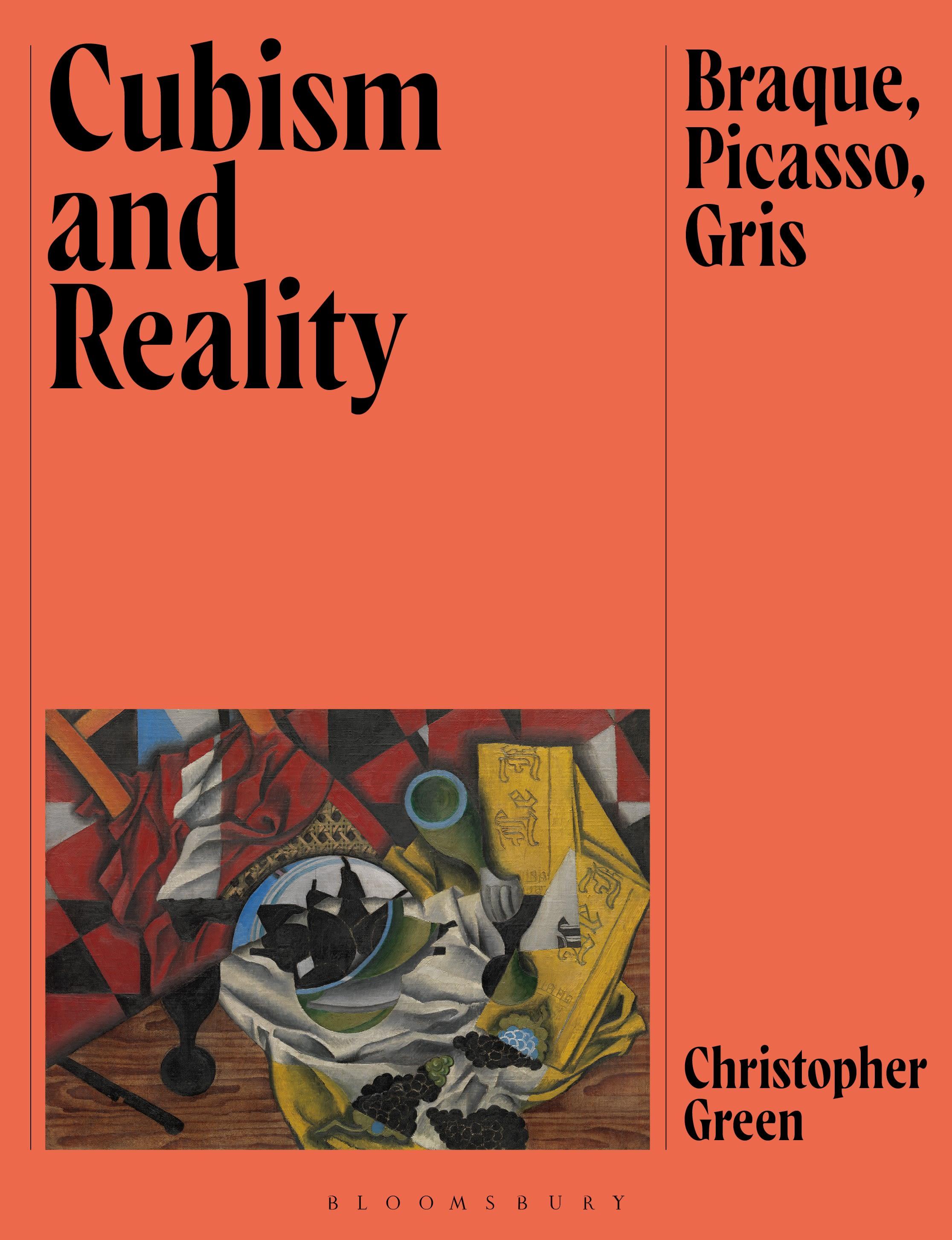
What was Cubism? How did this strange new way of making paintings and sculptures enable artists so decisively to change the trajectory of 'Modern Art'? In responding to these questions, distinguished art historian Christopher Green presents a bold new interpretation of the movement and three of its key protagonists.
Stemming from a critical re-evaluation of the author's own first responses to Cubist artworks, as a student of the late artist and critic John Golding, Cubism and Reality challenges the commonly-held view of Cubism as either a retreat from reality into abstraction, or an invitation to convert the real into the 'surreal', arguing instead that Georges Braque, Pablo Picasso, and Juan Gris wanted, above all, to find ways of intensifying and expanding painting's capacity to give viewers more, not less, of their lived experience of the world.
Lavishly illustrated and filled with rich new insights and approaches to the artwork that are the product of decades' worth of research, Green argues that, for the three artists, 'reality' was not objectively always there, but was created by their own perceptions, and could be transformed by their imaginations. The artwork becomes not merely a dead material fact, but somewhere into which wishes, lived experiences and memories can enter – ours, over a century later, as well as theirs. Green explores how Cubist artworks ask us to reflect in far-reaching ways on visual art's relationship to everyday visual experience and questions how it is that we still believe that drawings, paintings and sculptures can represent the world as we see and know it. In doing so Cubism and Reality tackles a fundamental issue that has preoccupied artists, critics and art enthusiasts for over a century, well into our present age: the survival of hand-made representational artworks in the epoch of photography, film and, latterly, digital reproduction.
Stemming from a critical re-evaluation of the author's own first responses to Cubist artworks, as a student of the late artist and critic John Golding, Cubism and Reality challenges the commonly-held view of Cubism as either a retreat from reality into abstraction, or an invitation to convert the real into the 'surreal', arguing instead that Georges Braque, Pablo Picasso, and Juan Gris wanted, above all, to find ways of intensifying and expanding painting's capacity to give viewers more, not less, of their lived experience of the world.
Lavishly illustrated and filled with rich new insights and approaches to the artwork that are the product of decades' worth of research, Green argues that, for the three artists, 'reality' was not objectively always there, but was created by their own perceptions, and could be transformed by their imaginations. The artwork becomes not merely a dead material fact, but somewhere into which wishes, lived experiences and memories can enter – ours, over a century later, as well as theirs. Green explores how Cubist artworks ask us to reflect in far-reaching ways on visual art's relationship to everyday visual experience and questions how it is that we still believe that drawings, paintings and sculptures can represent the world as we see and know it. In doing so Cubism and Reality tackles a fundamental issue that has preoccupied artists, critics and art enthusiasts for over a century, well into our present age: the survival of hand-made representational artworks in the epoch of photography, film and, latterly, digital reproduction.
Pages: 288
Category: Konst, Design & Fotografi
e-ISBN: 9781350453555
Shipping weight: 1.2 kg
Ships in: 1-2 days
Pay easily by card, Klarna, Apple Pay or Google Pay. Not happy? You always have a 14-day money-back guarantee. Read more in our terms. If you have any questions, email us at hello@memmo.org.
Memmo makes studying easier – wherever you are in the world. We bring your course books and smart study tools together in one place: summaries, quizzes, podcasts and flashcards. Plus Ted, your study buddy who answers anything you wonder. Over 50,000 students already study here – built to help you learn faster and stress less.