
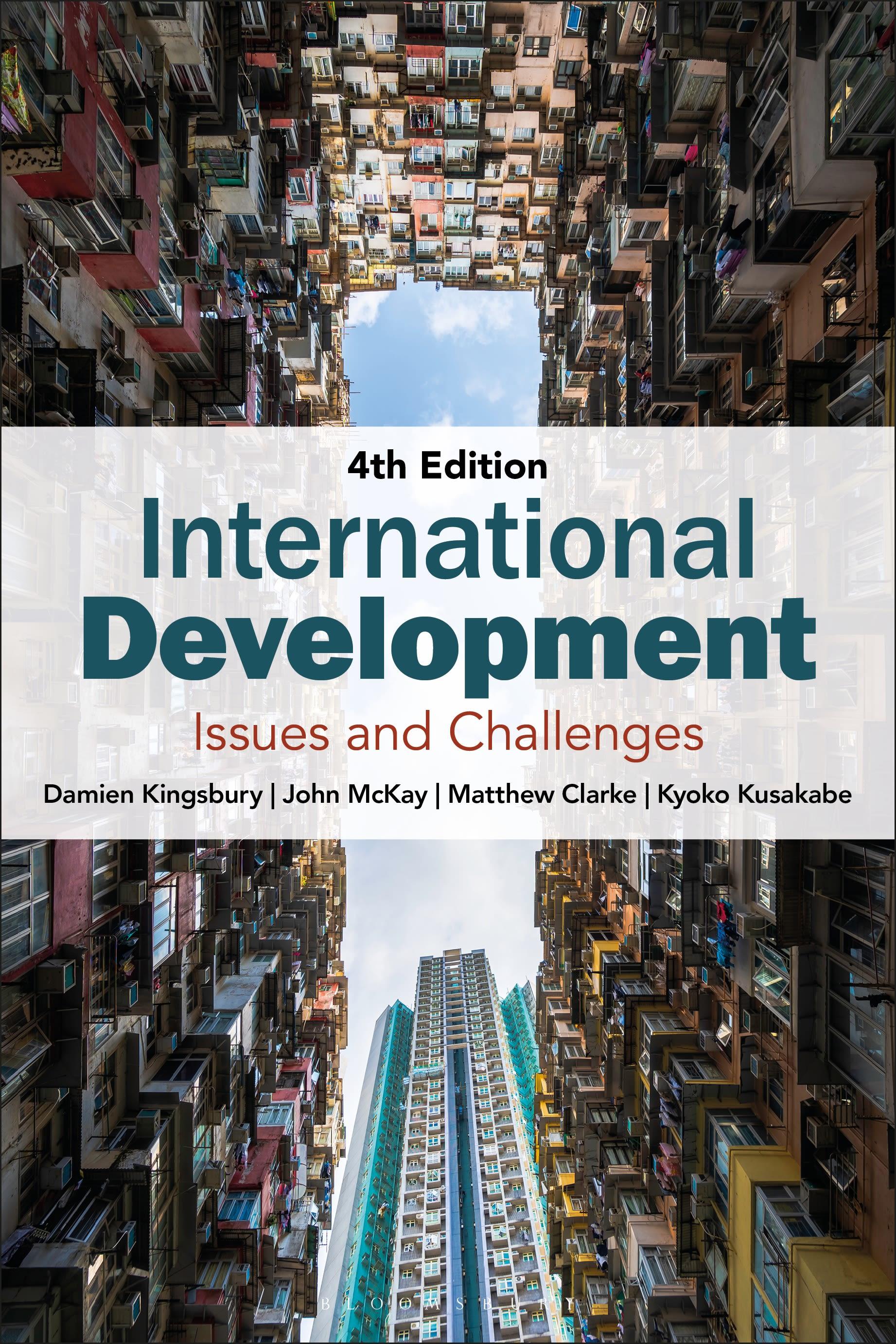
How can a country industrialise without causing environmental damage? How do development professionals ensure they act in the interests of recipients, rather than their own donor country? And how is the humanitarian project of development complicated by ideological objectives?
The fourth edition of this renowned textbook covers the most urgent issues facing the field of development. With the return of Russia as a global actor, renewed conflict in the Middle East, and global inequality exacerbated by climate change and global health crises, the questions underpinning international development are increasingly fraught. For most of its history, international development was shaped by Cold War competition; at the turn of the twenty-first century, the paradigm shifted as China assumed a greater role, and post-9/11 US development initiatives were intended to reduce militancy in the Middle East. As these tensions return to the world stage, it is ever more important for students to ask what development is – or should be – and what it can achieve. With increased attention to gender and postcolonial perspectives and strong coverage of security, economics and global order, this book is essential reading for students of international development.
The fourth edition of this renowned textbook covers the most urgent issues facing the field of development. With the return of Russia as a global actor, renewed conflict in the Middle East, and global inequality exacerbated by climate change and global health crises, the questions underpinning international development are increasingly fraught. For most of its history, international development was shaped by Cold War competition; at the turn of the twenty-first century, the paradigm shifted as China assumed a greater role, and post-9/11 US development initiatives were intended to reduce militancy in the Middle East. As these tensions return to the world stage, it is ever more important for students to ask what development is – or should be – and what it can achieve. With increased attention to gender and postcolonial perspectives and strong coverage of security, economics and global order, this book is essential reading for students of international development.
Pages: 456
Category: Ekonomi & Utveckling
e-ISBN: 9781350446519
Shipping weight: 1.2 kg
Ships in: 1-2 days
Pay easily by card, Klarna, Apple Pay or Google Pay. Not happy? You always have a 14-day money-back guarantee. Read more in our terms. If you have any questions, email us at hello@memmo.org.
Memmo makes studying easier – wherever you are in the world. We bring your course books and smart study tools together in one place: summaries, quizzes, podcasts and flashcards. Plus Ted, your study buddy who answers anything you wonder. Over 50,000 students already study here – built to help you learn faster and stress less.