
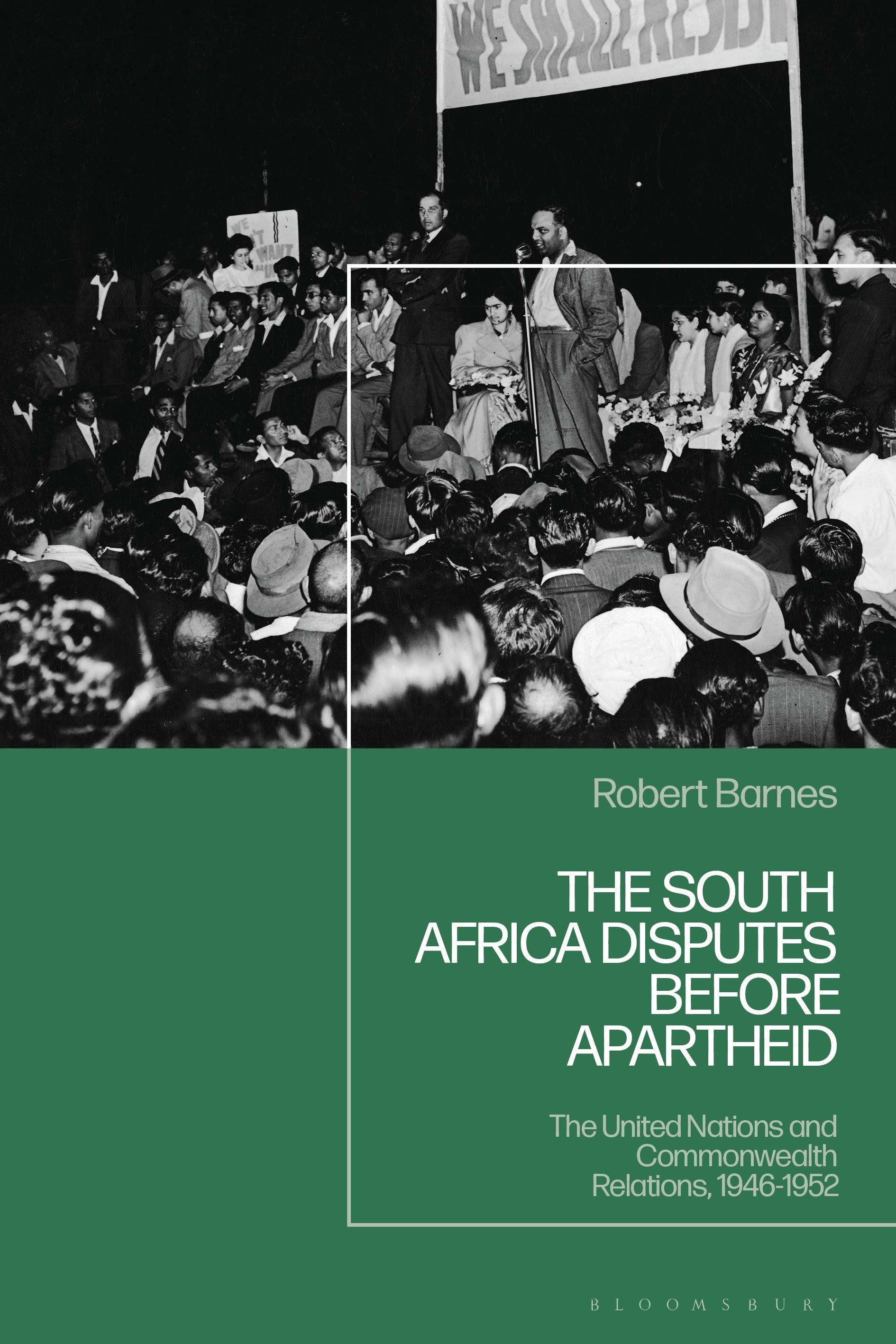
In examining the early United Nations disputes over South African racial and expansionist policies between 1946 and 1952, this book explores how South Africa found itself out of step with the post-war international environment and had become a pariah state as well as an embarrassment to its Commonwealth partners even before apartheid was formally discussed at the world organisation.
Focusing on international concerns around two specific disputes at the UN; the treatment of Indians in South Africa, and Pretoria's attempts to annex the territory of South West Africa (Namibia), Barnes highlights how divisive these issues became for the Commonwealth of Nations. The recently independent Asian 'new' members, especially India, led the charge in criticizing these policies. But for the 'old' White members, from whom South Africa expected support and who initially went the furthest in supporting their partner, the situation was more problematic. These governments increasingly felt uncomfortable openly endorsing South Africa's policies, especially after the election of the National Party in 1948 and the implementation of its apartheid programme in the face of mounting international criticism. Utilizing a vast range of official records from the Commonwealth countries involved and the UN, The South African Disputes before Apartheid shows how these disputes over the future of South Africa's race relations and its territorial claims caused the deepest rifts within the Commonwealth during the early postwar period. These issues also set the scene for ever more heated debate on apartheid at the UN after 1952 and Pretoria's withdrawal from the Commonwealth in 1961.
Focusing on international concerns around two specific disputes at the UN; the treatment of Indians in South Africa, and Pretoria's attempts to annex the territory of South West Africa (Namibia), Barnes highlights how divisive these issues became for the Commonwealth of Nations. The recently independent Asian 'new' members, especially India, led the charge in criticizing these policies. But for the 'old' White members, from whom South Africa expected support and who initially went the furthest in supporting their partner, the situation was more problematic. These governments increasingly felt uncomfortable openly endorsing South Africa's policies, especially after the election of the National Party in 1948 and the implementation of its apartheid programme in the face of mounting international criticism. Utilizing a vast range of official records from the Commonwealth countries involved and the UN, The South African Disputes before Apartheid shows how these disputes over the future of South Africa's race relations and its territorial claims caused the deepest rifts within the Commonwealth during the early postwar period. These issues also set the scene for ever more heated debate on apartheid at the UN after 1952 and Pretoria's withdrawal from the Commonwealth in 1961.
Pay easily by card, Klarna, Apple Pay or Google Pay. Not happy? You always have a 14-day money-back guarantee. Read more in our terms. If you have any questions, email us at hello@memmo.org.
Memmo makes studying easier – wherever you are in the world. We bring your course books and smart study tools together in one place: summaries, quizzes, podcasts and flashcards. Plus Ted, your study buddy who answers anything you wonder. Over 50,000 students already study here – built to help you learn faster and stress less.