
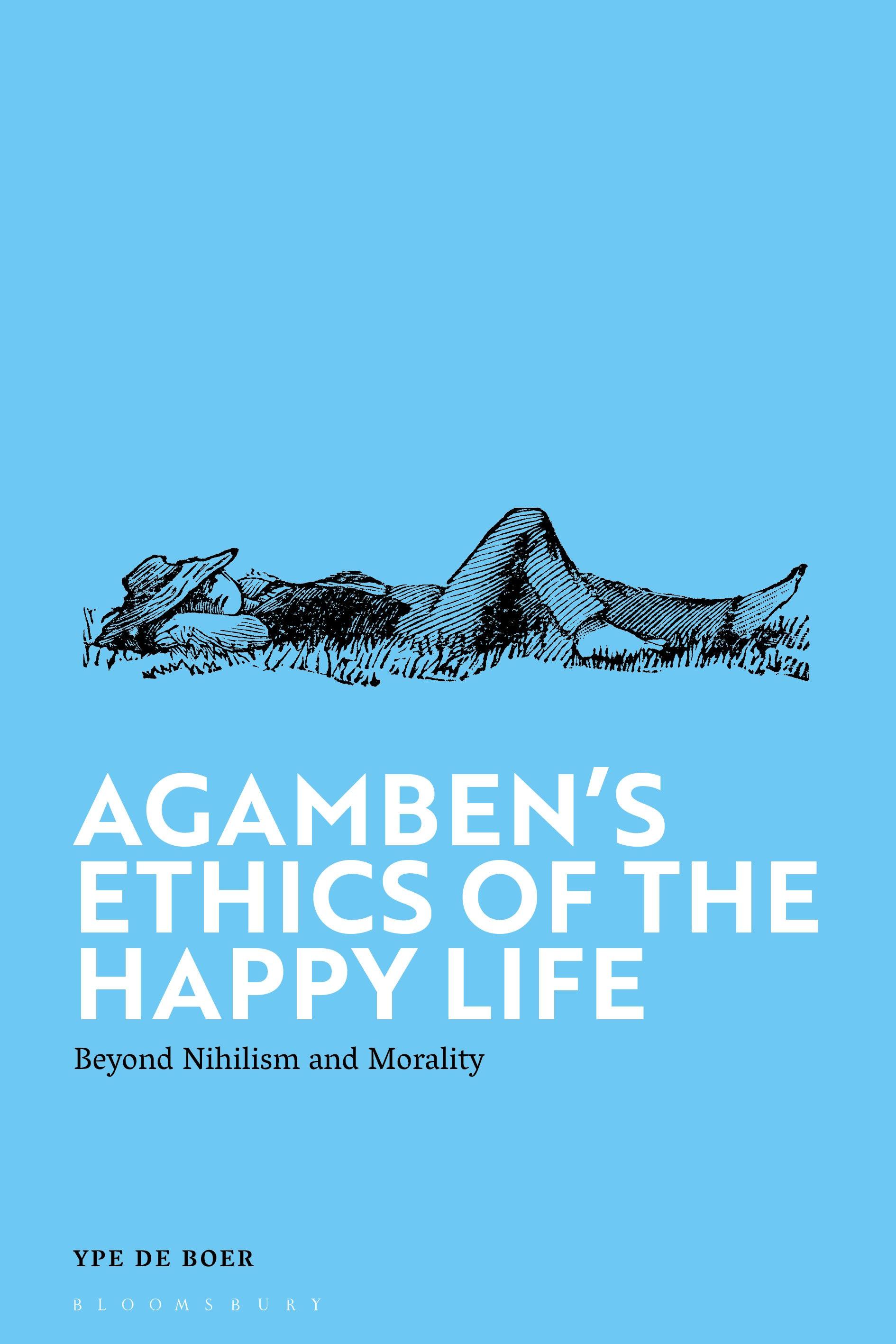
Ype de Boer invites you to rethink what you know about the philosophy of Giorgio Agamben.
In a compelling and original argument, De Boer contends that, in the work of Agamben, ethics takes primacy over politics. Presenting a careful evaluation of Agamben's overlooked contribution to ethics, this book explores his enigmatic yet central concept of the 'happy life'.
By reading Agamben's philosophy in terms of a 'poetico-philosophical experiment' – a term coined by the Italian philosopher himself, and one through which he questions our very mode of existence – De Boer assesses the variety of ethical paradigms that Agamben's work offers. This not only challenges the widespread misconception of Agamben as the 'dark prophet' known for his pessimistic, even nihilistic political critiques, but reveals how understanding the various facets of the 'happy life' allows for a better appreciation of his attacks on the ethico-political condition. Agamben's Ethics and the Happy Life demonstrates that ultimately Agamben seeks to formulate an alternative notion of ethics, politics and ontology that will lead us out of nihilism.
Tracing Agamben's positive moral philosophy through his key works, including the seminal Homo Sacer series, De Boer uncovers how, for Agamben, a happy life is one directed not by responsibility, guilt, action and duty, but by receptivity, love, use and potentiality.
In a compelling and original argument, De Boer contends that, in the work of Agamben, ethics takes primacy over politics. Presenting a careful evaluation of Agamben's overlooked contribution to ethics, this book explores his enigmatic yet central concept of the 'happy life'.
By reading Agamben's philosophy in terms of a 'poetico-philosophical experiment' – a term coined by the Italian philosopher himself, and one through which he questions our very mode of existence – De Boer assesses the variety of ethical paradigms that Agamben's work offers. This not only challenges the widespread misconception of Agamben as the 'dark prophet' known for his pessimistic, even nihilistic political critiques, but reveals how understanding the various facets of the 'happy life' allows for a better appreciation of his attacks on the ethico-political condition. Agamben's Ethics and the Happy Life demonstrates that ultimately Agamben seeks to formulate an alternative notion of ethics, politics and ontology that will lead us out of nihilism.
Tracing Agamben's positive moral philosophy through his key works, including the seminal Homo Sacer series, De Boer uncovers how, for Agamben, a happy life is one directed not by responsibility, guilt, action and duty, but by receptivity, love, use and potentiality.
Pay easily by card, Klarna, Apple Pay or Google Pay. Not happy? You always have a 14-day money-back guarantee. Read more in our terms. If you have any questions, email us at hello@memmo.org.
Memmo makes studying easier – wherever you are in the world. We bring your course books and smart study tools together in one place: summaries, quizzes, podcasts and flashcards. Plus Ted, your study buddy who answers anything you wonder. Over 50,000 students already study here – built to help you learn faster and stress less.