
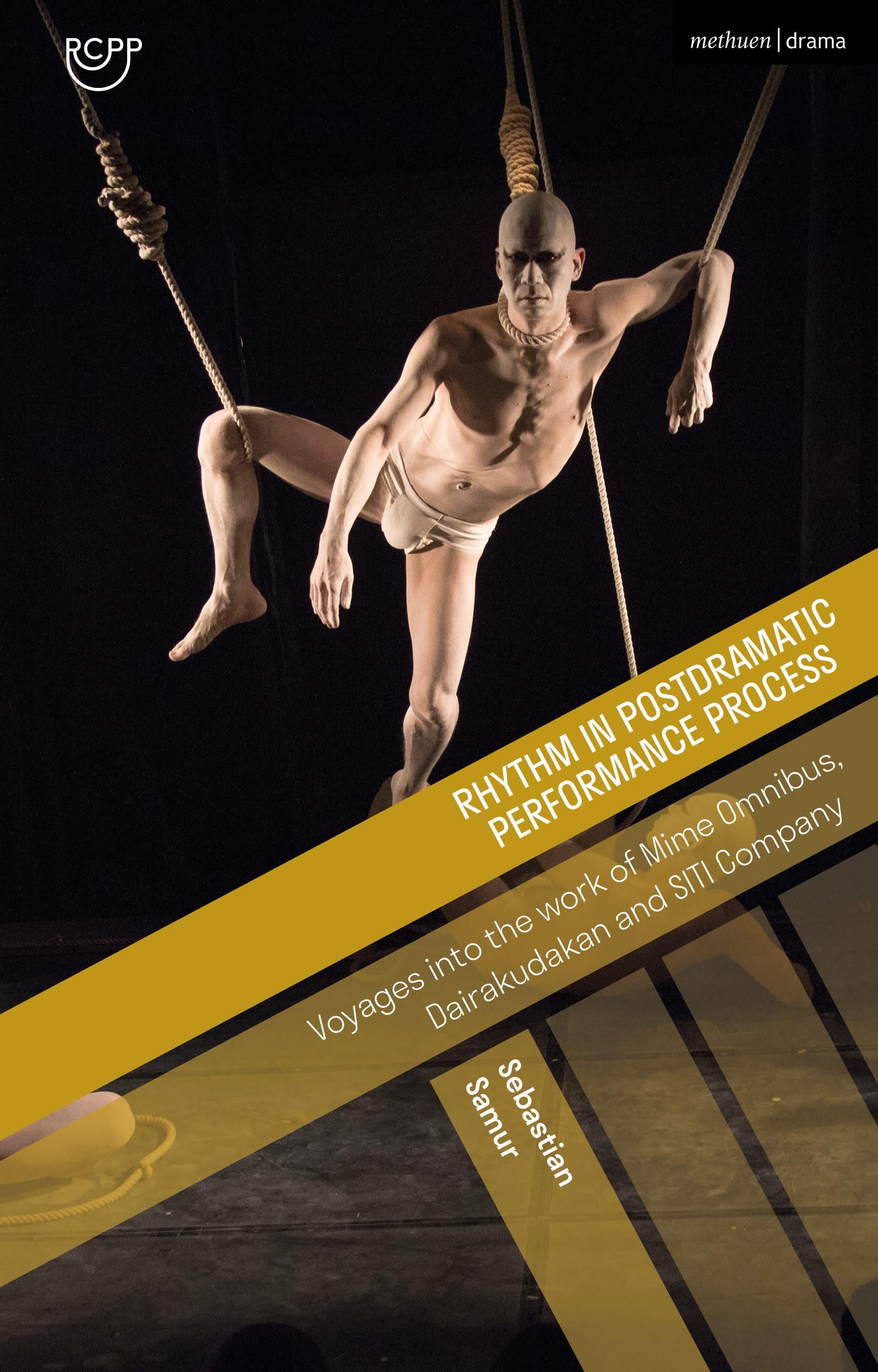
Combining theory and historiography, this book presents a new means for considering rhythm in postdramatic performance by examining the creative processes of three major international companies: Mime Omnibus (Montreal, Canada), Dairakudakan (Tokyo, Japan), and SITI Company (New York, US).
While rhythm is unanimously acknowledged as fundamental to performance, critical in every role from performing and directing to design and dramaturgy, studies on the subject are limited and the phenomenon remains obscure. This book remedies that, offering a unique focus on 'rhythmanalysis', bringing distinctive and insightful attention to rhythm as permeating key areas of performance process.
By focusing on recent work from these three major companies, the book provides a glimpse into each company's latest devising processes, enriched by scholarly and archival research, while personal interviews give voice to performers often absent in performance analysis and criticism.
Through its theoretical and practical offerings, this book brings greater understanding by putting forth a simplified model that can be applied to both interdisciplinary practices and theoretical analysis. The reader gains not only a greater understanding of rhythm in contemporary performance, but also significant insights into the working methods of each company.
While rhythm is unanimously acknowledged as fundamental to performance, critical in every role from performing and directing to design and dramaturgy, studies on the subject are limited and the phenomenon remains obscure. This book remedies that, offering a unique focus on 'rhythmanalysis', bringing distinctive and insightful attention to rhythm as permeating key areas of performance process.
By focusing on recent work from these three major companies, the book provides a glimpse into each company's latest devising processes, enriched by scholarly and archival research, while personal interviews give voice to performers often absent in performance analysis and criticism.
Through its theoretical and practical offerings, this book brings greater understanding by putting forth a simplified model that can be applied to both interdisciplinary practices and theoretical analysis. The reader gains not only a greater understanding of rhythm in contemporary performance, but also significant insights into the working methods of each company.
Pay easily by card, Klarna, Apple Pay or Google Pay. Not happy? You always have a 14-day money-back guarantee. Read more in our terms. If you have any questions, email us at hello@memmo.org.
Memmo makes studying easier – wherever you are in the world. We bring your course books and smart study tools together in one place: summaries, quizzes, podcasts and flashcards. Plus Ted, your study buddy who answers anything you wonder. Over 75,000 students already study here – built to help you learn faster and stress less.