
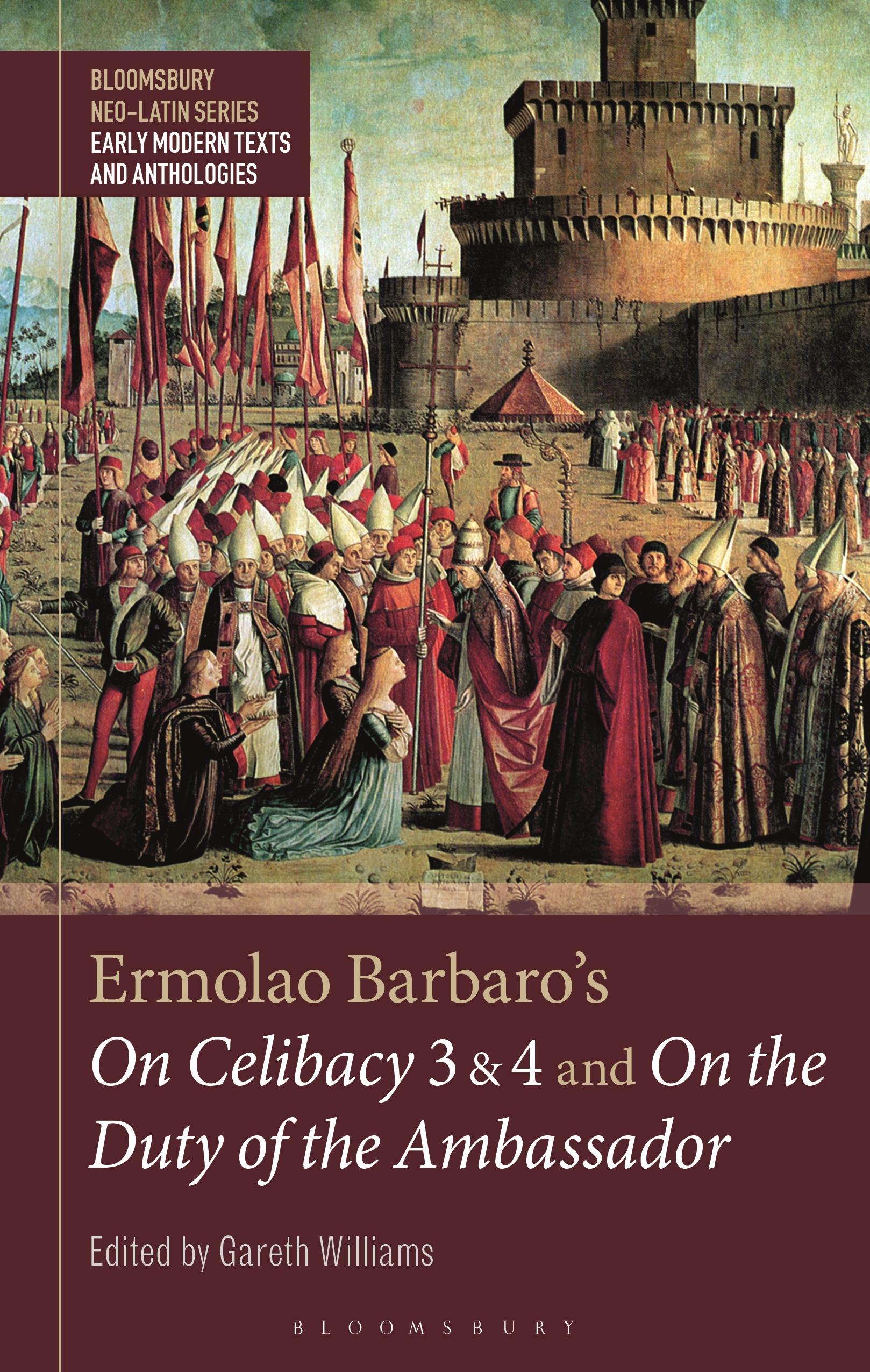
This book offers the first annotated translation into English of two works of the eminent Venetian humanist, Ermolao Barbaro (1454–93). Books 3 and 4 of On Celibacy seek to justify a contemplative existence at a far remove from the active life and career-path expected of a figure of Barbaro's standing within the Venetian patriciate; Books 1 and 2 of On Celibacy are presented in the companion-piece to this second volume. The second work presented here is Barbaro's short treatise On the Duty of Ambassador (1488): based on Barbaro's own practical experience as a Venetian envoy abroad, this treatise outlines the conduct expected of the dedicated career diplomat.
Viewed against each other, Barbaro's On Celibacy and On the Duty of the Ambassador offer contrasting perspectives on the wider 15th-century debate about the claims of the reflective as opposed to the active life – a debate that extends all the way back to Greco-Roman antiquity. In On Celibacy the young Barbaro is committed to a life that proudly renounces civic engagement in the name of self-discovery and inner fulfilment. Yet a different Barbaro asserts himself in On the Duty of the Ambassador: he now presents himself as a committed public servant in a work that is ahead if its time in theorizing the nature of 'modern' Renaissance diplomacy. On a personal level, these two works capture the profound dichotomy in Barbaro's life between his humanist devotion to scholarship on the one hand and, on the other, his call of duty to the Republic of Venice.
Viewed against each other, Barbaro's On Celibacy and On the Duty of the Ambassador offer contrasting perspectives on the wider 15th-century debate about the claims of the reflective as opposed to the active life – a debate that extends all the way back to Greco-Roman antiquity. In On Celibacy the young Barbaro is committed to a life that proudly renounces civic engagement in the name of self-discovery and inner fulfilment. Yet a different Barbaro asserts himself in On the Duty of the Ambassador: he now presents himself as a committed public servant in a work that is ahead if its time in theorizing the nature of 'modern' Renaissance diplomacy. On a personal level, these two works capture the profound dichotomy in Barbaro's life between his humanist devotion to scholarship on the one hand and, on the other, his call of duty to the Republic of Venice.
Pay easily by card, Klarna, Apple Pay or Google Pay. Not happy? You always have a 14-day money-back guarantee. Read more in our terms. If you have any questions, email us at hello@memmo.org.
Memmo makes studying easier – wherever you are in the world. We bring your course books and smart study tools together in one place: summaries, quizzes, podcasts and flashcards. Plus Ted, your study buddy who answers anything you wonder. Over 75,000 students already study here – built to help you learn faster and stress less.