
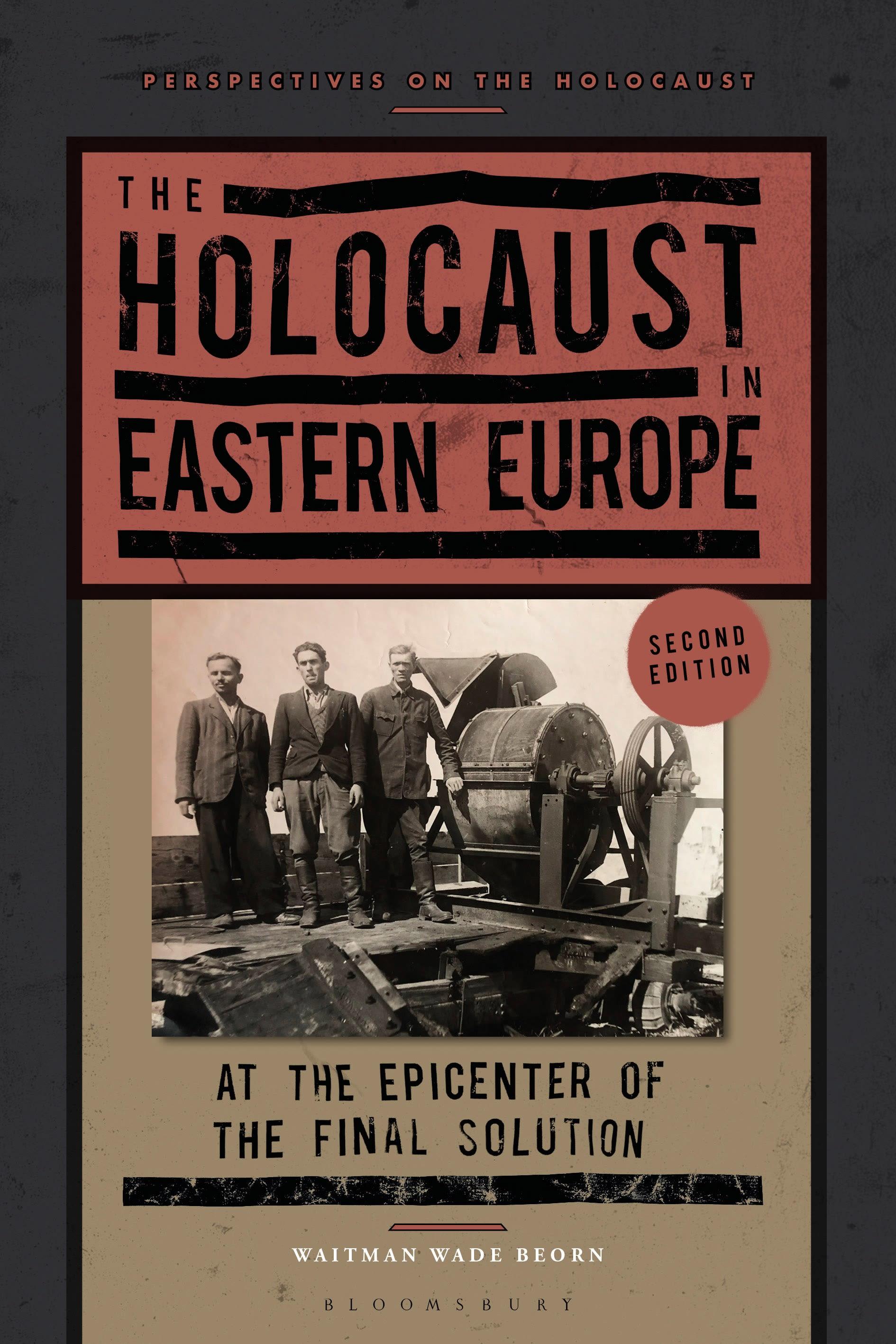
This book provides an authoritative history of the Holocaust in Eastern Europe and makes a compelling case for why the region can be considered 'the epicentre of the final solution'.
Waitman Wade Beorn introduces us to pre-war Jewish life in Eastern Europe, before tracing the escalating nature of Nazi policies in the area during the Second World War. Beorn crucially reflects on the German obsession with the East and its impact on the Nazi genocidal project there. The Holocaust in Eastern Europe also examines Soviet occupation and its consequences for the Shoah, while offering vital coverage of key themes like ghettoization, the Final Solution, rescue, collaboration, resistance, and many others. The book considers the commonalities and differences of regional Holocaust experiences from the perspectives of perpetrators, witnesses, collaborators, and victims/survivors.
Adeptly incorporating material on challenging subjects like sexual violence, the use of slave labour, the treatment of Soviet POWs, and profiteering, this 2nd edition includes two brand new chapters that enhance the scope and usefulness of the text even further; one addresses sources, methods, historiographical debates in the field, and the other focuses on non-Jewish victims of the Nazi genocidal project, such as Soviet prisoners of war, the mental and physically handicapped, Sinti and Roma, and other civilians.
Waitman Wade Beorn introduces us to pre-war Jewish life in Eastern Europe, before tracing the escalating nature of Nazi policies in the area during the Second World War. Beorn crucially reflects on the German obsession with the East and its impact on the Nazi genocidal project there. The Holocaust in Eastern Europe also examines Soviet occupation and its consequences for the Shoah, while offering vital coverage of key themes like ghettoization, the Final Solution, rescue, collaboration, resistance, and many others. The book considers the commonalities and differences of regional Holocaust experiences from the perspectives of perpetrators, witnesses, collaborators, and victims/survivors.
Adeptly incorporating material on challenging subjects like sexual violence, the use of slave labour, the treatment of Soviet POWs, and profiteering, this 2nd edition includes two brand new chapters that enhance the scope and usefulness of the text even further; one addresses sources, methods, historiographical debates in the field, and the other focuses on non-Jewish victims of the Nazi genocidal project, such as Soviet prisoners of war, the mental and physically handicapped, Sinti and Roma, and other civilians.
Pay easily by card, Klarna, Apple Pay or Google Pay. Not happy? You always have a 14-day money-back guarantee. Read more in our terms. If you have any questions, email us at hello@memmo.org.
Memmo makes studying easier – wherever you are in the world. We bring your course books and smart study tools together in one place: summaries, quizzes, podcasts and flashcards. Plus Ted, your study buddy who answers anything you wonder. Over 50,000 students already study here – built to help you learn faster and stress less.