
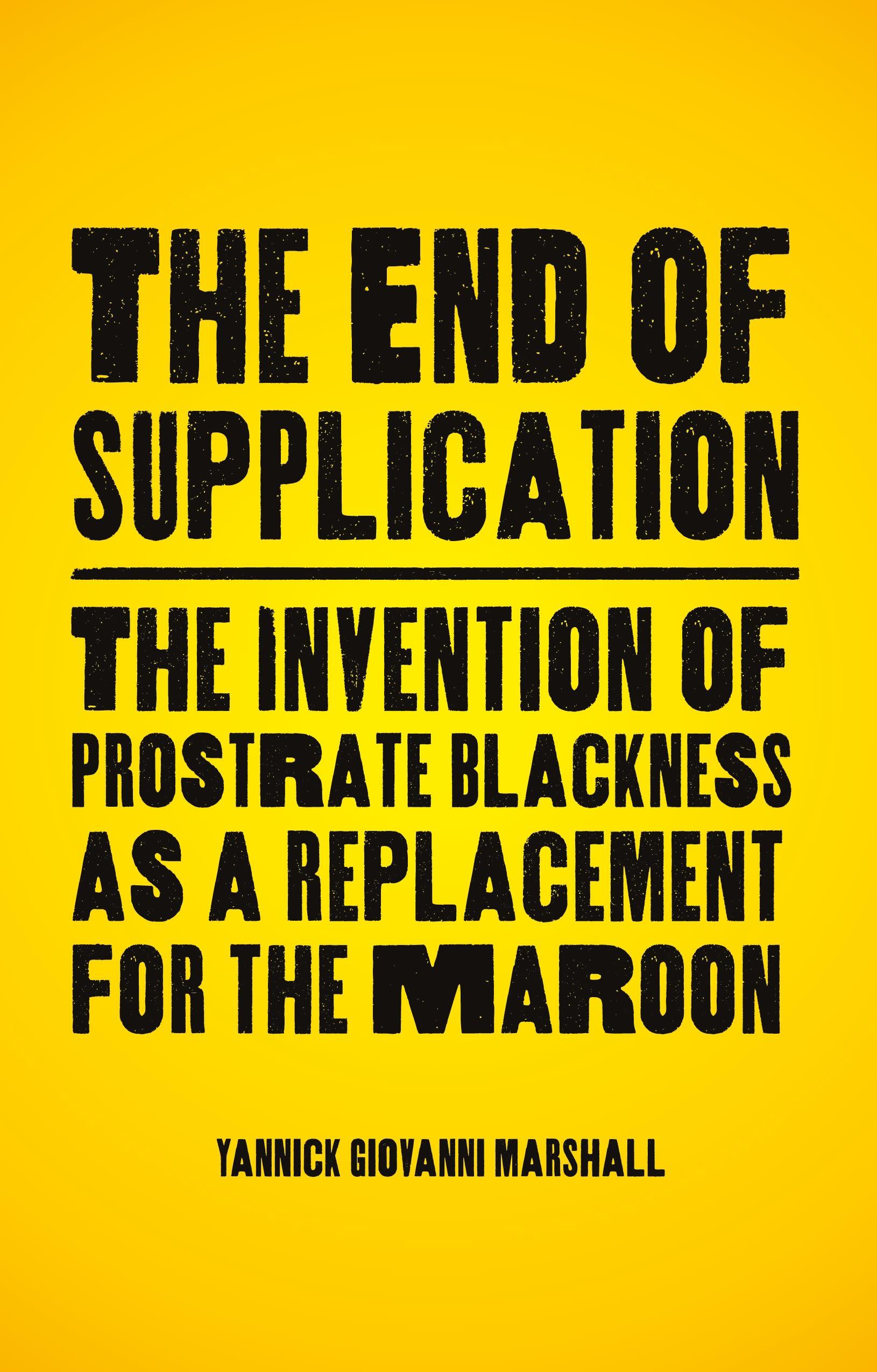
The figure of the supplicant negro-a figure famously represented in Josiah Wedgewood's 18th-century anti-slavery medallion-continues to sideline radical Black anti-colonialist struggle.
The End of the Supplication contends that Black freedom struggles are anti-colonial movements against anti-Blackness and the permutations of slavery, and as such they are ill-served by a dominant Civil Rights discourse that escapes neither the paternalism of white abolitionism nor the caricatures of minstrelsy.
The book traces the roots of the white supremacist ideology behind the disarmed, supplicant-negro figure, and it shows how this ideology continues to inform present liberal presentations of Black people as passive subjects at the mercy of white power, which only reinforces the relatively light consequences white supremacists generally incur for harming Black people. These discussions lead to the conclusion that in our contemporary context of rising, openly white-supremacist politics, the figure of the supplicant negro must be definitively destroyed in order to make way for more effective resistance to anti-Black racism.
This book is a must-read for students and researchers interested in colonialism and decolonization, diaspora studies, critical race and whiteness studies, African American studies, Black studies, and Indigenous studies. It is also of keen interest for anyone frustrated with the still-recurring admonition to “go slow” when it comes to eradicating structural racism.
The End of the Supplication contends that Black freedom struggles are anti-colonial movements against anti-Blackness and the permutations of slavery, and as such they are ill-served by a dominant Civil Rights discourse that escapes neither the paternalism of white abolitionism nor the caricatures of minstrelsy.
The book traces the roots of the white supremacist ideology behind the disarmed, supplicant-negro figure, and it shows how this ideology continues to inform present liberal presentations of Black people as passive subjects at the mercy of white power, which only reinforces the relatively light consequences white supremacists generally incur for harming Black people. These discussions lead to the conclusion that in our contemporary context of rising, openly white-supremacist politics, the figure of the supplicant negro must be definitively destroyed in order to make way for more effective resistance to anti-Black racism.
This book is a must-read for students and researchers interested in colonialism and decolonization, diaspora studies, critical race and whiteness studies, African American studies, Black studies, and Indigenous studies. It is also of keen interest for anyone frustrated with the still-recurring admonition to “go slow” when it comes to eradicating structural racism.
Pay easily by card, Klarna, Apple Pay or Google Pay. Not happy? You always have a 14-day money-back guarantee. Read more in our terms. If you have any questions, email us at hello@memmo.org.
Memmo makes studying easier – wherever you are in the world. We bring your course books and smart study tools together in one place: summaries, quizzes, podcasts and flashcards. Plus Ted, your study buddy who answers anything you wonder. Over 50,000 students already study here – built to help you learn faster and stress less.