
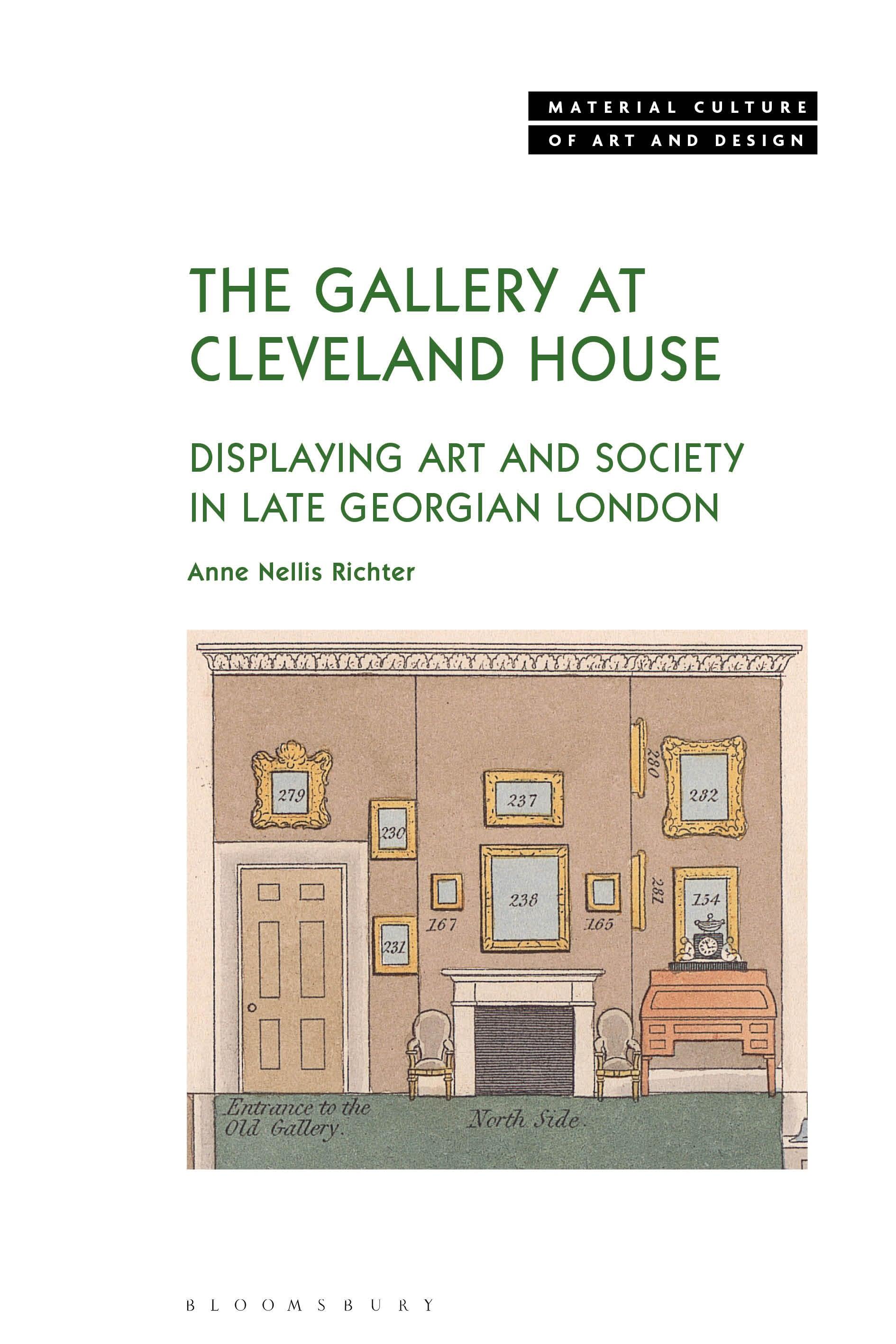
In 1806, the Marquess and Marchioness of Stafford opened a gallery at Cleveland House, London, to display their internationally-renowned collection of Old Master paintings to the public. A ticket to the gallery's Wednesday afternoon openings was a sought-after prize, granting access to the collection and the house's dazzling interior in the company of artists, celebrities, and Britain's elite. This book explores the gallery's interior through the lens of its abundant material culture, including paintings in gilded frames, furniture, silver oil lamps, flower arrangements, and the numerous printed catalogues and guidebooks that made the gallery visible to those who might never cross its threshold.
Through detailed analysis of these objects and a wide range of other visual, material, textual and archival sources, the book presents the gallery at Cleveland House as a methodological case study on how the display of art in the 19th century was shaped by notions about public and private space, domesticity, and the role art galleries played in the formation of national culture. In doing so, the book also explains how and why magnificent private galleries and the artworks and objects they contained gripped the public imagination during a critical period of political and cultural transformation during and after the Napoleonic Wars.
Combining historical, cultural and material analysis, the book will make essential reading for researchers in British art in the Regency period, museum studies, collecting studies, social history, and the histories of interior decoration and design in the 18th and 19th centuries.
Through detailed analysis of these objects and a wide range of other visual, material, textual and archival sources, the book presents the gallery at Cleveland House as a methodological case study on how the display of art in the 19th century was shaped by notions about public and private space, domesticity, and the role art galleries played in the formation of national culture. In doing so, the book also explains how and why magnificent private galleries and the artworks and objects they contained gripped the public imagination during a critical period of political and cultural transformation during and after the Napoleonic Wars.
Combining historical, cultural and material analysis, the book will make essential reading for researchers in British art in the Regency period, museum studies, collecting studies, social history, and the histories of interior decoration and design in the 18th and 19th centuries.
Pages: 248
Category: Konst, Design & Fotografi
e-ISBN: 9781350372764
Shipping weight: 1.2 kg
Ships in: 1-2 days
Pay easily by card, Klarna, Apple Pay or Google Pay. Not happy? You always have a 14-day money-back guarantee. Read more in our terms. If you have any questions, email us at hello@memmo.org.
Memmo makes studying easier – wherever you are in the world. We bring your course books and smart study tools together in one place: summaries, quizzes, podcasts and flashcards. Plus Ted, your study buddy who answers anything you wonder. Over 50,000 students already study here – built to help you learn faster and stress less.