
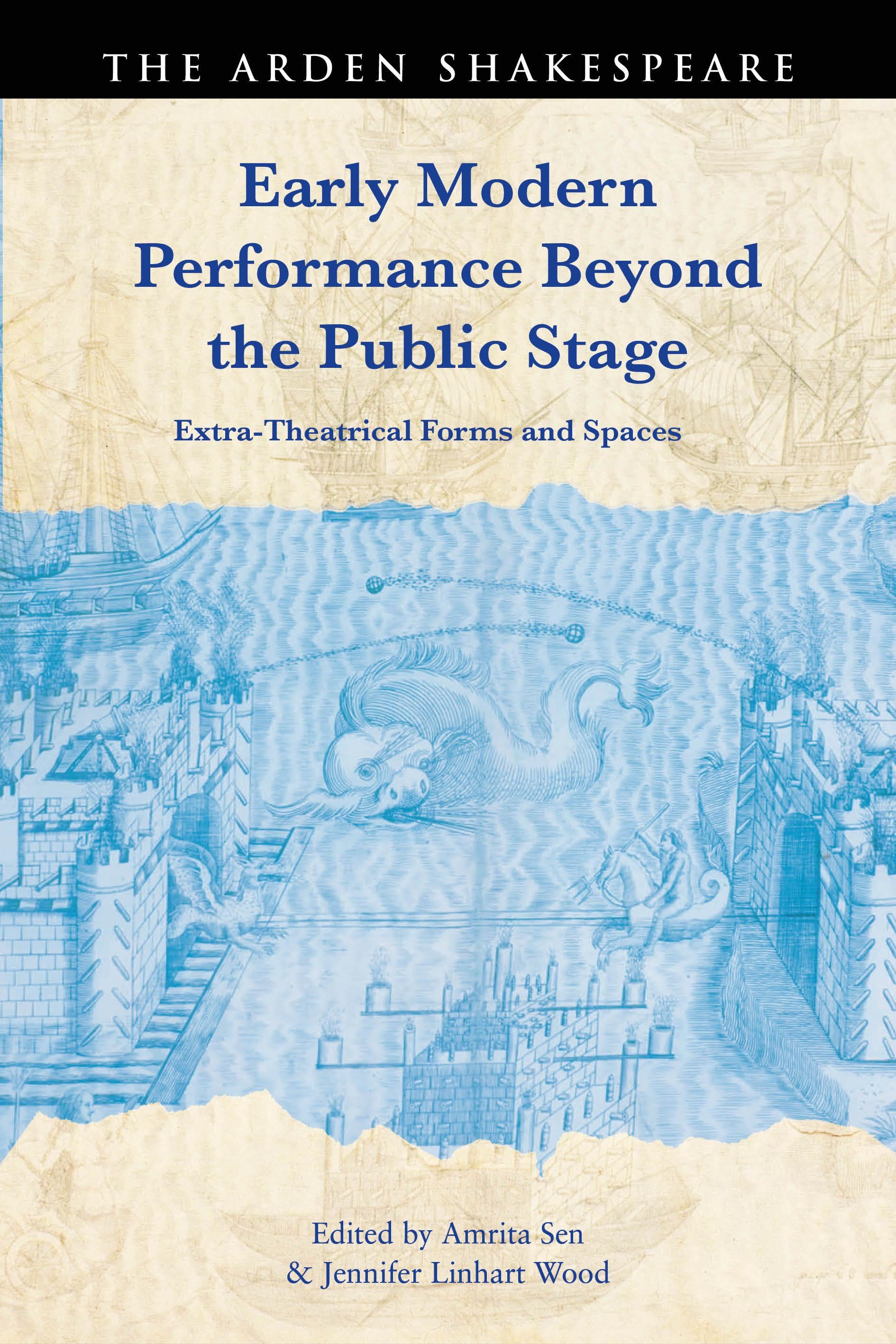
The first major work to explore and analyse the popular 'extra-theatrical' performances in late medieval and Renaissance England.
This wider heterogeneous category of early modern performance included puppetry, fireworks shows, rope dancing, minstrelsy, performing animals, games, civic drama, court masques, university drama, morris dances, and ceremonial rituals, all taking place in a variety of venues.
The volume reveals how these extra-theatrical productions shaped urban and rural life and conveyed a sense of spectacular excess, of exceeding traditional genres, conventional modes of performance and the typical bounds of theatrical space. The spaces where medieval and early modern drama flourished include pageant carts, convents, private homes, universities, waterways, and the streets of both urban and rural communities. Much like public theatres, these performance spaces also played a pivotal role in articulating individual, communal, and national aspirations.
Spanning the medieval period to the late 17th century, this volume engages with questions of spatiality, gender, religion, transcontinental exchanges, and colonialism, presenting the latest research from scholars across the globe.
This wider heterogeneous category of early modern performance included puppetry, fireworks shows, rope dancing, minstrelsy, performing animals, games, civic drama, court masques, university drama, morris dances, and ceremonial rituals, all taking place in a variety of venues.
The volume reveals how these extra-theatrical productions shaped urban and rural life and conveyed a sense of spectacular excess, of exceeding traditional genres, conventional modes of performance and the typical bounds of theatrical space. The spaces where medieval and early modern drama flourished include pageant carts, convents, private homes, universities, waterways, and the streets of both urban and rural communities. Much like public theatres, these performance spaces also played a pivotal role in articulating individual, communal, and national aspirations.
Spanning the medieval period to the late 17th century, this volume engages with questions of spatiality, gender, religion, transcontinental exchanges, and colonialism, presenting the latest research from scholars across the globe.
Pay easily by card, Klarna, Apple Pay or Google Pay. Not happy? You always have a 14-day money-back guarantee. Read more in our terms. If you have any questions, email us at hello@memmo.org.
Memmo makes studying easier – wherever you are in the world. We bring your course books and smart study tools together in one place: summaries, quizzes, podcasts and flashcards. Plus Ted, your study buddy who answers anything you wonder. Over 75,000 students already study here – built to help you learn faster and stress less.