
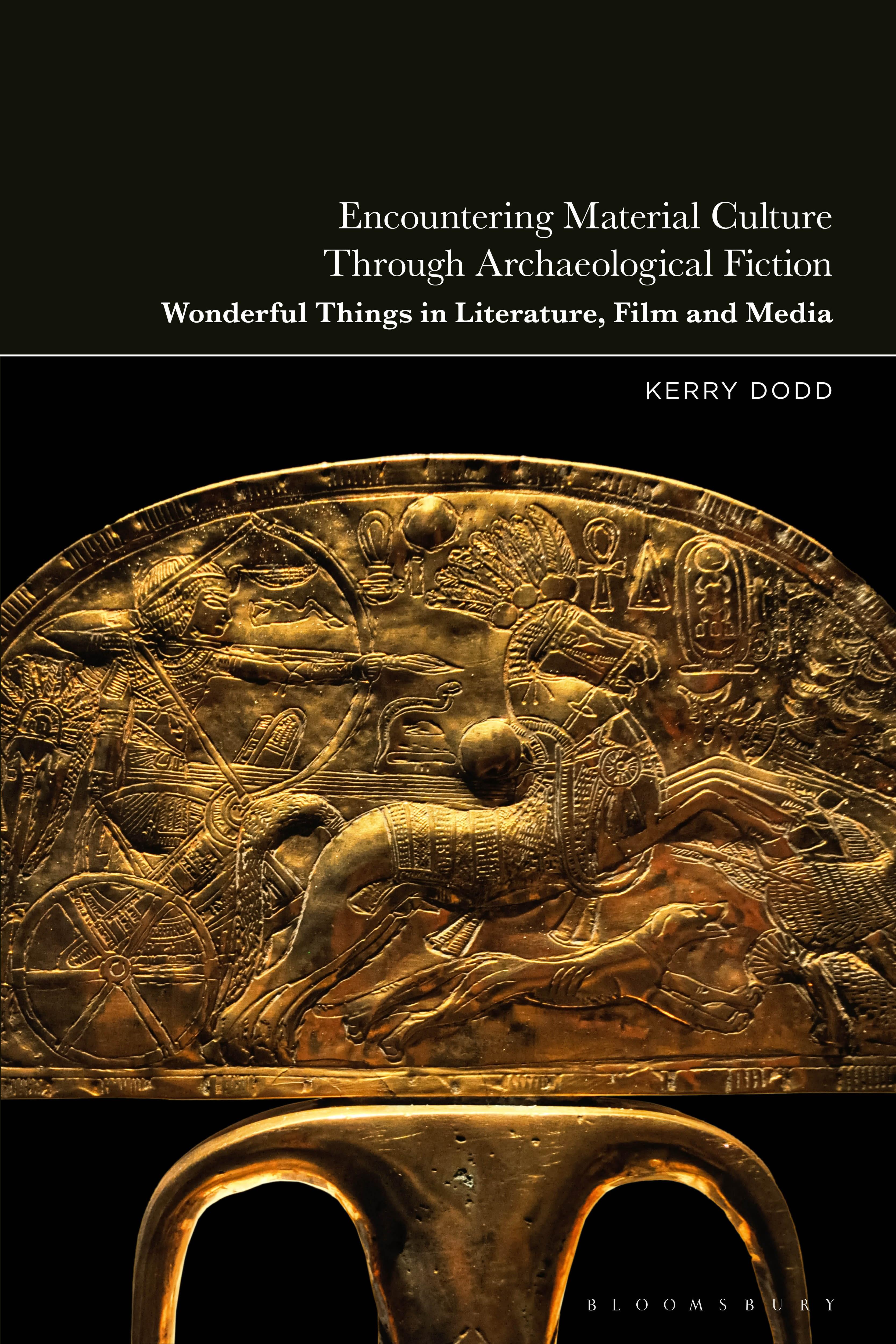
Investigating the representation of artefacts, objects and 'things' in a range of predominantly Western archaeological fiction from the late Victorian period to the modern day, this book examines the narratives through which humanity represents its own material heritage in relation to notions of enchantment, exhibition, estrangement, adventure, tourism and waste.
Kerry Dodd asserts that comprehending the structures through which material culture is presented within archaeological media reveals the structures that transform an object from rubbish to relic. Calling upon such indicative literature, films, TV series and video games as Tomb Raider, Indiana Jones, Uncharted and Relic Hunter, this book explores the depiction of material culture through three principal areas – relics, exhibition and adventure.
Outlining a critical framework of artefact representation, Dodd argues that such iconic moments as Howard Carter's remark that he saw 'wonderful things' when he broke into the antechamber of Tutankhamun's tomb remain recognisable through the evocation of a spectacular visual, despite little concrete definition of the objects witnessed. This book offers a unique exploration of how such figures as Indiana Jones, Lara Croft and Carter have cemented a cultural recognition of what an artefact constitutes as being dependent on how an object is encountered. It is through the very 'wonder' of things that Dodd breaks down the boundaries between popular and professional archaeology by pushing forward critical considerations of material culture.
Kerry Dodd asserts that comprehending the structures through which material culture is presented within archaeological media reveals the structures that transform an object from rubbish to relic. Calling upon such indicative literature, films, TV series and video games as Tomb Raider, Indiana Jones, Uncharted and Relic Hunter, this book explores the depiction of material culture through three principal areas – relics, exhibition and adventure.
Outlining a critical framework of artefact representation, Dodd argues that such iconic moments as Howard Carter's remark that he saw 'wonderful things' when he broke into the antechamber of Tutankhamun's tomb remain recognisable through the evocation of a spectacular visual, despite little concrete definition of the objects witnessed. This book offers a unique exploration of how such figures as Indiana Jones, Lara Croft and Carter have cemented a cultural recognition of what an artefact constitutes as being dependent on how an object is encountered. It is through the very 'wonder' of things that Dodd breaks down the boundaries between popular and professional archaeology by pushing forward critical considerations of material culture.
Pay easily by card, Klarna, Apple Pay or Google Pay. Not happy? You always have a 14-day money-back guarantee. Read more in our terms. If you have any questions, email us at hello@memmo.org.
Memmo makes studying easier – wherever you are in the world. We bring your course books and smart study tools together in one place: summaries, quizzes, podcasts and flashcards. Plus Ted, your study buddy who answers anything you wonder. Over 75,000 students already study here – built to help you learn faster and stress less.