
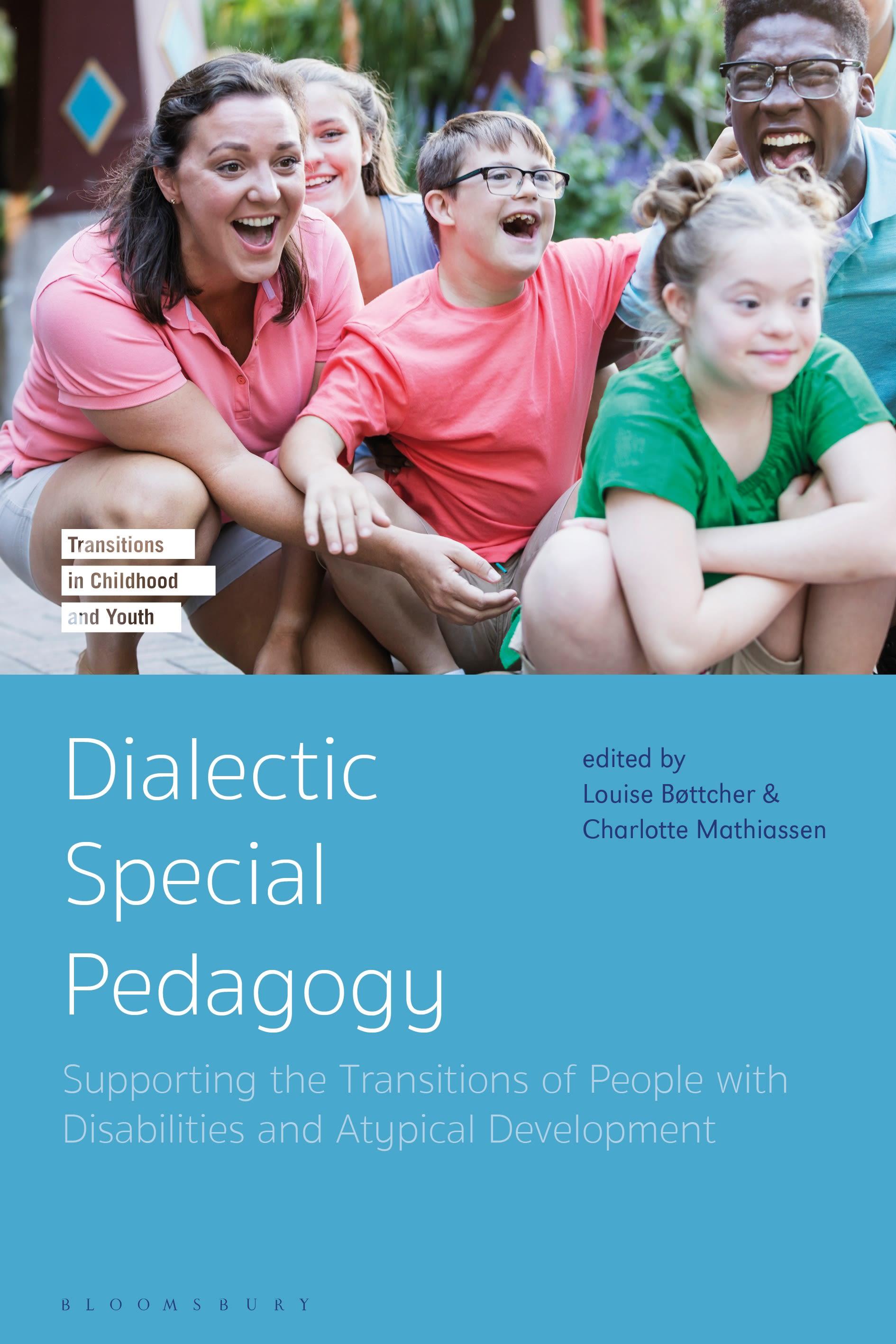
This book offers theoretical and practical discussion on the inclusion of students with disabilities and learning impairments within the learning environments and beyond. It explores how social relations and social activities can support the personal and social transitions of children, young people and adults in need of specialized support. Written by academics based in Australia, Canada, Denmark, the Netherlands and the UK, the contributors take a cultural-historical and dialectical approach as a starting point for special pedagogy. This approach enables special pedagogy to rise above biological-essentialist, environmental-social-training and purely sociological approaches and to focusing on development as a psychological as well as a social phenomenon. The chapters cover a range topics including deaf education, primary and secondary disabilities, play, mediation, incarcerated youth and mental illness. The contributors draw heavily on psychologist Lev Vygotsky's work and his notion of the zone of proximal development.
Pay easily by card, Klarna, Apple Pay or Google Pay. Not happy? You always have a 14-day money-back guarantee. Read more in our terms. If you have any questions, email us at hello@memmo.org.
Memmo makes studying easier – wherever you are in the world. We bring your course books and smart study tools together in one place: summaries, quizzes, podcasts and flashcards. Plus Ted, your study buddy who answers anything you wonder. Over 50,000 students already study here – built to help you learn faster and stress less.