
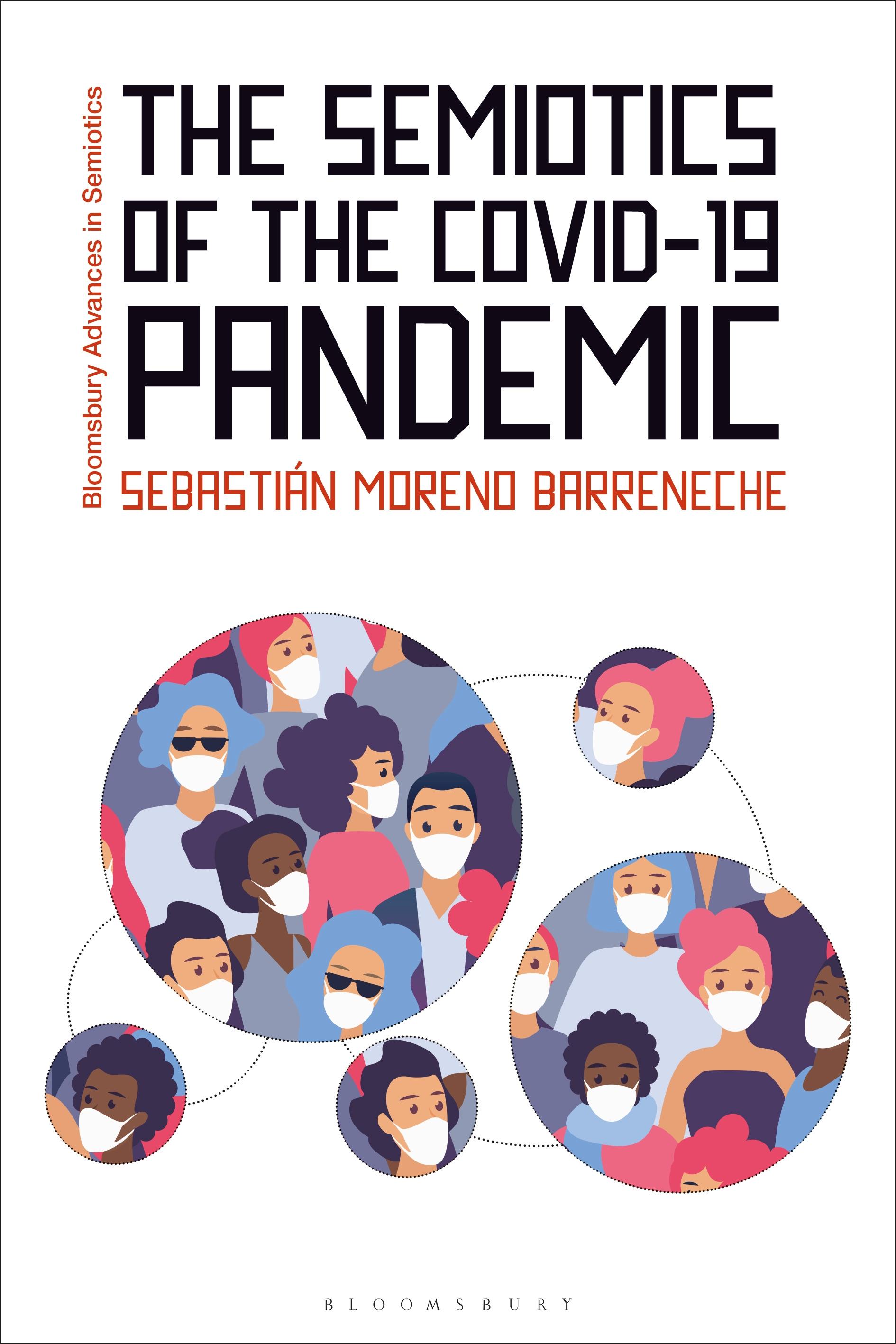
Focusing on the discursive dimension of the COVID-19 pandemic from a semiotic perspective, this book uses semiotic theory and methods to analyse the meaning-making mechanisms and dynamics that occurred during, and revolved around, the pandemic.
Demonstrating the utility of semiotic theory, concepts and analytical methods to make sense of discursive phenomena like those triggered by the COVID-19 pandemic, the book explores in detail:
· the blame-attribution discourses that emerged at the beginning of the pandemic;
· how the coronavirus was brought to life in plastic and visual manifestations as a monster that poses a threat to humans;
· how the collective actor 'the healthcare workers' was constructed in discourse and axiologised in positive terms;
· the semiotics of the body during the pandemic, with a focus on the face, facemasks, social distancing and the uses of the body in online environments;
· the idea of a 'new' normality following the pandemic.
The book examines different dimensions of the COVID-19 pandemic, including examples from Europe, Latin America and the United States and a wide range of images, texts, practices and objects, in order to highlight the importance of its discursive and semiotic nature.
Demonstrating the utility of semiotic theory, concepts and analytical methods to make sense of discursive phenomena like those triggered by the COVID-19 pandemic, the book explores in detail:
· the blame-attribution discourses that emerged at the beginning of the pandemic;
· how the coronavirus was brought to life in plastic and visual manifestations as a monster that poses a threat to humans;
· how the collective actor 'the healthcare workers' was constructed in discourse and axiologised in positive terms;
· the semiotics of the body during the pandemic, with a focus on the face, facemasks, social distancing and the uses of the body in online environments;
· the idea of a 'new' normality following the pandemic.
The book examines different dimensions of the COVID-19 pandemic, including examples from Europe, Latin America and the United States and a wide range of images, texts, practices and objects, in order to highlight the importance of its discursive and semiotic nature.
Pay easily by card, Klarna, Apple Pay or Google Pay. Not happy? You always have a 14-day money-back guarantee. Read more in our terms. If you have any questions, email us at hello@memmo.org.
Memmo makes studying easier – wherever you are in the world. We bring your course books and smart study tools together in one place: summaries, quizzes, podcasts and flashcards. Plus Ted, your study buddy who answers anything you wonder. Over 50,000 students already study here – built to help you learn faster and stress less.