
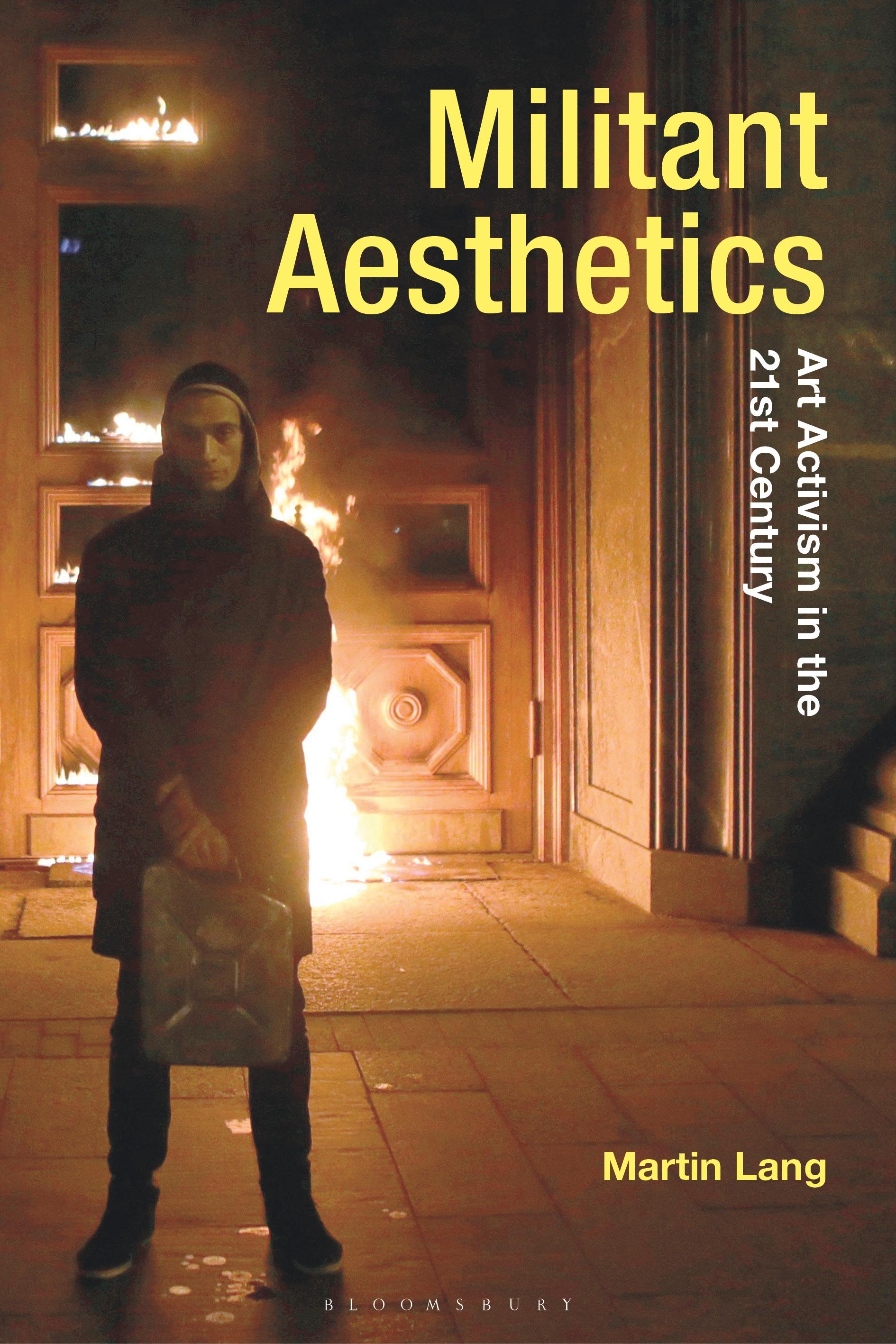
In 2008 an Iraqi artist was waterboarded as performance art. In 2010 artists upturned police cars in Russia. But what exactly do we mean by militant art and aesthetics? Bringing together the philosophy of art and politics, Martin Lang provides a comprehensive examination of militant art activism: its history, its advocates and the aesthetic theory behind it.
Protest art is not a new concept and yet this book argues that after the terrorist attacks of 9/11 distinctly 21st-century forms of art activism emerged. On the one hand these became militant as artists retained belief in the possibility of radical political change through art. On the other hand, this belief developed in a hostile environment, when anti-terror legislations reclassified activists and artists as terrorists.
Through first-hand interviews and experiences, Militant Aesthetics sheds light on numerous international case studies of modern art activism and the different ways they can be classified as militant. Many artists and collectives, including Grupo Etcétera in Buenos Aries, are prepared to break the law and risk arrest for their art. Others like Thomas Bresolin's Militant Training Camp utilise military uniforms in violent performances that connect with public anger, and artists such as Zthoven in the Czech Republic occupy, hack, antagonise and disrupt in increasingly militant ways.
Combining these examples with the pioneering thought of Badiou, Žižek, Rancière and Mouffe, as well as up-to-date scholarship from Bishop, Léger and others, Lang investigates the instances, attributes and rules of militant art in order to introduce a new overall theory of 21st-century militant aesthetics.
Protest art is not a new concept and yet this book argues that after the terrorist attacks of 9/11 distinctly 21st-century forms of art activism emerged. On the one hand these became militant as artists retained belief in the possibility of radical political change through art. On the other hand, this belief developed in a hostile environment, when anti-terror legislations reclassified activists and artists as terrorists.
Through first-hand interviews and experiences, Militant Aesthetics sheds light on numerous international case studies of modern art activism and the different ways they can be classified as militant. Many artists and collectives, including Grupo Etcétera in Buenos Aries, are prepared to break the law and risk arrest for their art. Others like Thomas Bresolin's Militant Training Camp utilise military uniforms in violent performances that connect with public anger, and artists such as Zthoven in the Czech Republic occupy, hack, antagonise and disrupt in increasingly militant ways.
Combining these examples with the pioneering thought of Badiou, Žižek, Rancière and Mouffe, as well as up-to-date scholarship from Bishop, Léger and others, Lang investigates the instances, attributes and rules of militant art in order to introduce a new overall theory of 21st-century militant aesthetics.
Pages: 264
Category: Konst, Design & Fotografi
e-ISBN: 9781350346765
Shipping weight: 1.2 kg
Ships in: 1-2 days
Pay easily by card, Klarna, Apple Pay or Google Pay. Not happy? You always have a 14-day money-back guarantee. Read more in our terms. If you have any questions, email us at hello@memmo.org.
Memmo makes studying easier – wherever you are in the world. We bring your course books and smart study tools together in one place: summaries, quizzes, podcasts and flashcards. Plus Ted, your study buddy who answers anything you wonder. Over 50,000 students already study here – built to help you learn faster and stress less.