
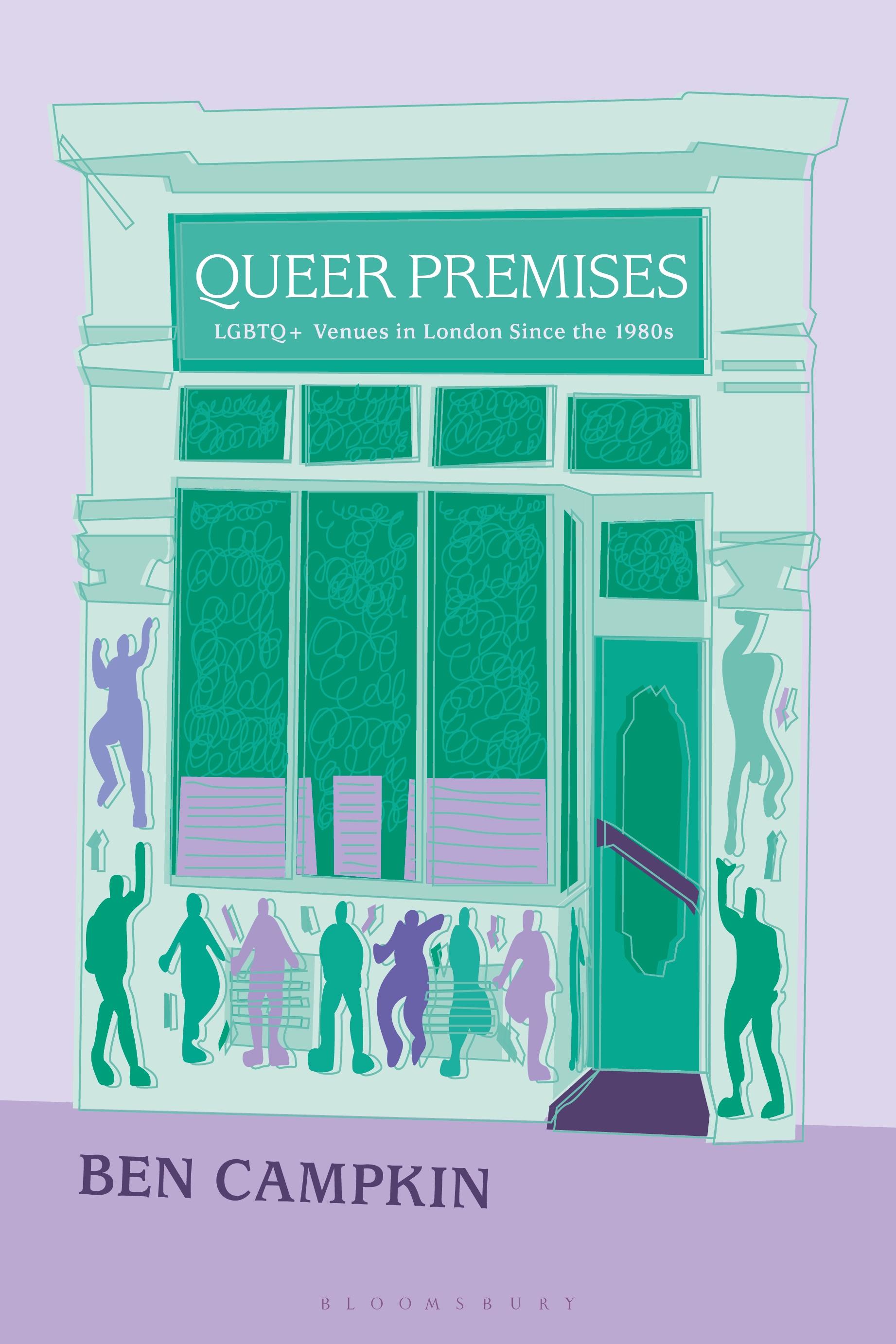
Queer premises provide vital social and cultural infrastructure – a queer infrastructure – connecting different generations and locations, facilitating the movement of resources, across and beyond the city.
Queer Premises offers evidence for how London's diverse LGBTQ+ populations have embedded themselves into urban space, systems and resources. It sets out to understand how, across their different material dimensions, bars, cafés, nightclubs, pubs, community centres, and hybrids of these typologies, have been imagined, created and sustained. From the 1980s to the present, Campkin asks how, where, and why these venues have been established, how they operate and the purposes they serve, what challenges they face and why they close down.
Queer Premises offers evidence for how London's diverse LGBTQ+ populations have embedded themselves into urban space, systems and resources. It sets out to understand how, across their different material dimensions, bars, cafés, nightclubs, pubs, community centres, and hybrids of these typologies, have been imagined, created and sustained. From the 1980s to the present, Campkin asks how, where, and why these venues have been established, how they operate and the purposes they serve, what challenges they face and why they close down.
Pay easily by card, Klarna, Apple Pay or Google Pay. Not happy? You always have a 14-day money-back guarantee. Read more in our terms. If you have any questions, email us at hello@memmo.org.
Memmo makes studying easier – wherever you are in the world. We bring your course books and smart study tools together in one place: summaries, quizzes, podcasts and flashcards. Plus Ted, your study buddy who answers anything you wonder. Over 75,000 students already study here – built to help you learn faster and stress less.