
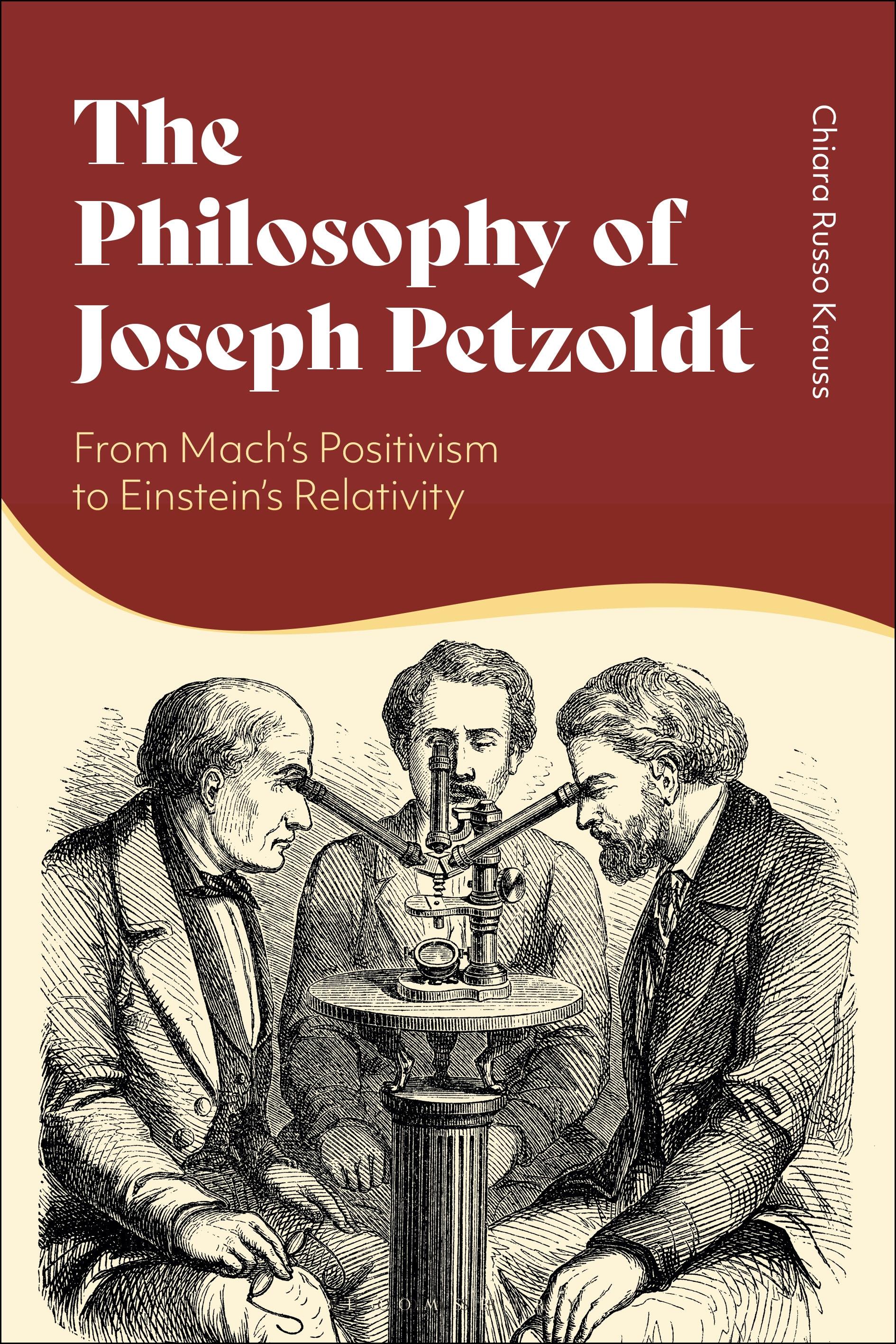
This volume is the first English resource to shed light on the philosophy of Joseph Petzoldt (1862-1929), the main pupil of Ernst Mach and founder of the Gesellschaft für wissenschaftliche Philosophie, later the association of Berlin logical positivists. A central figure in the early debate on the theory of relativity, his work was praised by Einstein himself.
Tracing the development of Petzoldt's ideas, starting from his early acceptance of materialism and Kantian agnosticism, Chiara Russo Krauss presents a comprehensive reconstruction of his philosophy in the context of the German milieu. She examines his attempt to develop a new philosophy following Gustav Fechner and the empiriocriticism of Richard Avenarius and Ernst Mach. In the final chapter, she sets out how Petzoldt proposed relativistic positivism as the official interpretation of Einstein's relativity.
By illuminating key elements of Petzoldt's work, this is a valuable case study for students and scholars of philosophy of science and late 19th-century and early 20th-century philosophy. It reveals the complex interplay of two different tendencies of the time: neo-Kantianism and its struggle to overcome the notion of thing-in-itself, as well as the need for an epistemological foundation for the new advances of science.
Tracing the development of Petzoldt's ideas, starting from his early acceptance of materialism and Kantian agnosticism, Chiara Russo Krauss presents a comprehensive reconstruction of his philosophy in the context of the German milieu. She examines his attempt to develop a new philosophy following Gustav Fechner and the empiriocriticism of Richard Avenarius and Ernst Mach. In the final chapter, she sets out how Petzoldt proposed relativistic positivism as the official interpretation of Einstein's relativity.
By illuminating key elements of Petzoldt's work, this is a valuable case study for students and scholars of philosophy of science and late 19th-century and early 20th-century philosophy. It reveals the complex interplay of two different tendencies of the time: neo-Kantianism and its struggle to overcome the notion of thing-in-itself, as well as the need for an epistemological foundation for the new advances of science.
Pay easily by card, Klarna, Apple Pay or Google Pay. Not happy? You always have a 14-day money-back guarantee. Read more in our terms. If you have any questions, email us at hello@memmo.org.
Memmo makes studying easier – wherever you are in the world. We bring your course books and smart study tools together in one place: summaries, quizzes, podcasts and flashcards. Plus Ted, your study buddy who answers anything you wonder. Over 50,000 students already study here – built to help you learn faster and stress less.