
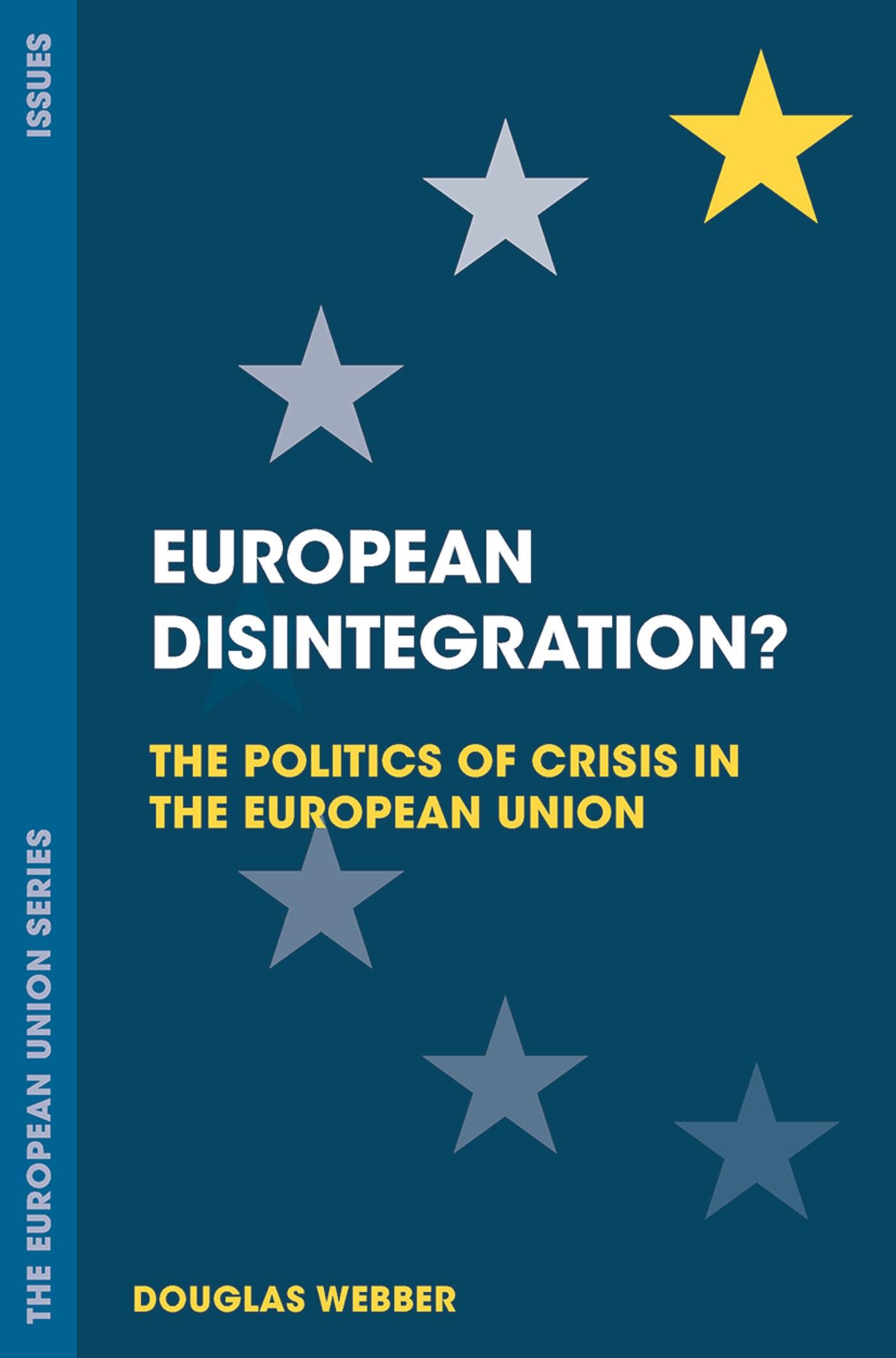
This new book provides a comprehensive analysis of Europe on the brink of political disintegration. Observers of the European Union (EU) could be forgiven for thinking that it is in a state of permanent crisis. The Union has been beset with high levels of Eurozone debt, Russian intervention and armed conflict in Ukraine, refugees fleeing conflict zones in North Africa and the Middle East, and the decision of Britain to leave the European Union. This text offers a concise and readable assessment of the dynamics, character and consequences of these four crises and the increasingly real possibility of European disintegration.
High levels of socio-economic interdependence and institutionalization have failed to result in an ever closer union, and yet the proposed theories of disintegration also fall short. Webber instead shows that it is only by looking at the role of the EU's dominant member, Germany, in each crisis that the potential for an increasingly fragmented Europe becomes clear. Until now, Germany has been the EU's stabilizing force but this is no longer guaranteed. The fate of the integration process will depend on whether other, more inclusive forms of stabilizing leadership may emerge to fill the vacuum created by Berlin's incapacity.
This text is the ideal companion for upper undergraduate and postgraduate students of the European Union, as part of degrees in politics, international relations or European studies, or for anyone interested in the crises of the European Union.
High levels of socio-economic interdependence and institutionalization have failed to result in an ever closer union, and yet the proposed theories of disintegration also fall short. Webber instead shows that it is only by looking at the role of the EU's dominant member, Germany, in each crisis that the potential for an increasingly fragmented Europe becomes clear. Until now, Germany has been the EU's stabilizing force but this is no longer guaranteed. The fate of the integration process will depend on whether other, more inclusive forms of stabilizing leadership may emerge to fill the vacuum created by Berlin's incapacity.
This text is the ideal companion for upper undergraduate and postgraduate students of the European Union, as part of degrees in politics, international relations or European studies, or for anyone interested in the crises of the European Union.
Pages: 262
Category: Statsvetenskap & Politik
e-ISBN: 9781350311503
Shipping weight: 1.2 kg
Ships in: 1-2 days
Pay easily by card, Klarna, Apple Pay or Google Pay. Not happy? You always have a 14-day money-back guarantee. Read more in our terms. If you have any questions, email us at hello@memmo.org.
Memmo makes studying easier – wherever you are in the world. We bring your course books and smart study tools together in one place: summaries, quizzes, podcasts and flashcards. Plus Ted, your study buddy who answers anything you wonder. Over 50,000 students already study here – built to help you learn faster and stress less.