
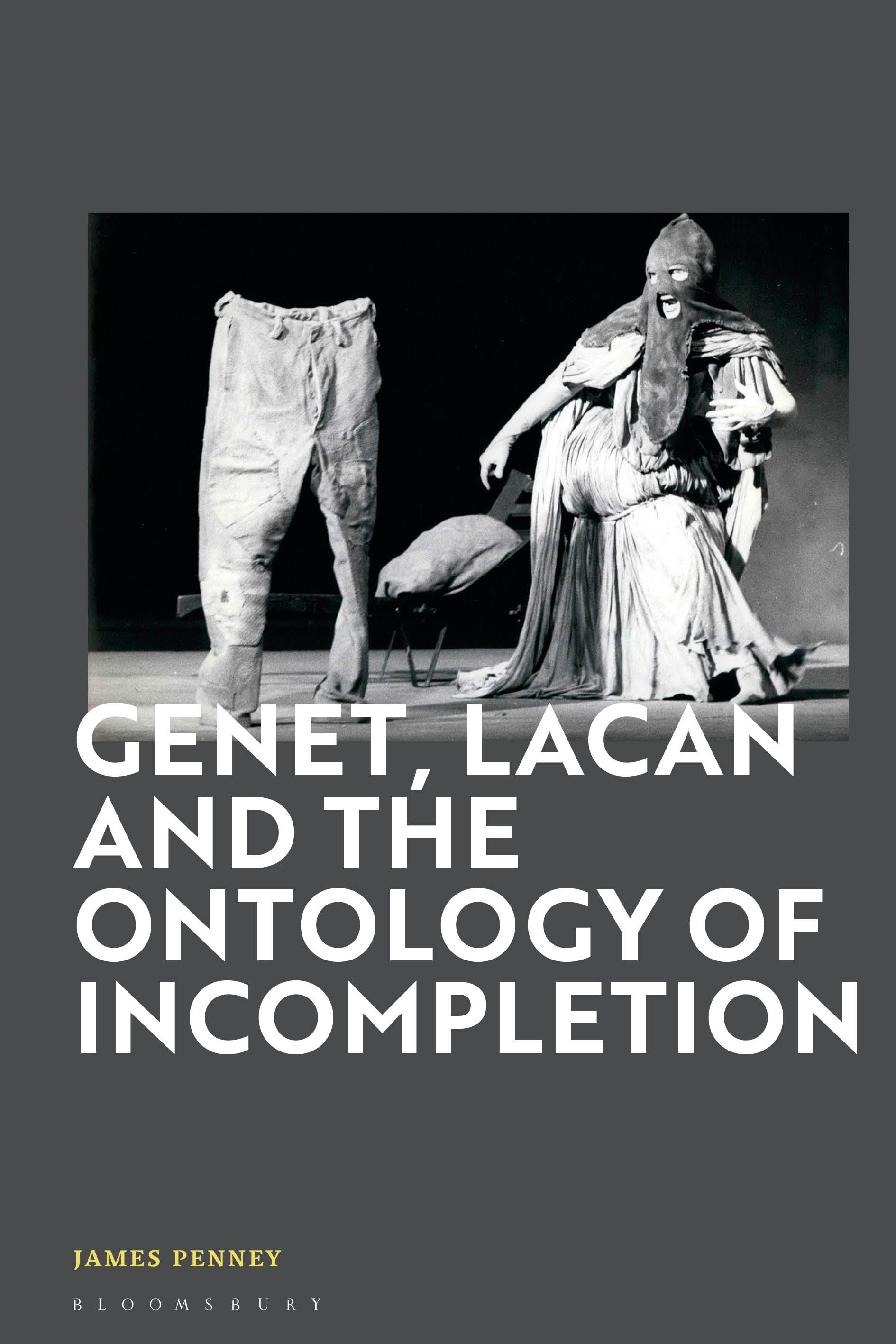
Bringing Jean Genet and Jacques Lacan into dialogue, James Penney examines the overlooked similarities between Genet's literary oeuvre and Lacanian psychoanalysis, uncovering in particular their shared ontology of fragility and incompletion.
This book exposes the two thinkers' joint and unwavering ontological conviction that the representations that make up the world of appearances are inherently enigmatic: inscrutable, not only on the level of their problematic link to knowledge and meaning, but also, more fundamentally, as concerns the reliability of their existence. According to Genet and Lacan, the signification of words and images will forever remain unfulfilled, just like the whole of reality, as if prematurely removed from the oven, under-baked.
Genet, Lacan and the Ontology of Incompletion reveals how, in the same manner as Lacan's psychoanalytic act, Genet's acts of poetry further seek to expose the fragile prop that holds our reality together, baring the fissures in being for which fantasy normally compensates.
Moving away from scholarship that considers Genet's plays, novels, sexuality and politics in isolation, Penney explores the whole span of Genet's work, from his early novels to the posthumously-published Prisoner of Love and, combining this with psychoanalysis, opens up new avenues for thinking about Genet, Lacan and our wanting being.
This book exposes the two thinkers' joint and unwavering ontological conviction that the representations that make up the world of appearances are inherently enigmatic: inscrutable, not only on the level of their problematic link to knowledge and meaning, but also, more fundamentally, as concerns the reliability of their existence. According to Genet and Lacan, the signification of words and images will forever remain unfulfilled, just like the whole of reality, as if prematurely removed from the oven, under-baked.
Genet, Lacan and the Ontology of Incompletion reveals how, in the same manner as Lacan's psychoanalytic act, Genet's acts of poetry further seek to expose the fragile prop that holds our reality together, baring the fissures in being for which fantasy normally compensates.
Moving away from scholarship that considers Genet's plays, novels, sexuality and politics in isolation, Penney explores the whole span of Genet's work, from his early novels to the posthumously-published Prisoner of Love and, combining this with psychoanalysis, opens up new avenues for thinking about Genet, Lacan and our wanting being.
Pay easily by card, Klarna, Apple Pay or Google Pay. Not happy? You always have a 14-day money-back guarantee. Read more in our terms. If you have any questions, email us at hello@memmo.org.
Memmo makes studying easier – wherever you are in the world. We bring your course books and smart study tools together in one place: summaries, quizzes, podcasts and flashcards. Plus Ted, your study buddy who answers anything you wonder. Over 50,000 students already study here – built to help you learn faster and stress less.