
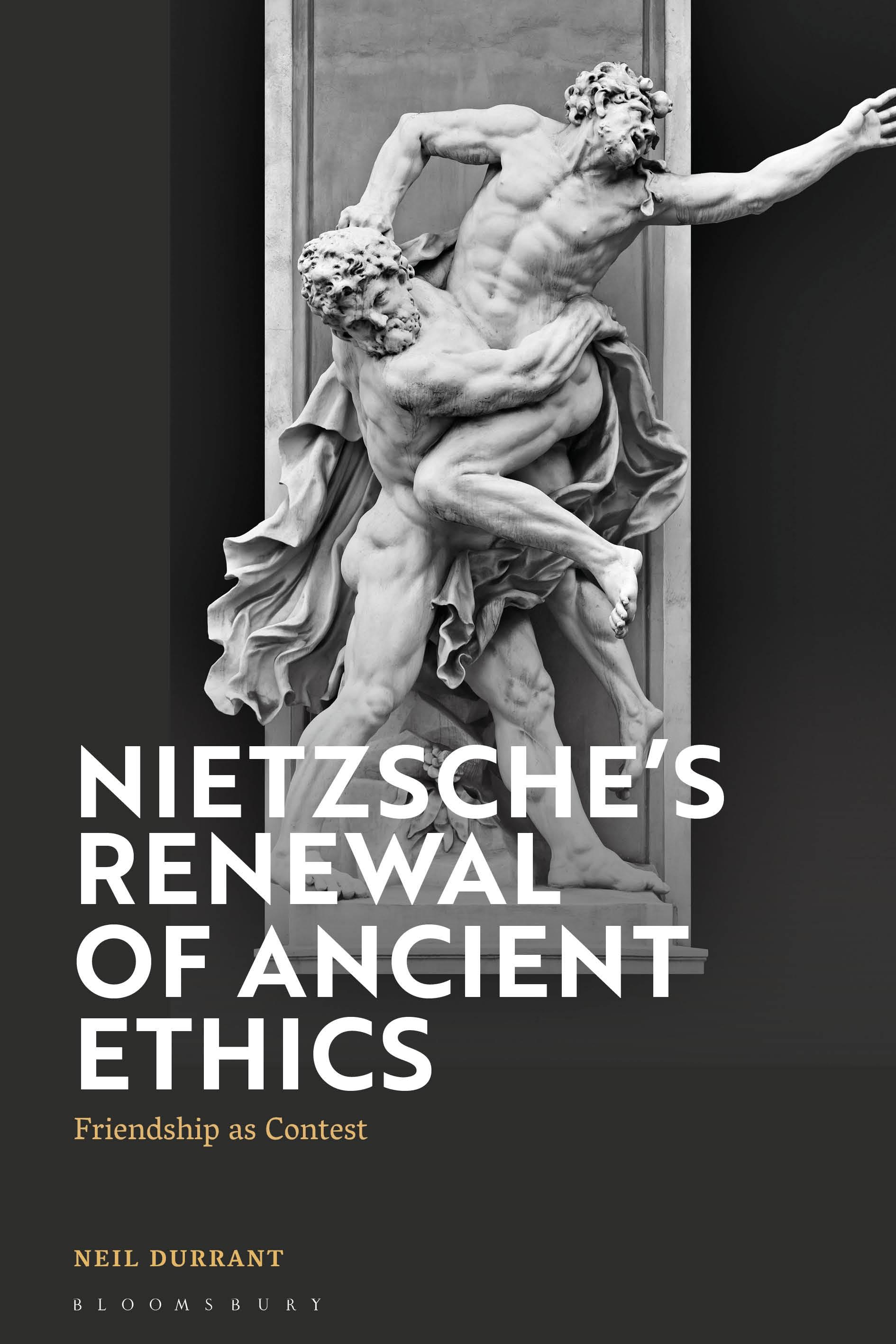
Nietzsche's Renewal of Ancient Ethics connects different strands in Nietzsche studies to progress a unique interpretation of friendship in his writings. Exploring this alternative approach to Nietzsche's ethics through the influence of ancient Greek ideals on his ideas, Neil Durrant highlights the importance of contest for developing strong friendships.
Durrant traces the history of what Nietzsche termed a 'higher friendship' to the ancient Greek ideal of the Homeric hero. In this kind of friendship, neither person attempts to tyrannize or dominate the other but rather aims to promote the differences between them as a way of stimulating stronger and fiercer contests. Through this exchange, they discover new heights-new standards of excellence-both for themselves and for others.
Durrant shows how the development of this approach to personal relationships relied on Nietzsche rejecting the Christian ideals of love and compassion to build an ethics which incorporated aspects of evolutionary biology into the ancient Homeric ideals he was himself wedded to. The resulting 'higher friendship' is strong enough to include not only love and compassion, but also enmity and opposition, expanding our notion of what is good and ethical in the process.
Durrant traces the history of what Nietzsche termed a 'higher friendship' to the ancient Greek ideal of the Homeric hero. In this kind of friendship, neither person attempts to tyrannize or dominate the other but rather aims to promote the differences between them as a way of stimulating stronger and fiercer contests. Through this exchange, they discover new heights-new standards of excellence-both for themselves and for others.
Durrant shows how the development of this approach to personal relationships relied on Nietzsche rejecting the Christian ideals of love and compassion to build an ethics which incorporated aspects of evolutionary biology into the ancient Homeric ideals he was himself wedded to. The resulting 'higher friendship' is strong enough to include not only love and compassion, but also enmity and opposition, expanding our notion of what is good and ethical in the process.
Pay easily by card, Klarna, Apple Pay or Google Pay. Not happy? You always have a 14-day money-back guarantee. Read more in our terms. If you have any questions, email us at hello@memmo.org.
Memmo makes studying easier – wherever you are in the world. We bring your course books and smart study tools together in one place: summaries, quizzes, podcasts and flashcards. Plus Ted, your study buddy who answers anything you wonder. Over 50,000 students already study here – built to help you learn faster and stress less.