
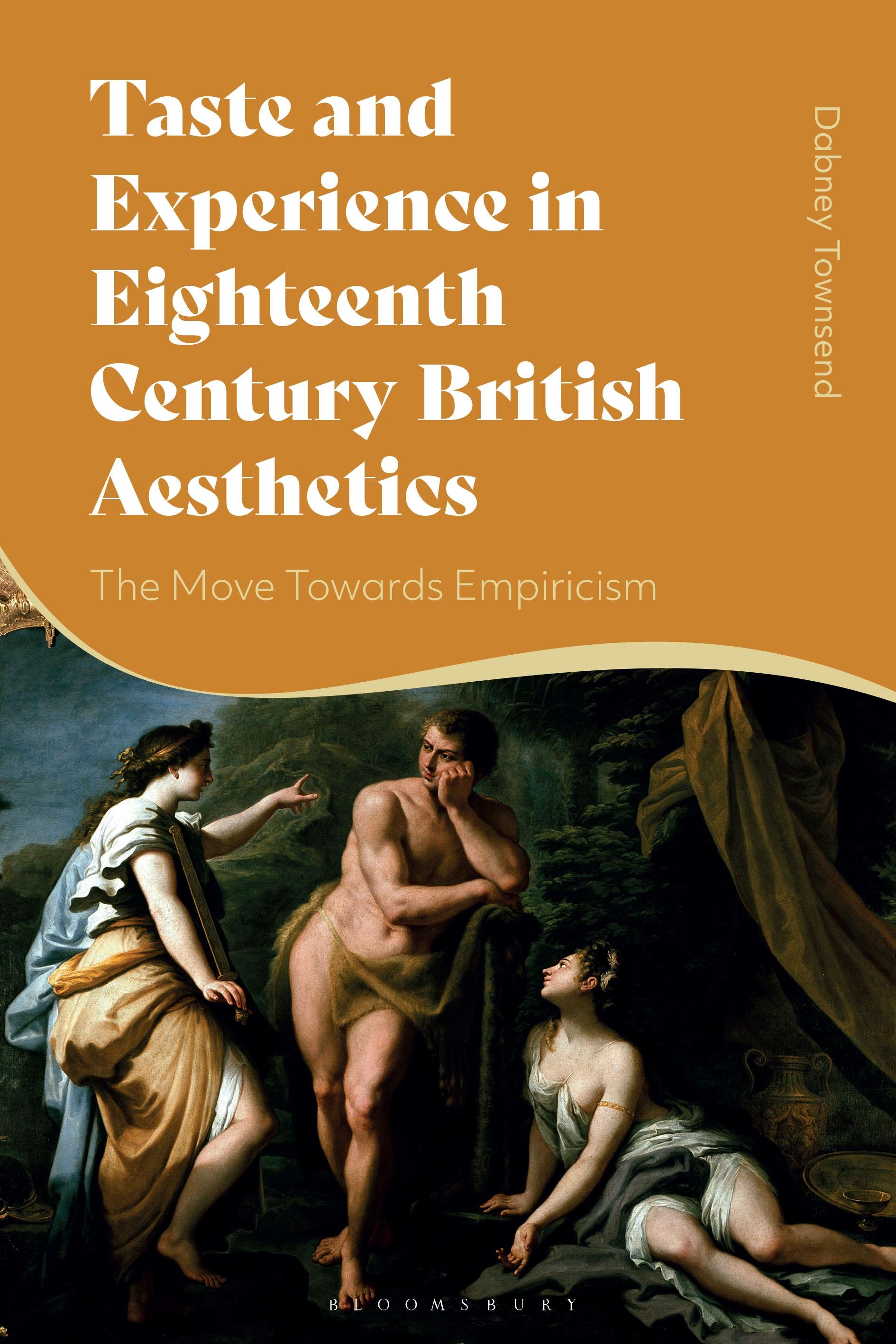
Taste and Experience in Eighteenth Century Aesthetics acknowledges theories of taste, beauty, the fine arts, genius, expression, the sublime and the picturesque in their own right, distinct from later theories of an exclusively aesthetic kind of experience. By drawing on a wealth of thinkers, including several marginalised philosophers, Dabney Townsend presents a novel reading of the century to challenge our understanding of art and move towards a unique way of thinking about aesthetics.
Speaking of a proto-aesthetic, Townsend surveys theories of taste and beauty arising from the empiricist shift in philosophy. A proto-aesthetic was shaped by the philosophers who followed Locke and accepted that theories of taste and beauty must be products of experience alone. Francis Hutcheson, David Hume, Alexander Gerard and Thomas Reid were among the most important advocates, joined by others who re-thought traditional topics.
Featuring chapters tracing its philosophical principles, issues raised by the subjectivity of the empiricist approach and the more academic proto-aesthetic formed toward the end of the century, Townsend argues that Lockean empiricism laid the foundations for what we now call aesthetics.
Speaking of a proto-aesthetic, Townsend surveys theories of taste and beauty arising from the empiricist shift in philosophy. A proto-aesthetic was shaped by the philosophers who followed Locke and accepted that theories of taste and beauty must be products of experience alone. Francis Hutcheson, David Hume, Alexander Gerard and Thomas Reid were among the most important advocates, joined by others who re-thought traditional topics.
Featuring chapters tracing its philosophical principles, issues raised by the subjectivity of the empiricist approach and the more academic proto-aesthetic formed toward the end of the century, Townsend argues that Lockean empiricism laid the foundations for what we now call aesthetics.
Pay easily by card, Klarna, Apple Pay or Google Pay. Not happy? You always have a 14-day money-back guarantee. Read more in our terms. If you have any questions, email us at hello@memmo.org.
Memmo makes studying easier – wherever you are in the world. We bring your course books and smart study tools together in one place: summaries, quizzes, podcasts and flashcards. Plus Ted, your study buddy who answers anything you wonder. Over 50,000 students already study here – built to help you learn faster and stress less.