
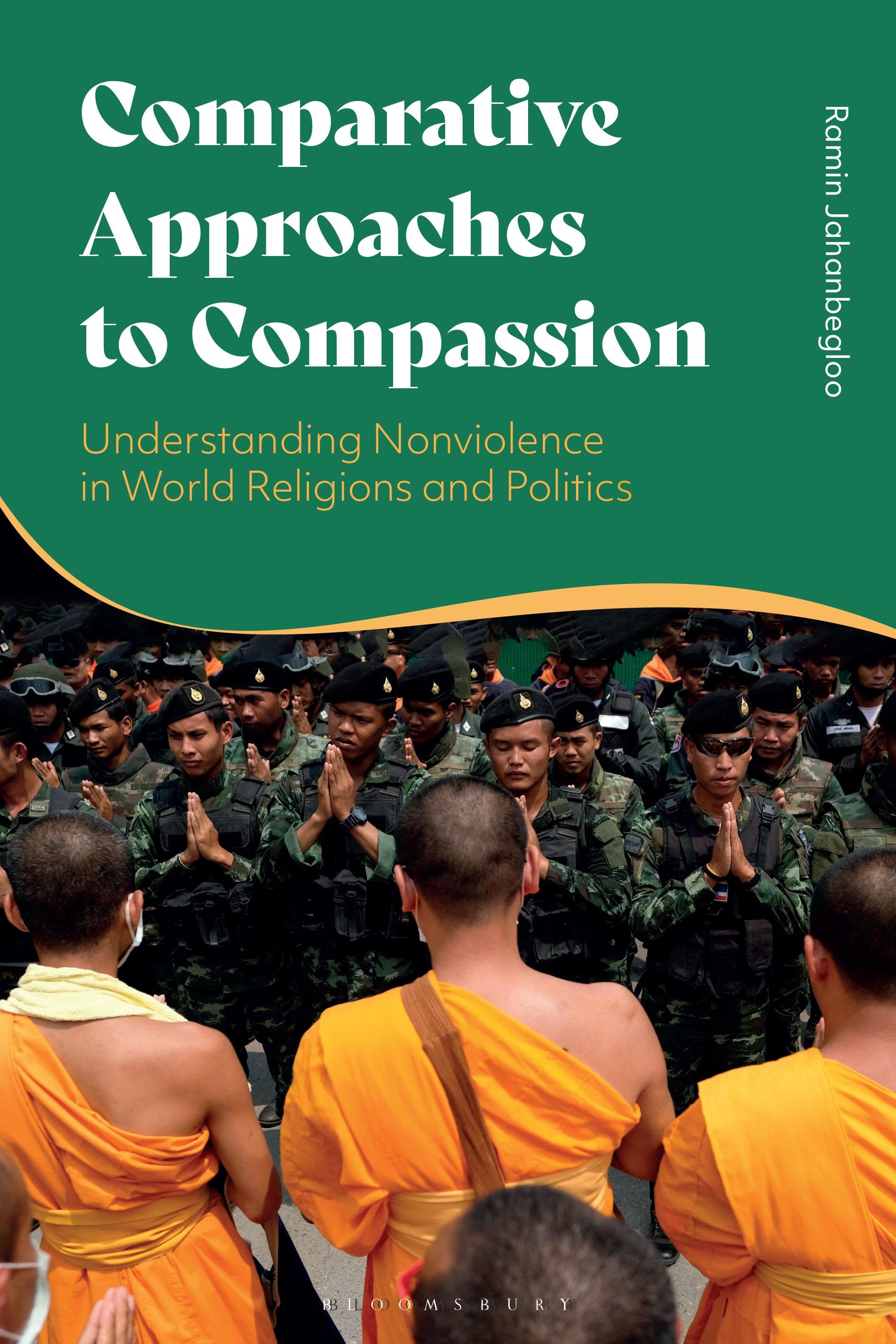
Ramin Jahanbegloo develops the concept of compassion as a practical and ethical response to the problems of today's world. Examining the power of compassion through the lens of multiple world religions, he explores ahimsa in Buddhism, Jainism and Hinduism and neighbourly love in Christianity, before synthesizing the two concepts in the Gandhian theory of non-violence and its impact on Muslim and Christian thinkers such as Abdul Ghaffar Khan and Martin Luther King, Jr. Jahanbegloo considers the idea of a compassionate civilization based on the nonviolent democratic theory put forward by Gandhi with Swaraj, and completed by Martin Luther King, Jr. with the Beloved Community.
By scrutinizing compassion in various religious and ethical traditions and exploring the relevance of homo fragilis, Jahanbegloo's comparative approach enriches our understanding of nonviolence as a universal philosophy and practice for the 21st century. He shows that nonviolence is not only a mode of thinking and a way of life, but also a powerful strategy of social and political transformation.
By scrutinizing compassion in various religious and ethical traditions and exploring the relevance of homo fragilis, Jahanbegloo's comparative approach enriches our understanding of nonviolence as a universal philosophy and practice for the 21st century. He shows that nonviolence is not only a mode of thinking and a way of life, but also a powerful strategy of social and political transformation.
Pay easily by card, Klarna, Apple Pay or Google Pay. Not happy? You always have a 14-day money-back guarantee. Read more in our terms. If you have any questions, email us at hello@memmo.org.
Memmo makes studying easier – wherever you are in the world. We bring your course books and smart study tools together in one place: summaries, quizzes, podcasts and flashcards. Plus Ted, your study buddy who answers anything you wonder. Over 50,000 students already study here – built to help you learn faster and stress less.